Michele Marieschi
1710 – 1743
In short
Michele Marieschi (1710–1743) was a Venetian painter and engraver noted for his vedute—detailed cityscapes of Venice—and for his imaginative architectural capricci. Working in the early 18th century, he combined precise observation with theatrical composition, influencing later Venetian vedutisti such as Canaletto.
Notable works

_Capriccio_con_arco_classico_e_capre_-_Michele_Marieschi_-_Gallerie_Accademia.jpg)
_Capriccio_con_edificio_gotico_e_obelisco_-_Michele_Marieschi_-_Gallerie_Accademia.jpg)
Early life Michele Marieschi was born in Venice in 1710, a city whose canals and palaces would become the central subjects of his artistic career. Little is recorded about his family background or his early education, but the vibrant artistic environment of the Republic of Venice offered ample opportunity for apprenticeship. By the 1720s he was likely receiving training in drawing and painting, possibly within one of the many workshops that catered to the demand for decorative and narrative art among Venetian patrons.
Career and style Marieschi emerged as a professional artist in the late 1720s, establishing a reputation for producing highly detailed vedute—large‑scale city views that combined topographical accuracy with a keen sense of atmosphere. While his exact affiliation with a particular artistic movement remains unclear, his work reflects the broader Baroque fascination with drama, light, and architectural grandeur. He was also active as an engraver, a skill that reinforced his capacity for precise line work and contributed to the dissemination of his images beyond the Venetian market.
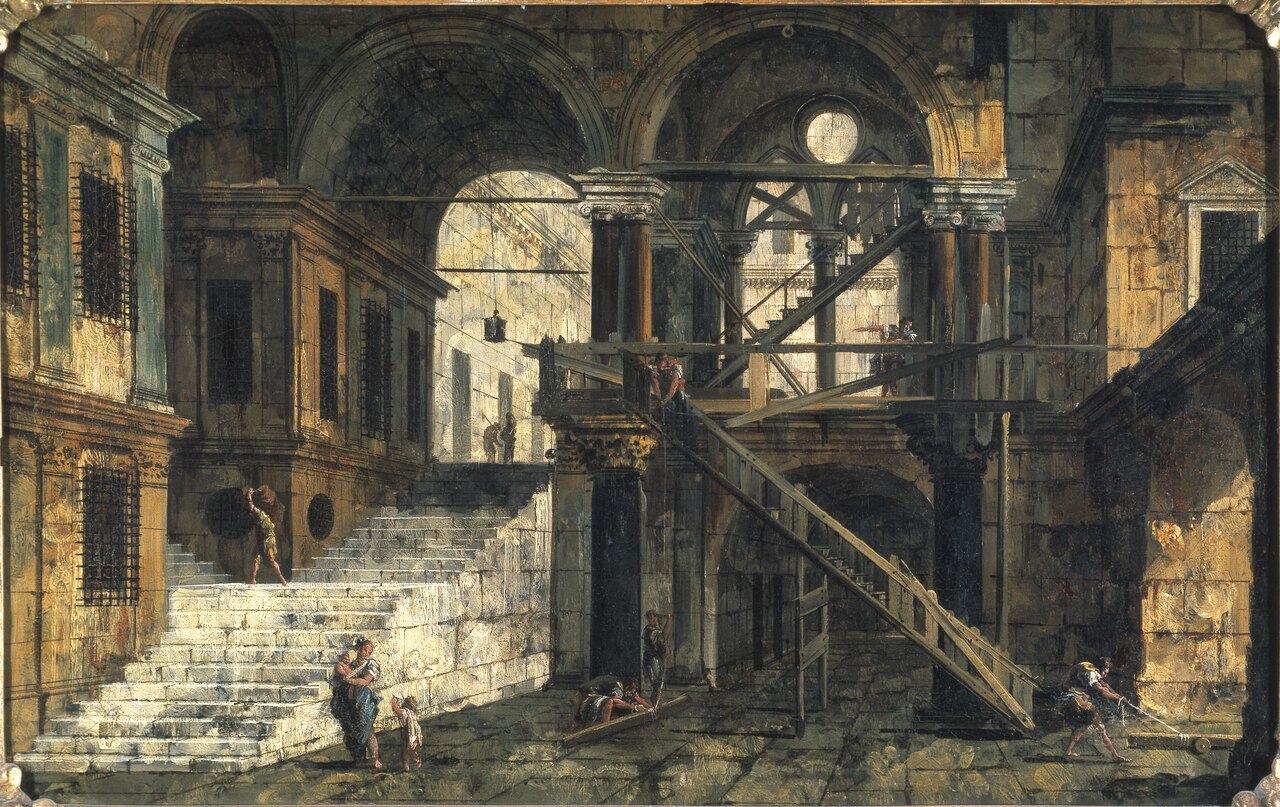
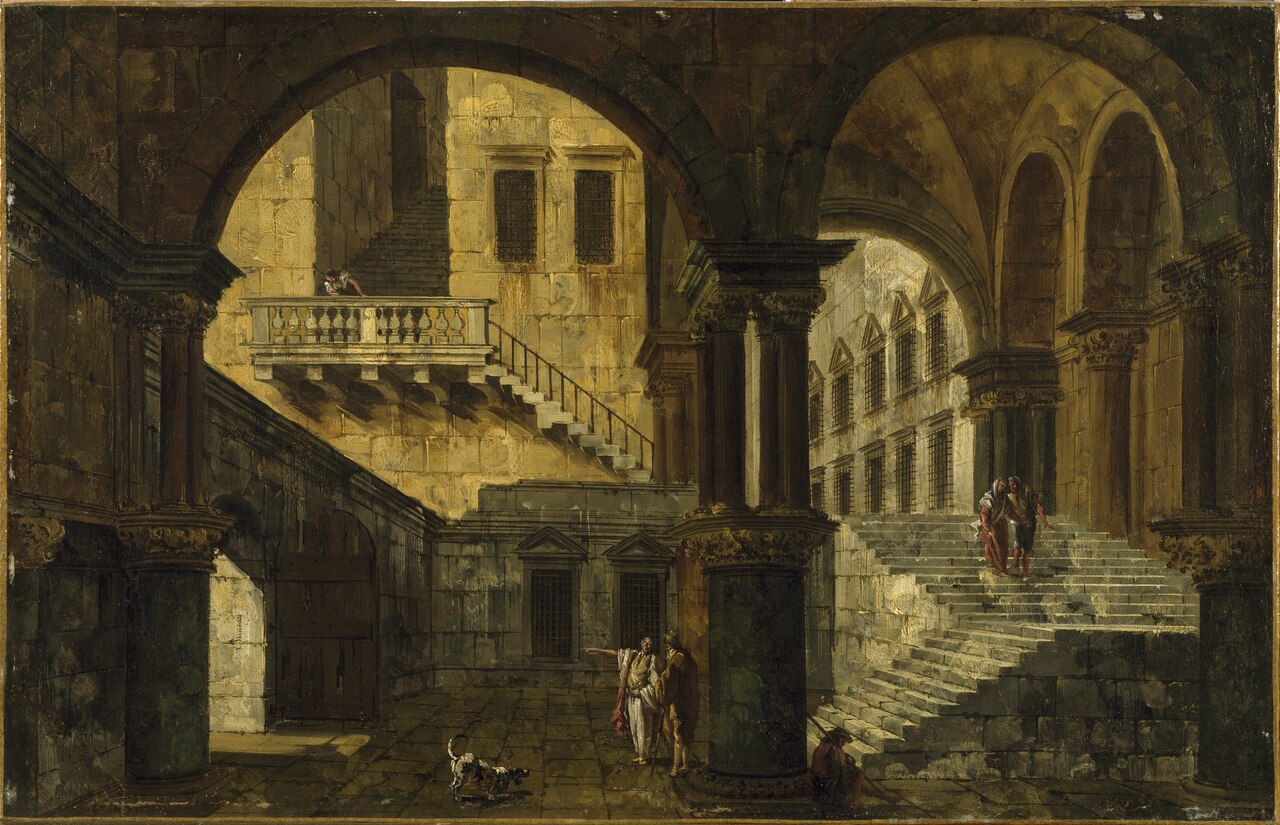
His paintings often portray Venice from elevated viewpoints, allowing the viewer to take in the bustling waterways, the interplay of light on water, and the intricate façades of the city’s buildings. Unlike some contemporaries who favoured a purely documentary approach, Marieschi introduced a theatrical element, arranging architectural elements and figures in a way that suggests a staged scene rather than a straightforward snapshot. This interest in theatricality is evident in his capricci—imagined architectural compositions that blend real and invented structures.
Signature techniques Marieschi’s technique is characterised by a meticulous handling of perspective, which he achieved through careful draftsmanship and the use of camera obscura effects that were common among vedutisti. His palette balances warm ochres and cool blues, creating depth through atmospheric perspective: distant buildings recede in muted tones while foreground elements retain vivid colour. Light is rendered with a subtle chiaroscuro that highlights the reflective surface of canals and the sun‑lit façades of palaces.
In his engravings, Marieschi employed fine hatching to convey texture and depth, a method that translated well to his painted works. He often included staffage—small figures of pedestrians, gondoliers, and market sellers—to animate his scenes and provide a sense of scale. The compositional rhythm of his works frequently follows a diagonal sweep, guiding the eye from the foreground through architectural arches toward a vanishing point, thereby reinforcing the illusion of an expansive, almost cinematic space.
Major works - **The Grand Canal with Santa Maria della Salute (1735)** – This early masterpiece demonstrates Marieschi’s command of perspective and his ability to capture the luminous quality of Venetian water. The composition centres on the iconic dome of Santa Maria della Salute, framed by bustling gondolas and the surrounding palazzi, illustrating both the city’s spiritual heart and its commercial vitality. - **Capriccio with Classical Arch and Goats (1741)** – In this imaginative scene, Marieschi juxtaposes a Roman‑style triumphal arch with a pastoral element—goats grazing nearby. The work reflects his fascination with stage design, as the arch functions like a theatrical backdrop, while the rural motif introduces a whimsical contrast to the urban sensibility of his vedute. - **Capriccio with Gothic Building and Obelisk (1741)** – Here the artist combines a soaring Gothic structure with an Egyptian‑style obelisk, creating a fantastical architectural ensemble. The piece underscores his skill in rendering diverse architectural vocabularies within a single, harmonious composition, a hallmark of the capriccio genre. - **Stairwell in a Renaissance Palace (1742)** – This interior view showcases Marieschi’s attention to spatial depth. The stairwell, rendered with precise linear perspective, leads the eye upward through an elegant series of arches, bathed in soft daylight that filters through upper windows. The work hints at his possible involvement in decorative projects for aristocratic residences. - **Courtyard in a Renaissance House (1742)** – Complementing the stairwell, this painting captures a quiet courtyard surrounded by arcades and cloistered galleries. The balanced arrangement of columns and the play of shadow across the paved floor reveal Marieschi’s mastery of light and his capacity to convey a sense of serene, enclosed space.
These works collectively illustrate Marieschi’s versatility: while his vedute anchor him firmly within the Venetian tradition, his capricci and interior scenes demonstrate a broader curiosity for architecture, theatricality, and the interplay between reality and imagination.
Influence and legacy Michele Marieschi’s career was brief—he died in Venice in 1743 at the age of thirty‑three—but his impact on the visual culture of his city was substantial. His combination of accurate topography with a dramatic, almost cinematic composition prefigured the later achievements of Canaletto, who would dominate the Venetian veduta genre in the mid‑18th century. Art historians credit Marieschi with helping to codify the visual language that allowed later artists to market Venice as a picturesque destination to Grand Tour travellers.
Beyond his immediate successors, Marieschi’s capricci contributed to a broader European fascination with imagined architectural fantasies, influencing painters in Rome and Northern Europe who explored similar themes. His engravings circulated through the Republic and beyond, providing a visual reference for architects and designers interested in the synthesis of classical, Gothic, and exotic motifs.
In contemporary scholarship, Marieschi is recognised not only for his artistic skill but also for his role in the commercial art market of 18th‑century Venice, where vedute served both decorative and documentary functions. His works continue to be exhibited in major museums, and their high degree of detail makes them valuable resources for historians studying the urban development of Venice during the Baroque period.
Overall, Michele Marieschi stands as a pivotal figure who bridged the documentary precision of early vedutisti with the theatrical imagination that would define later Venetian landscape painting.
Frequently asked questions
Who was Michele Marieschi?
Michele Marieschi (1710–1743) was a Venetian painter and engraver best known for his detailed cityscapes of Venice and imaginative architectural capricci.
What style or movement is he associated with?
He worked within the Baroque tradition, developing a distinctive veduta style that combined precise perspective with theatrical composition.
What are his most famous works?
His best‑known paintings include The Grand Canal with Santa Maria della Salute (1735), Capriccio with Classical Arch and Goats (1741), Capriccio with Gothic Building and Obelisk (1741), Stairwell in a Renaissance Palace (1742) and Courtyard in a Renaissance House (1742).
Why does he matter in art history?
Marieschi helped codify the visual language of Venetian vedute, influencing later masters such as Canaletto and contributing to the popularity of imagined architectural scenes across Europe.
How can I recognise a Michele Marieschi painting?
Look for meticulous perspective, a balanced use of light and shadow, detailed architectural elements, and often a stage‑like arrangement of figures that creates a sense of drama within a cityscape.