Michelangelo Cerquozzi
1602 – 1660
In short
Michelangelo Cerquozzi (1602–1660) was an Italian Baroque painter from Rome, noted for his vivid genre scenes, battle compositions and still‑life paintings. He earned the nickname “Michelangelo delle Battaglie” for his skill in depicting military encounters.
Notable works


_(attributed_to)_-_A_Toothdrawer_on_Horseback_in_an_Italian_Square_-_44618i_-_Wellcome_Collection.jpg)
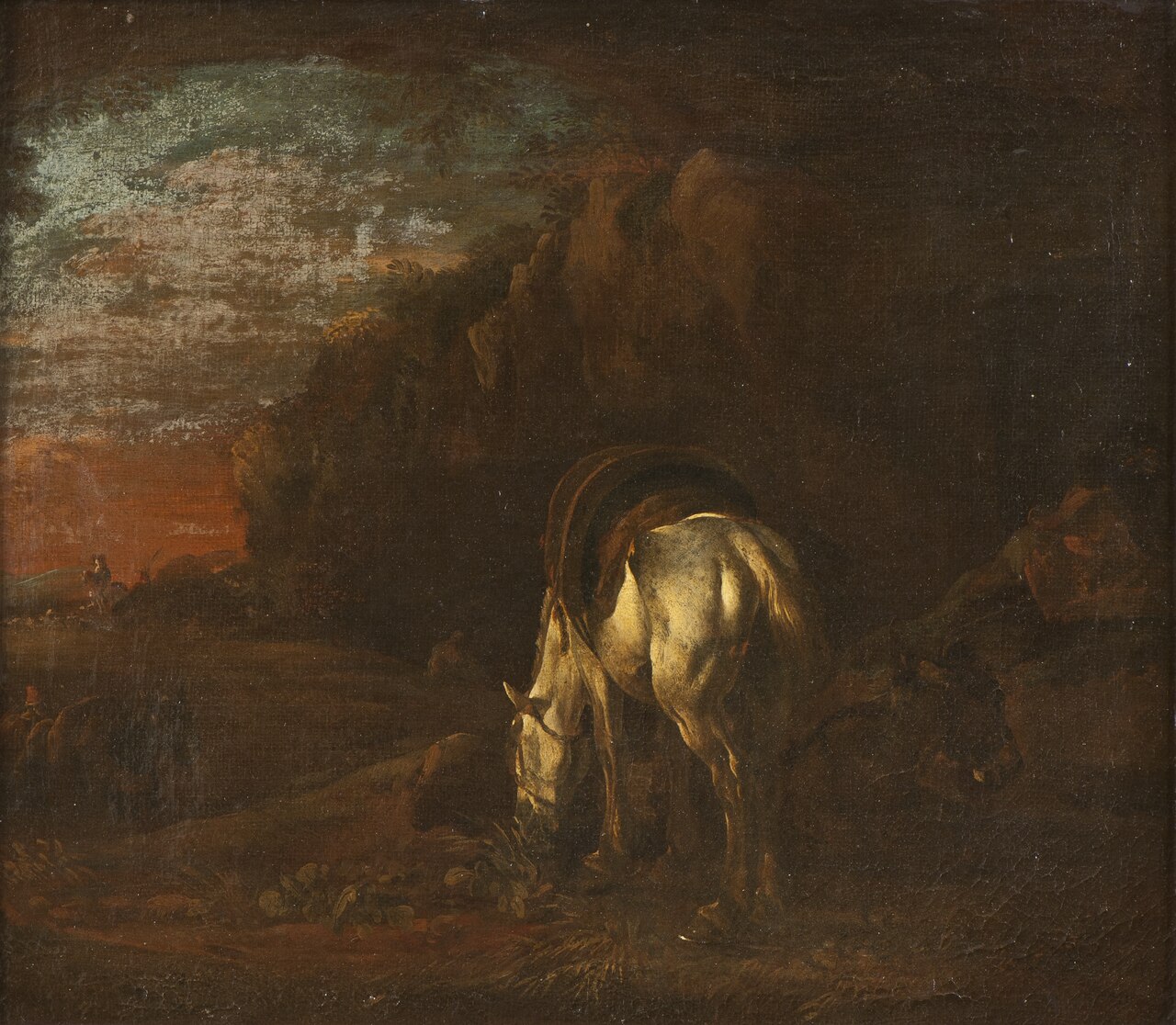
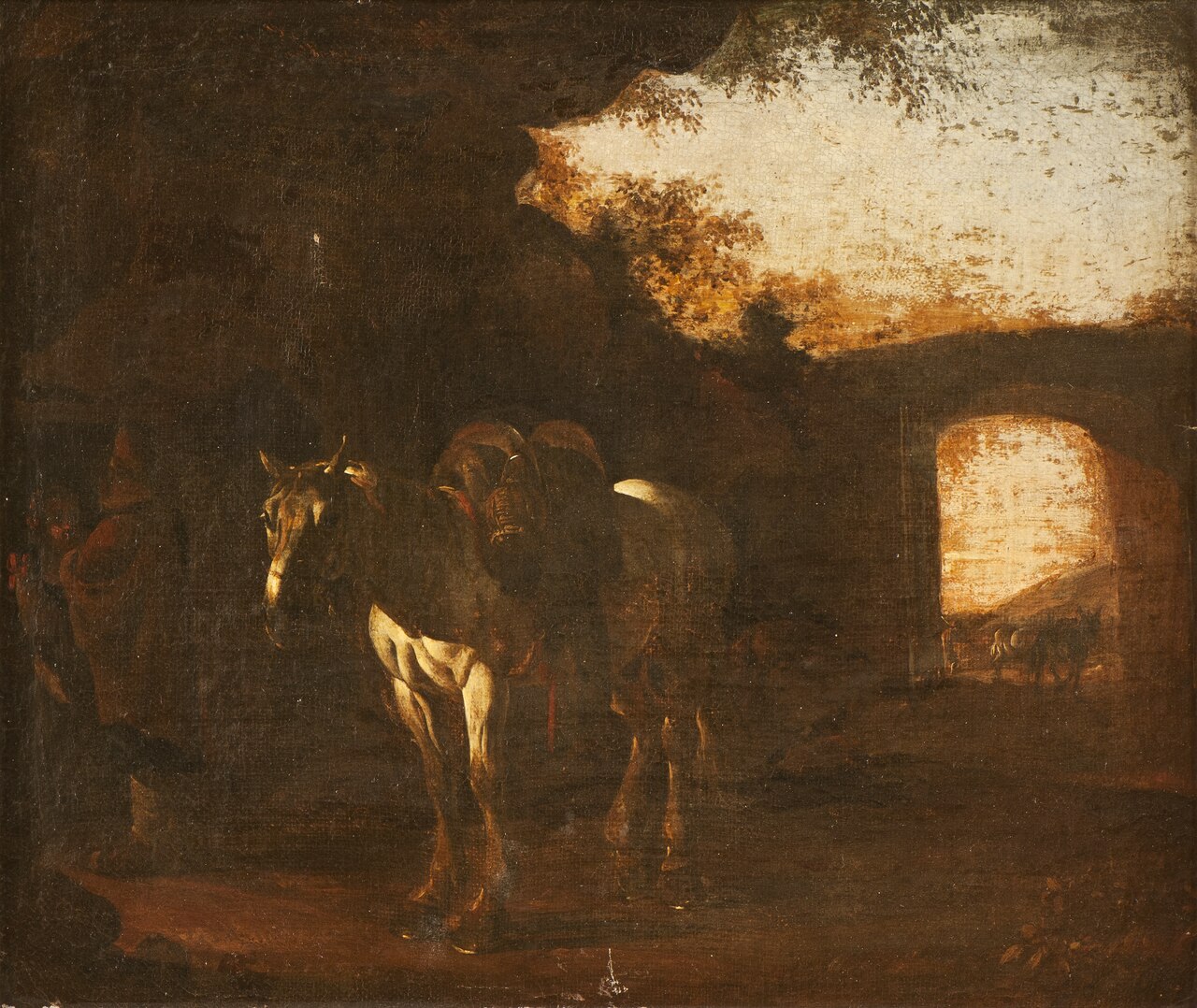
Early life Michelangelo Cerquozzi was born in Rome in 1602, within the Papal States. Little is recorded about his family background, but his Roman upbringing placed him at the heart of a flourishing artistic centre. Growing up amid the bustling streets and markets of the city, Cerquozzi would have been exposed to the everyday life of both the elite and the lower classes—a visual vocabulary that later became a hallmark of his work. Formal apprenticeship records are scarce, yet it is clear that he received a thorough training in the workshop environment typical of the period, mastering drawing, chiaroscuro and the handling of oil paint.
Career and style By the 1620s Cerquozzi was active as a professional painter in Rome. He aligned himself with the circle of artists known as the *Bamboccianti*, a group of Flemish and Dutch painters who introduced small‑scale genre scenes of quotidian life to the Italian market. Their influence is evident in Cerquozzi’s early canvases, which combine a naturalistic eye for detail with the dramatic lighting favoured by the Baroque. Over time he expanded his repertoire to include battle scenes, a genre that earned him the epithet *delle Battaglie*. These compositions display a keen sense of movement, often populated with cavalry, infantry and the chaos of combat, rendered with a palette of earthy reds, ochres and muted greens.
Cerquozzi also produced religious and mythological subjects, though these works were generally intended for private devotion rather than public altarpieces. In the later part of his career he turned increasingly toward still‑life painting, a genre that allowed him to explore texture, colour and the play of light on inanimate objects. His still‑lifes are characterised by a restrained yet vibrant arrangement of fruit, glassware and occasionally small game, reflecting both the influence of northern European still‑life traditions and the Roman taste for decorative cabinet pieces.
Signature techniques Cerquozzi’s technique is distinguished by several recurring elements:
1. Dynamic composition – Whether depicting a battlefield or a market stall, he arranges figures and objects along diagonal lines that guide the viewer’s eye across the canvas. 2. Chiaroscuro modelling – He frequently uses strong contrasts between illuminated foregrounds and darker backgrounds to heighten drama and give volume to forms. 3. Fine brushwork – In the rendering of textures such as horsehair, foliage or the skin of fruit, his brushstrokes remain precise, allowing a tactile sense of material. 4. Colour harmonies – A limited but rich palette of warm earth tones punctuated by occasional bright reds or greens creates visual cohesion while emphasizing focal points. 5. Narrative detail – Small, anecdotal elements—such as a stray dog, a discarded weapon or a fallen leaf—populate his scenes, offering viewers a glimpse into the lived reality behind the main subject.
These techniques combine to produce works that are both visually engaging and narratively informative, bridging the gap between high Baroque grandeur and everyday realism.
Major works Although many of Cerquozzi’s paintings have been lost or remain in private collections, several works are documented and occasionally reproduced in art historical literature:
- Still‑Life with Grapes and Figs – Traditionally dated to 1700, this piece features a luxuriant bunch of grapes alongside ripe figs, arranged on a simple wooden table. The date post‑dates Cerquozzi’s death, suggesting either a later attribution or a misdating; scholars generally treat the work as an example of his still‑life style rather than a precisely dated masterpiece.
- Still‑Life with Grapes and Apples – Also listed with a 1700 date, this composition mirrors the previous work but substitutes apples for figs. The similarity in subject matter underscores Cerquozzi’s interest in fruit as a symbol of abundance and the transience of material wealth.
- A Toothdrawer on Horseback in an Italian Square – This genre scene captures a figure—presumably a dentist or tooth‑drawer—mounted on a horse amidst a bustling Roman piazza. The work combines everyday activity with the dynamism of equine movement, illustrating Cerquozzi’s ability to blend narrative with action.
- Landscape with a White Horse Grazing – In this pastoral canvas, a solitary white horse grazes against a backdrop of rolling hills and distant ruins. The composition reflects the artist’s skill in integrating animal subjects within a broader natural setting, a motif also present in his battle paintings.
- Landscape with Ruins and a Saddled White Horse – Similar in tone to the previous landscape, this painting includes architectural ruins that hint at Rome’s ancient past, while the saddled horse adds a sense of human presence. The juxtaposition of decay and vitality is a recurring theme in Cerquozzi’s oeuvre.
While the precise dating of these works remains debated, their inclusion in catalogues highlights the range of subjects Cerquozzi pursued, from still‑life to genre narrative to landscape.
Influence and legacy Michelangelo Cerquozzi occupies a distinctive niche within the Baroque period. His synthesis of northern genre realism with Italian dramatic flair contributed to a broader acceptance of everyday subjects in high art circles. By documenting the lives of ordinary Romans and the turbulence of battle, he provided a visual record that complements the grand religious and mythological narratives of his contemporaries.
Later artists, especially those working in the late Baroque and early Rococo, drew upon Cerquozzi’s compositional dynamism and his willingness to treat modest subjects with the same technical rigor as grand history paintings. His still‑life motifs anticipated the more elaborate fruit and banquet scenes of the 18th‑century Italian still‑life tradition. Moreover, his battle scenes served as reference points for subsequent military painters who sought to balance realism with theatricality.
Although not as widely recognised as Caravaggio or Bernini, Cerquozzi’s works continue to be studied for their cross‑cultural influences and their role in the evolution of genre painting in Italy. Modern exhibitions of Baroque art often include his canvases to illustrate the diversity of the period’s visual culture, and his paintings remain of interest to scholars examining the exchange between Italian and northern European artistic practices.
In sum, Michelangelo Cerquozzi’s career reflects the vibrant artistic milieu of 17th‑century Rome, where the convergence of local tradition and foreign innovation produced a body of work that is both historically informative and aesthetically compelling.
Frequently asked questions
Who was Michelangelo Cerquozzi?
Michelangelo Cerquozzi (1602–1660) was a Roman Baroque painter known for genre scenes, battle compositions, and still‑life works, earning the nickname “Michelangelo delle Battaglie.”
What artistic style or movement is he associated with?
He worked within the Baroque style, blending the dramatic lighting and dynamic composition of Italian Baroque with the everyday realism of the Bamboccianti, a group of northern‑European genre painters active in Rome.
What are his most famous works?
Among his noted pieces are the still‑lifes ‘Still‑Life with Grapes and Figs’ and ‘Still‑Life with Grapes and Apples,’ the genre scene ‘A Toothdrawer on Horseback in an Italian Square,’ and the landscapes ‘Landscape with a White Horse Grazing’ and ‘Landscape with Ruins and a Saddled White Horse.’
Why is Michelangelo Cerquozzi important in art history?
He helped popularise genre and battle subjects in Italian art, bridging northern European realism with Italian Baroque drama, and his work influenced later painters who explored everyday life and military themes.
How can I recognise a painting by Cerquozzi?
Look for dynamic diagonal compositions, strong chiaroscuro, precise brushwork on textures, a limited warm colour palette, and narrative details that depict ordinary Roman life or vivid battle scenes.