Matthäus Merian
1621 – 1687
In short
Matthäus Merian (1621–1687) was a Swiss engraver and portrait painter born in Basel who established a prolific publishing workshop in Frankfurt. He is best known for detailed portrait engravings of European nobility and for his contributions to topographical illustration.
Notable works

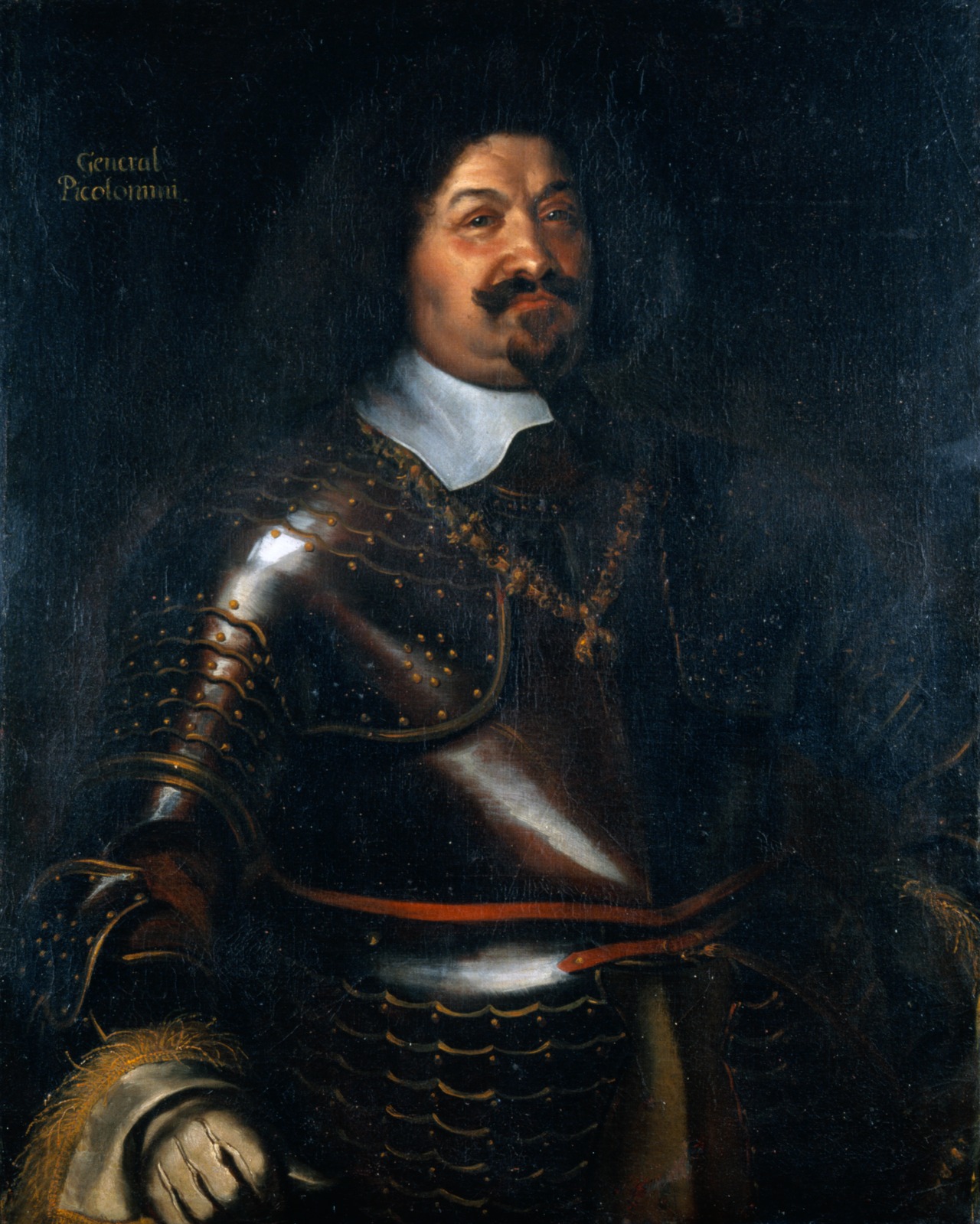
,_baron,_quarter_defense_general_,_field_marshal,_married_to_1._-_NMGrh_1764_-_Nationalmuseum.jpg)

_-_Google_Art_Project.jpg)
Early life Matthäus Merian was born in 1621 in Basel, a city that lay at the crossroads of Swiss, German and French cultural influences. His family was part of the city's artisan class; his father, Johann Merian, was a goldsmith, which gave young Matthäus early exposure to metalworking and the fine manual skills required for engraving. Basel’s vibrant print culture in the early seventeenth century offered apprenticeships in both the visual arts and the emerging publishing trade. Merian is believed to have begun an apprenticeship with a local goldsmith‑engraver, where he learned the fundamentals of line work, chiaroscuro, and the preparation of copper plates.
In his late teens, Merian travelled to Strasbourg and then to Frankfurt, attracted by the latter’s reputation as a hub for trade fairs and a centre of the German book market. By the early 1640s he had settled in Frankfurt, a city that would remain his base for the rest of his life. The move coincided with a period of political turmoil—the Thirty Years' War—yet Frankfurt’s status as a free imperial city meant it retained a relatively stable environment for artists and printers.
Career and style In Frankfurt, Merian quickly established himself as a skilled engraver of portraiture. His early commissions came from the local merchant class, but his reputation soon attracted the attention of the German aristocracy. The style of his portrait engravings reflects a blend of Swiss precision and the baroque sensibility that was spreading through Central Europe. Merian’s figures are rendered with careful attention to facial features, clothing textures, and insignia, creating a sense of both realism and status.
Beyond portraiture, Merian expanded his practice into topographical publishing. In partnership with his son, Matthäus Merian the Younger, and later with his second wife, the widowed publisher Anna Merian, he produced the multi‑volume series *Topographia Germaniae* (published from the 1650s onward). This ambitious project combined detailed cityscapes, maps, and descriptive texts, cementing Merian’s role not only as an artist but also as a chronicler of the German lands. His work in this area is characterised by a systematic approach to architecture and landscape, employing a clear, almost documentary line that nonetheless retains artistic nuance.
Signature techniques Merian’s engravings are distinguished by several technical hallmarks:
1. Fine cross‑hatching – He used dense, intersecting lines to model the subtle gradations of light on skin, fabric and metal, giving his subjects a three‑dimensional presence. 2. Attention to heraldic detail – In aristocratic portraits, Merian meticulously reproduced coats of arms, insignia and regalia, often using a separate plate for the decorative elements to ensure crispness. 3. Balanced composition – Portraits frequently place the sitter slightly off‑centre, allowing space for symbolic objects (e.g., swords, books) that reinforce the sitter’s identity. 4. Integration of text and image – Particularly in his topographical works, Merian blended explanatory captions seamlessly with the visual field, a practice that anticipated modern infographics. 5. Use of copper plates – By mastering the copper engraving process, he achieved a level of detail that woodcut or etching alone could not provide at the time.
These techniques contributed to a distinctive visual language that made Merian’s prints instantly recognisable to contemporary collectors and to modern scholars.
Major works Merian’s oeuvre includes several portrait engravings that exemplify his skill and the range of his patronage:
- Landgrave Friedrich of Hesse‑Eschwege (1650) – This portrait captures the Landgrave in a formal pose, highlighting his military attire and the elaborate chain of office. The rendering of the lace collar and the crispness of the armor’s reflective surfaces illustrate Merian’s mastery of texture.
- Ottavio Piccolomini in Armour (1649) – Depicting the Italian commander in full cuirass, the work showcases Merian’s ability to convey the sheen of polished steel through intricate cross‑hatching. Piccolomini’s facial expression is rendered with a calm authority, underscoring his status as a seasoned military leader.
- Conrad Marderfelt (c. 1610‑1688) – Although the exact date of this portrait is uncertain, Merian’s representation of the baron‑field‑marshal includes the double‑tasselled coat of arms and a sword‑hilt, signalling his high rank. The background is subdued, focusing attention on the sitter’s dignified bearing.
- Hans Christoffer von Königsmarck (1600‑1663) – two versions (1651 and undated) – Merian produced at least two engravings of the Swedish nobleman, one dated 1651. Both portray Königsmarck in military dress, yet the later version adds a more elaborate background of a battlefield horizon, reflecting an evolution in Merian’s compositional approach.
These works not only document the individuals but also serve as visual records of mid‑seventeenth‑century aristocratic fashion and regalia.
Influence and legacy Matthäus Merian’s impact on the visual culture of the German lands is multifold. His portrait engravings set a standard for the accurate depiction of noble attire and heraldry, influencing later German portraitists such as Johann Baptist Homann and later engravers who worked for the burgeoning publishing houses of the eighteenth century. The *Topographia* series, meanwhile, became a reference point for cartographers and historians, providing some of the earliest systematic visual surveys of German cities and countryside.
Merian’s workshop model—combining artistic production with publishing—anticipated the modern notion of the artist‑entrepreneur. His son continued the business after his death, ensuring that the Merian name remained synonymous with high‑quality prints well into the early eighteenth century. Contemporary scholars regard his engravings as valuable primary sources for studying 17th‑century military dress, architecture, and urban development.
In the digital age, Merian’s prints have been digitised by numerous libraries, allowing researchers worldwide to examine his technique and historical content. His work continues to be exhibited in museums focusing on printmaking, Baroque portraiture, and early modern cartography, confirming his lasting relevance within art‑historical discourse.
Frequently asked questions
Who was Matthäus Merian?
Matthäus Merian (1621–1687) was a Swiss engraver and portrait painter who worked primarily in Frankfurt, known for detailed portrait engravings of European nobility and for his topographical publishing series.
What artistic style or movement is Merian associated with?
Merian’s work blends Swiss precision with the Baroque sensibility of the mid‑seventeenth century, characterised by realistic portraiture and systematic topographical illustration.
What are his most famous works?
Among his notable portraits are the 1650 engraving of Landgrave Friedrich of Hesse‑Eschwege, the 1649 portrait of Ottavio Piccolomini in armour, and multiple depictions of Hans Christoffer von Königsmarck; he is also renowned for the multi‑volume *Topographia Germaniae* series.
Why is Matthäus Merian important in art history?
He set standards for accurate portrait engraving, pioneered a combined artist‑publisher workshop model, and provided crucial visual documentation of 17th‑century German architecture and urban life.
How can I recognise a Merian engraving?
Look for fine cross‑hatching, meticulous heraldic detail, balanced compositions with symbolic objects, and the crispness of copper‑plate lines that give his prints a distinctive, documentary quality.