Matsumura Goshun
1752 – 1811
In short
Matsumura Goshun (1752–1811) was a Japanese Edo‑period painter who founded the Shijō school, blending Chinese literati influences with native Japanese techniques. He is noted for works such as Scenes from Essays in Idleness and Seventy‑two Peaks Against the Blue Sky.
Notable works
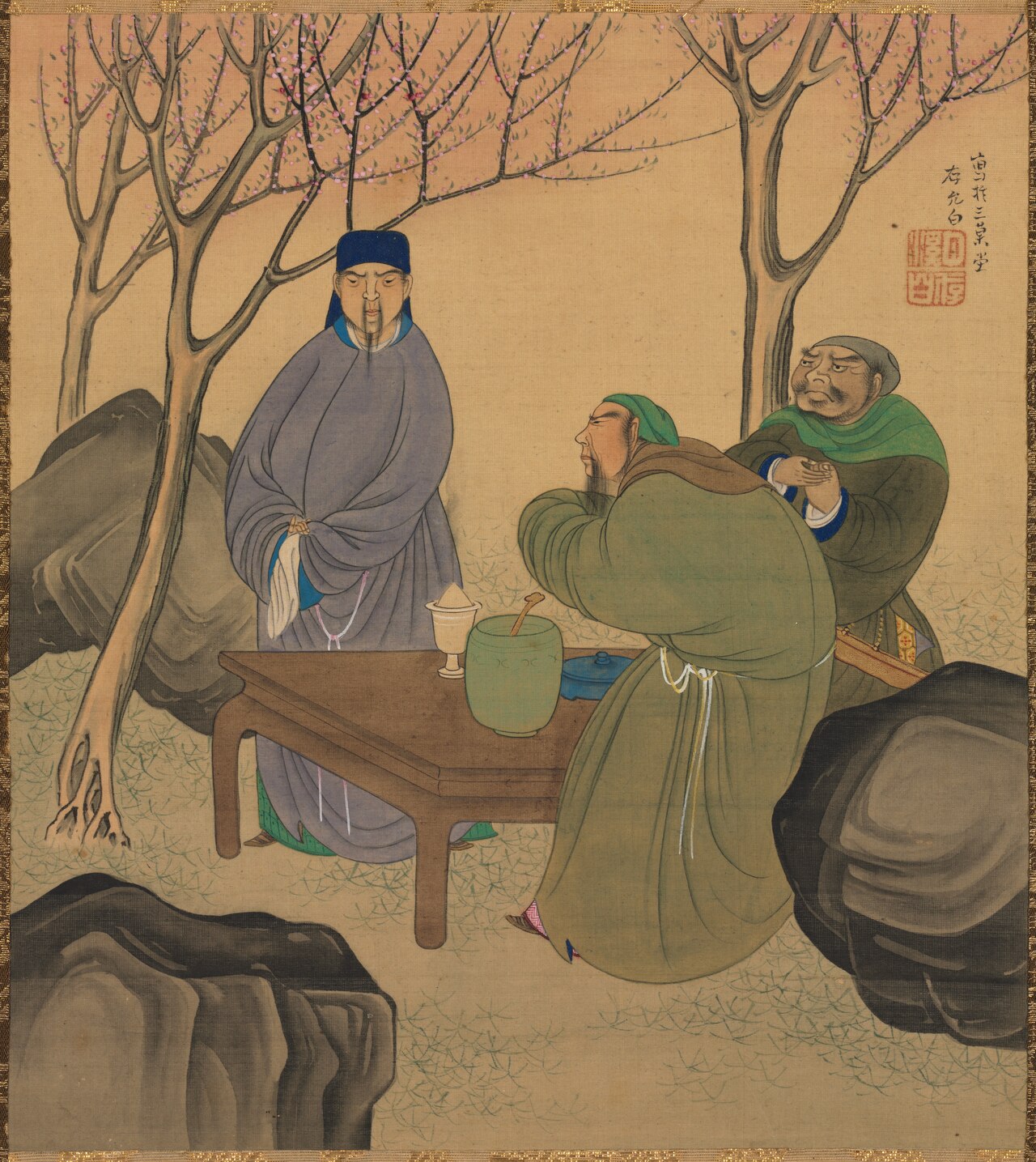
Early life Matsumura Goshun was born in 1752 in Heian‑kyō, the historic name for Kyoto, Japan. Little is recorded about his family background, but it is known that he entered the artistic world at a young age, receiving his first training in the native painting traditions that flourished in the capital. In his teens he became a disciple of the celebrated poet‑painter Yosa Buson, a master of the Southern School (Nanga) style that emphasized Chinese literati ideals. Under Buson’s mentorship Goshun absorbed the principles of spontaneity, poetic expression, and a reverence for classical Chinese poetry, which would later shape his own artistic philosophy.
Career and style After Buson’s death in 1784, Goshun emerged as an independent artist and began to develop a distinctive aesthetic that departed from the strict conventions of the Nanga school. He founded the Shijō school (named after the Shijō‑dōri district of Kyoto where his workshop was located), which sought to harmonise the delicate brushwork of Chinese literati painting with the more realistic, colour‑rich approach of the native Kano school. The Shijō style is characterised by its naturalistic observation of everyday subjects—landscapes, flora, and genre scenes—rendered with a restrained palette and an emphasis on atmosphere rather than elaborate detail.
Goshun’s career unfolded during a period of cultural vibrancy in Edo‑period Japan, when the merchant class increasingly patronised the arts. He enjoyed the support of both aristocratic collectors and the burgeoning urban audience, allowing him to produce a prolific body of work that spanned ink paintings, silk scrolls, and decorative screens. Throughout his career Goshun remained committed to the poetic sensibility inherited from Buson, often incorporating verses or literary allusions into his compositions.
Signature techniques Goshun’s technique is distinguished by several recurring elements:
1. Economy of brushstroke – He employed swift, confident strokes to suggest form, especially in foliage and rock textures, echoing the Chinese literati emphasis on spontaneity. 2. Subtle colour modulation – Unlike the bold pigments of the Kano school, Goshun preferred muted washes of ink and light colour, allowing the composition’s tonal balance to convey depth. 3. Atmospheric perspective – By varying ink density and using delicate gradations, he created a sense of distance and mist, particularly in his landscapes. 4. Integration of poetry – Many of his works feature calligraphic inscriptions or are directly inspired by classical texts, reinforcing the unity of visual and literary art. 5. Balanced composition – Goshun arranged elements asymmetrically but with careful attention to visual rhythm, often leaving empty space to evoke contemplation.
These techniques combined to produce paintings that feel both intimate and expansive, inviting viewers to contemplate the natural world through a poetic lens.
Major works The following works exemplify Goshun’s artistic range and his contribution to the Shijō school:
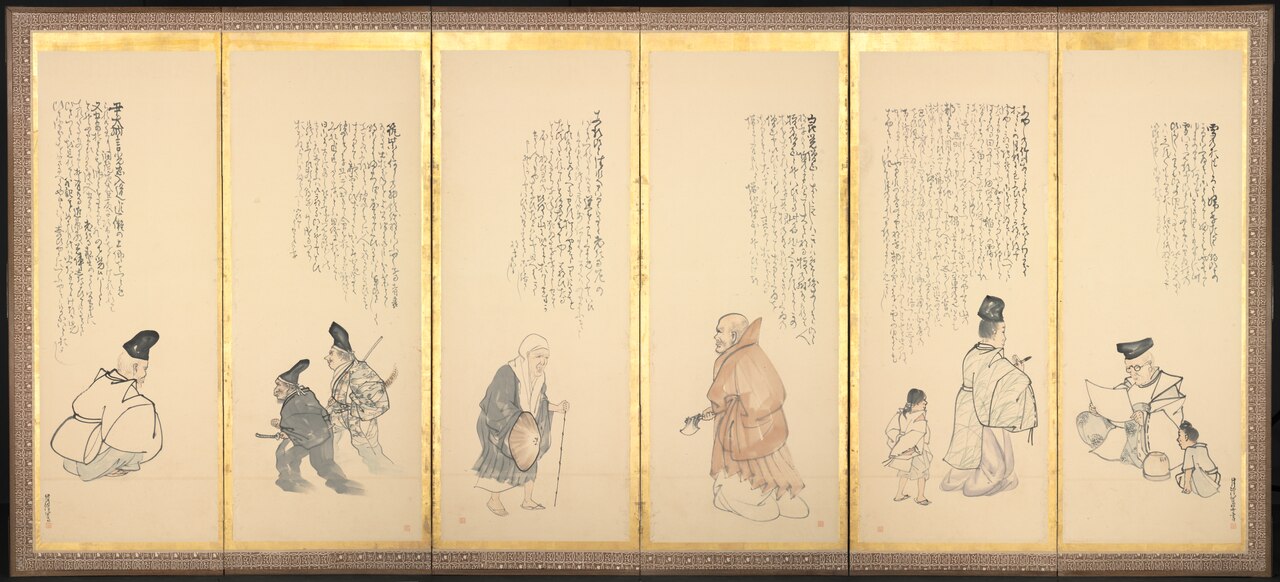
- Scenes from Essays in Idleness (1795) – A series of ink paintings illustrating passages from the classic Japanese collection of aphorisms *Tsurezuregusa*. Goshun interprets the text’s contemplative tone through muted landscapes and solitary figures, each vignette serving as a visual meditation on the essay’s themes.
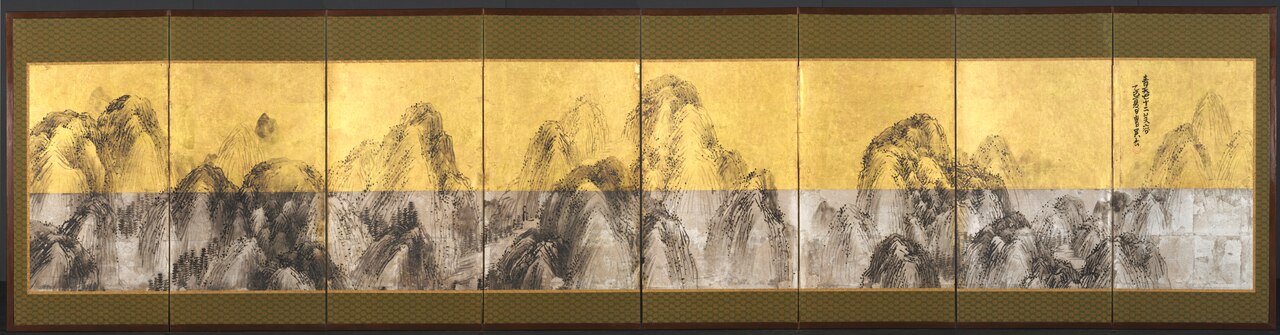
- Seventy‑two Peaks Against the Blue Sky (1785) – This ambitious landscape scroll depicts a sweeping vista of mountains rendered in delicate ink washes. The composition’s rhythmic repetition of peaks creates a sense of monumental scale while maintaining the subtlety characteristic of Goshun’s brushwork.
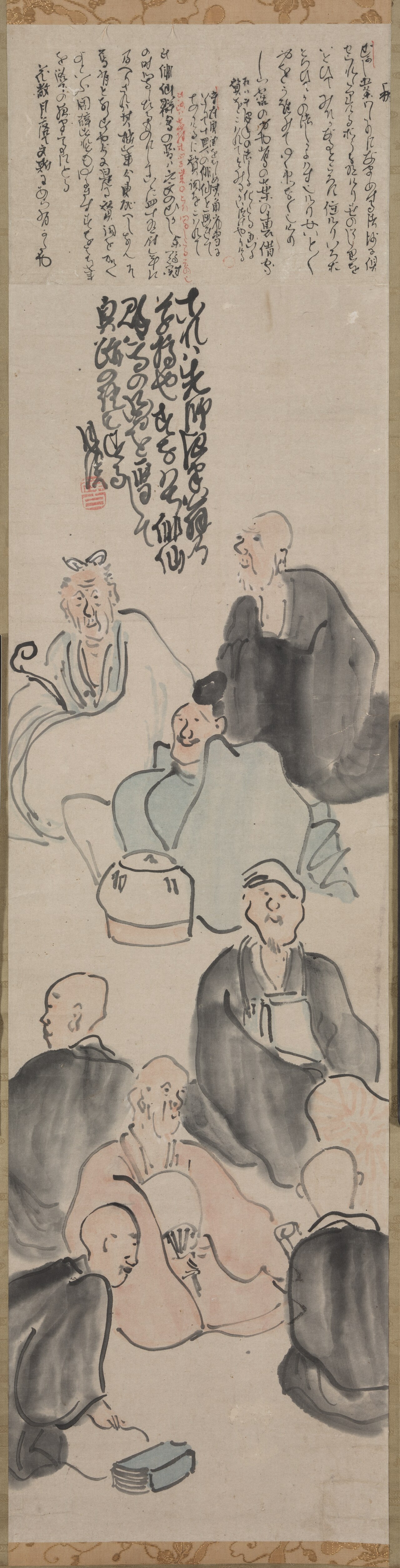
- A Poetic Gathering (1793) – In this genre scene, a group of scholars is shown engaged in poetry recitation beneath a blossoming tree. The work blends narrative detail with atmospheric mist, highlighting Goshun’s skill at portraying both human interaction and natural ambience.
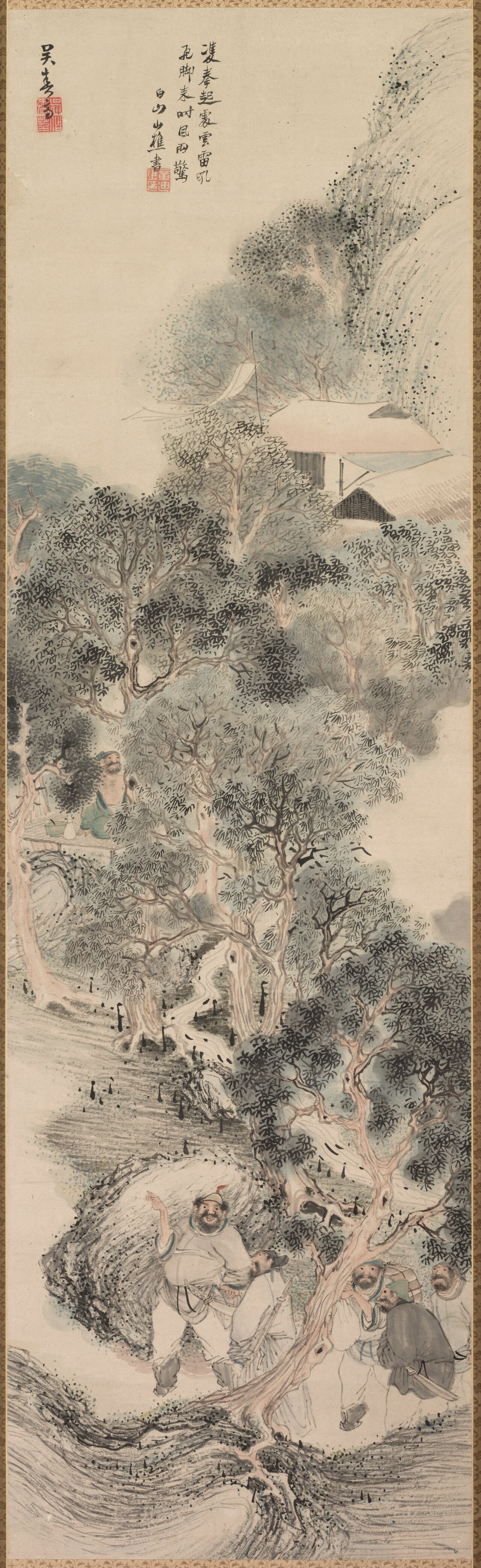
- Water Margin Bandits (1793) – Drawing on the Chinese novel *Shuihu Zhuan* (Water Margin), Goshun presents a dynamic tableau of outlaw heroes amidst a rugged landscape. The figures are rendered with fluid lines, and the composition balances action with the tranquil surroundings typical of his style.
- Romance of the Three Kingdoms (1849) – Although dated after Goshun’s death, this work is understood to be based on earlier sketches and designs he produced. Later publishers compiled his studies of the historic Chinese saga into a series of prints, preserving his interpretation of the legendary battles and characters.
These pieces illustrate Goshun’s versatility—from literary illustration to expansive landscapes—while consistently reflecting the Shijō school’s emphasis on naturalism and poetic resonance.
Influence and legacy Matsumura Goshun’s establishment of the Shijō school marked a turning point in Japanese painting, offering an alternative to the dominant Kano aesthetic. His synthesis of Chinese literati ideals with Japanese realism influenced a generation of artists, including his own students such as Kamo Keisen and Yamamoto Kansui, who carried forward the school’s principles.
The Shijō style persisted well into the Meiji period, informing both traditional painting and early modern Japanese art. Goshun’s emphasis on atmospheric subtlety and literary integration resonated with later movements that sought to balance Western techniques with native traditions. Contemporary scholars view Goshun as a pivotal figure who negotiated cultural exchange, and his works remain central to exhibitions on Edo‑period art.
Today, his paintings are held in major museum collections worldwide, and his legacy endures in the continued study of Japanese ink painting. The Shijō school’s approach to composition and brushwork continues to inspire artists who value the marriage of visual beauty and poetic meaning.
Frequently asked questions
Who was Matsumura Goshun?
Matsumura Goshun (1752–1811) was a Japanese Edo‑period painter who founded the Shijō school, merging Chinese literati influences with Japanese naturalistic techniques.
What artistic movement is he associated with?
He is the founder of the Shijō school, a style that blends the Southern School (Nanga) brushwork with the realistic colour and composition of the Kano tradition.
What are his most famous works?
Key works include *Scenes from Essays in Idleness* (1795), *Seventy‑two Peaks Against the Blue Sky* (1785), *A Poetic Gathering* (1793), *Water Margin Bandits* (1793) and the posthumously compiled *Romance of the Three Kingdoms* series.
Why does Goshun matter in art history?
He created a lasting school that offered an alternative to dominant styles, influencing subsequent generations and shaping the development of modern Japanese painting.
How can I recognise a Matsumura Goshun painting?
Look for delicate ink washes, restrained colour, atmospheric mist, balanced yet asymmetrical compositions, and often the inclusion of poetic or literary references.