Mathys Schoevaerdts
1660 – 1703
In short
Mathys Schoevaerdts (1660–1703) was a Flemish painter, draughtsman and printmaker from Brussels, noted for his lively genre scenes and landscapes that blend the detailed tradition of Jan Brueghel the Elder with later Italianate influences.
Notable works
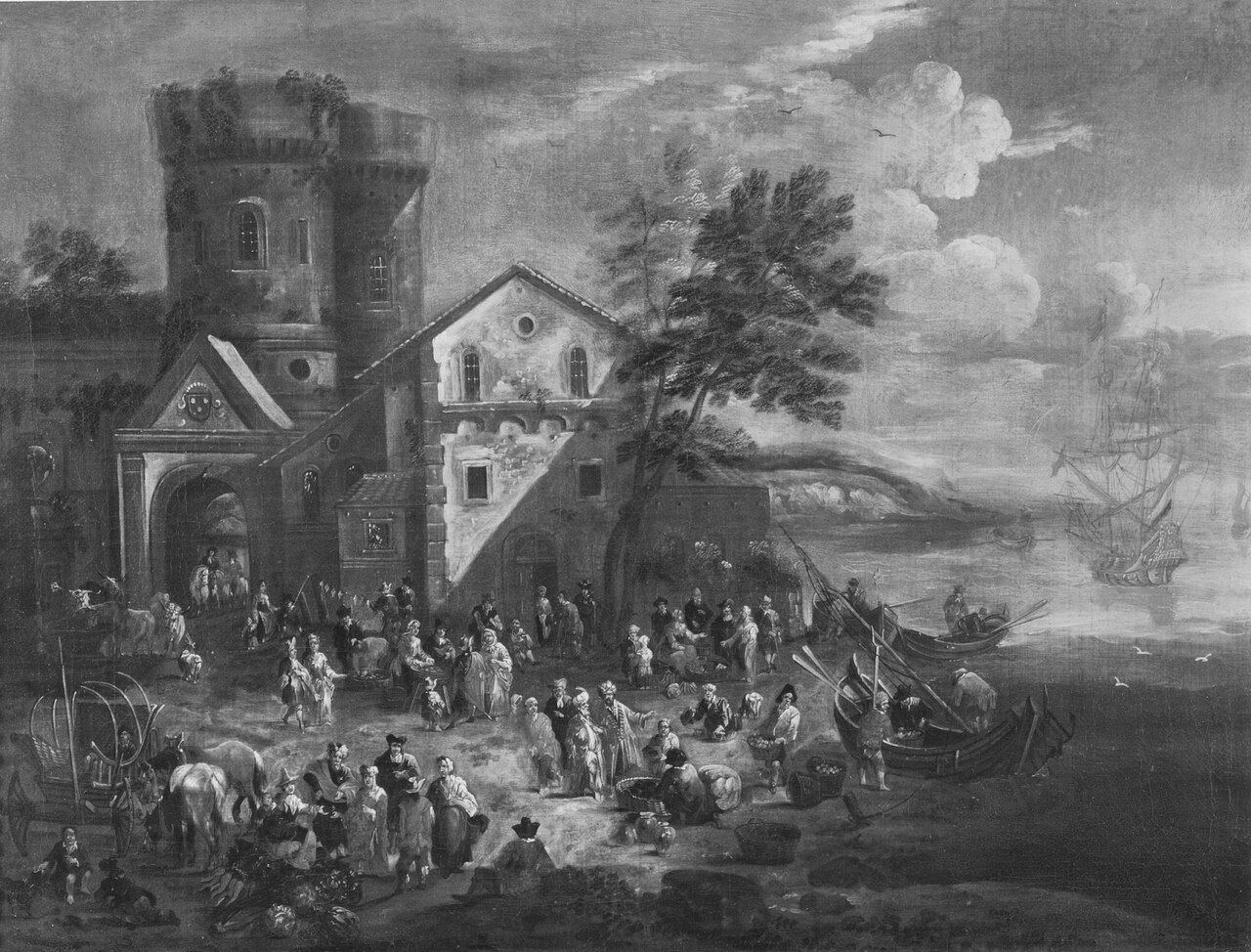
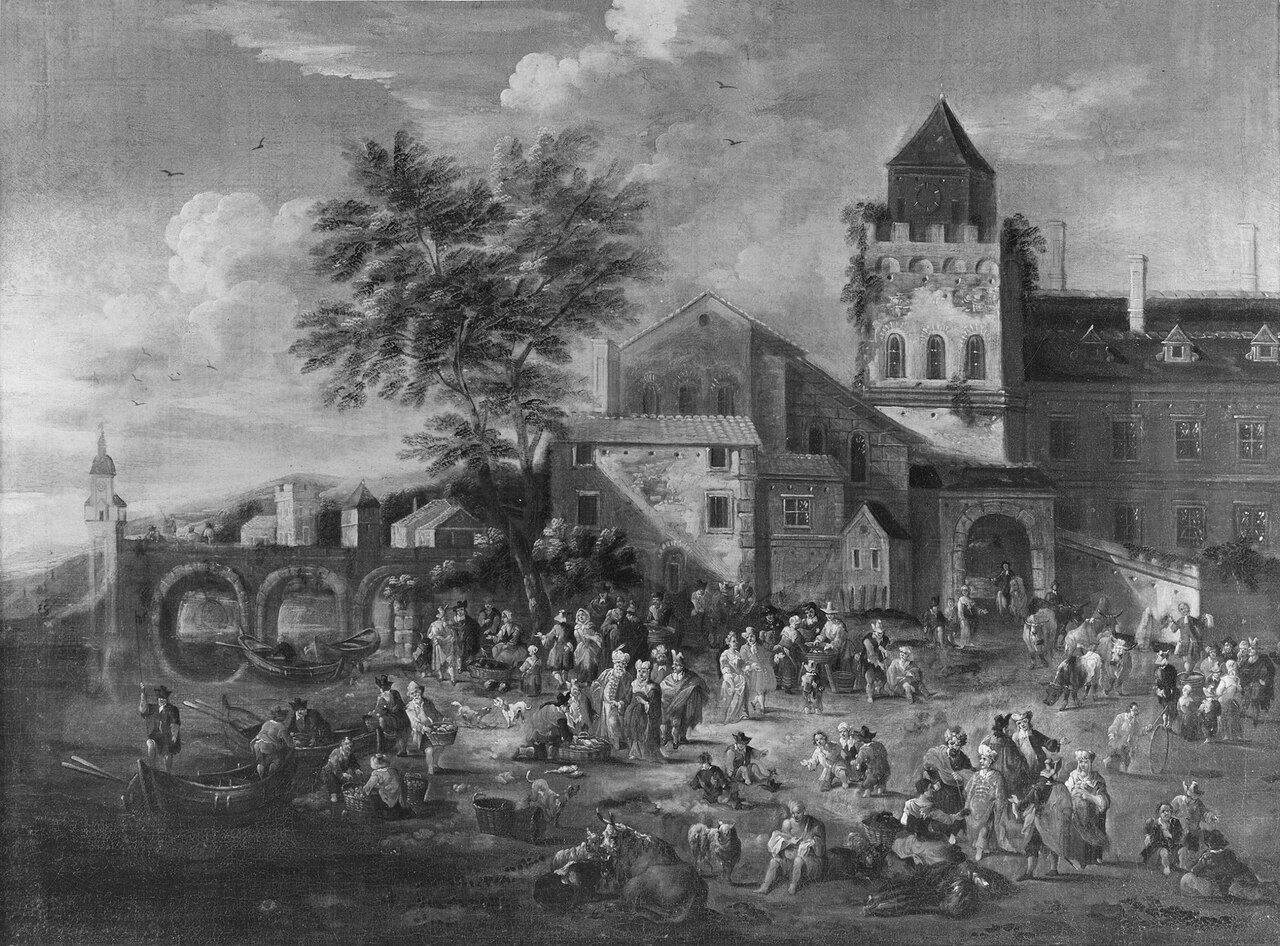
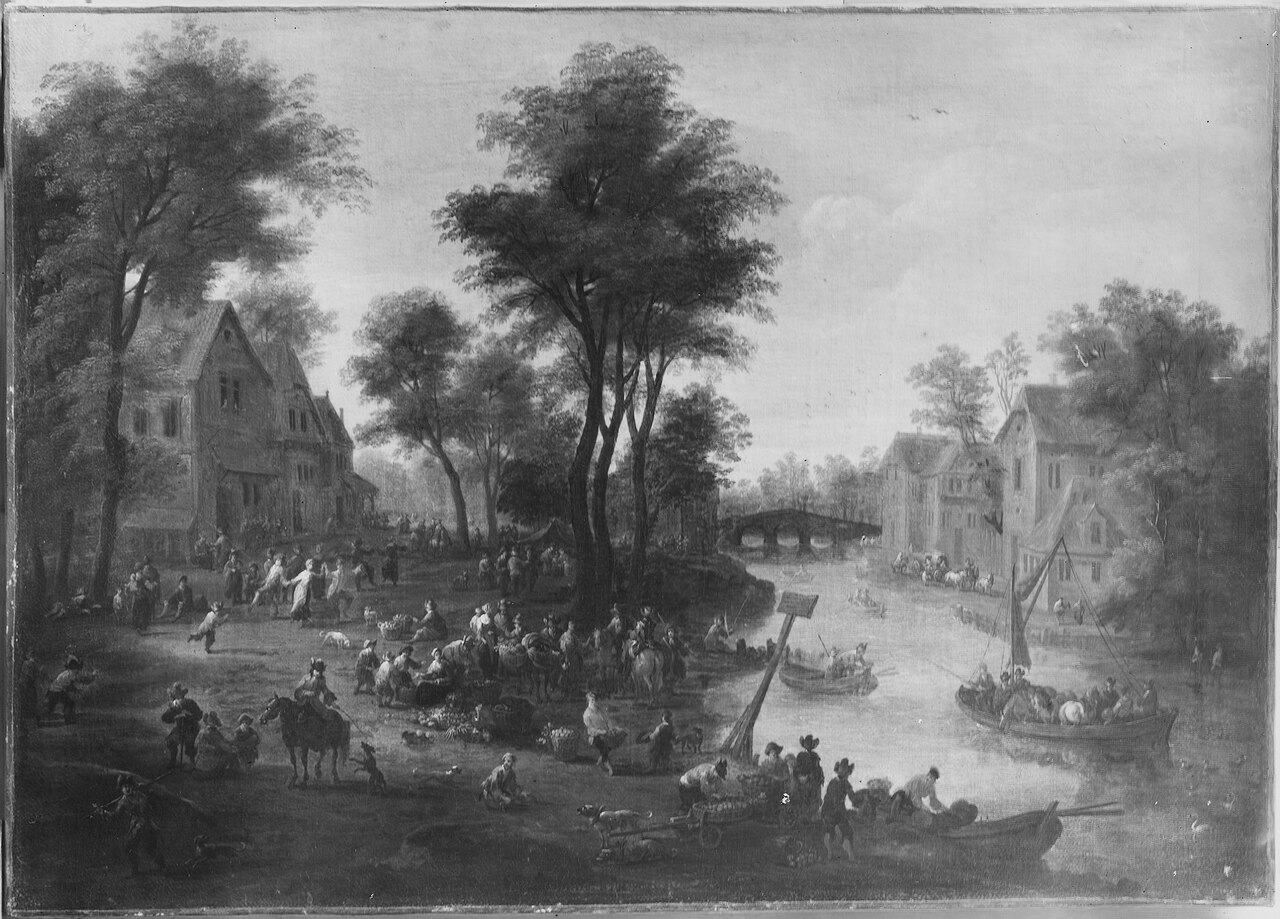
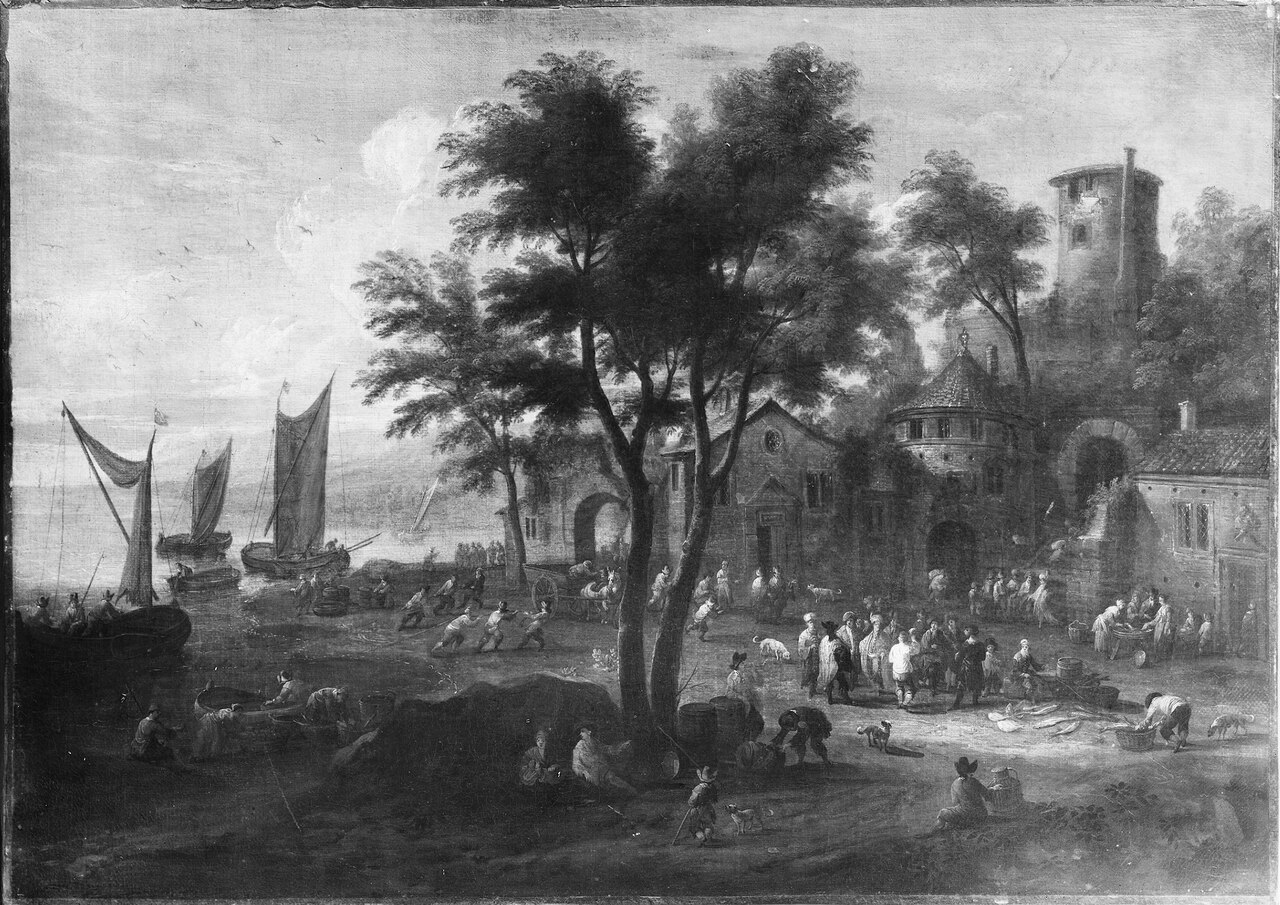

Early life Mathys Schoevaerdts was born in 1660 in Brussels, a major centre of artistic activity in the Habsburg Netherlands. Little is documented about his family background or formal apprenticeship, but his early exposure to the vibrant market and civic life of Brussels would later provide the subject matter for many of his paintings. The city’s artistic climate, dominated by the legacy of the Bruegel and Brueghel families, offered a fertile ground for a young artist to develop a keen eye for detail and a taste for bustling genre scenes.
Career and style Schoevaerdts began his professional career in the 1680s, working primarily as a painter of small‑scale landscapes and genre subjects. His early output closely follows the meticulous, decorative style of Jan Brueghel the Elder, characterised by a careful rendering of foliage, architecture, and everyday activity. By the mid‑1690s, he had absorbed influences from Italianate landscape painters, evident in broader compositional structures, a warmer colour palette, and a more atmospheric treatment of light. This hybrid style allowed him to depict both the ordered elegance of Flemish townscapes and the more expansive, lyrical qualities of Mediterranean scenery, even when the subject remained a local market or fair.
Signature techniques Schoevaerdts’s technique is distinguished by several recurring elements. He employed a fine, almost stippled brushwork to model foliage, giving trees a textured, three‑dimensional presence. In his water‑based media, he used delicate washes to suggest depth, while his oil paintings often feature a thin glaze that enhances the luminosity of sky and water. A hallmark of his compositions is the inclusion of numerous, well‑observed figures engaged in trade, conversation, or leisure, each rendered with individualized gestures that convey a narrative moment. His prints, largely executed in etching, replicate this attention to detail, employing cross‑hatching to suggest shadow and texture.
Major works Among Schoevaerdts’s most frequently cited canvases are a series of market scenes that illustrate his skill at combining architectural precision with human activity. **"Market Place near a Town Gate"** portrays a bustling square framed by a fortified gate; merchants display textiles and produce while townspeople mingle, all rendered with a crisp delineation of stonework and a subtle atmospheric perspective. **"Market Square in a Town"** expands the view to a broader civic space, emphasizing the rhythmic arrangement of stalls and the interplay of light across cobblestones. In **"Fruit Market near a River"**, Schoevaerdts introduces a water element, using reflective surfaces to heighten the sense of space and to showcase his ability to render both fruit and rippling water with equal fidelity. **"Fish Market near a Coast Town"** moves the setting to a maritime context, where the salty air and distant ships are suggested through muted blues and the gentle tilt of the horizon. Finally, **"Peasant Fair"** captures a rural celebration, juxtaposing rustic dwellings with a lively crowd, highlighting the artist’s interest in social variety and the festive aspects of daily life. Each of these works demonstrates his capacity to blend genre narrative with landscape, creating scenes that are both documentary and idealised.
Influence and legacy Although Mathys Schoevaerdts never achieved the fame of his more celebrated Flemish contemporaries, his oeuvre offers valuable insight into the transitional period between the high Baroque of the Brueghel workshop and the emerging taste for Italianate landscape in the Low Countries. His paintings and prints were collected by local patrons and occasionally exported to neighbouring regions, contributing to the diffusion of a hybrid Flemish‑Italian aesthetic. Modern scholarship recognises Schoevaerdts as a competent, if under‑documented, practitioner whose works enrich the visual record of late‑seventeenth‑century urban and rural life. His paintings continue to appear in exhibitions focusing on genre painting and the cross‑cultural influences that shaped Northern European art at the turn of the eighteenth century.
Frequently asked questions
Who was Mathys Schoevaerdts?
Mathys Schoevaerdts was a Flemish painter, draughtsman and printmaker (1660–1703) from Brussels, known for his detailed genre scenes and landscapes.
What artistic style or movement is he associated with?
He worked within the Flemish Baroque tradition, initially echoing Jan Brueghel the Elder’s detailed style and later incorporating Italianate landscape influences.
What are his most famous works?
His best‑known paintings include "Market Place near a Town Gate", "Market Square in a Town", "Fruit Market near a River", "Fish Market near a Coast Town" and "Peasant Fair".
Why is Mathys Schoevaerdts important in art history?
He illustrates the stylistic transition from the dense Flemish Baroque to a more atmospheric Italianate approach, providing a visual record of late‑17th‑century urban and rural life.
How can I recognise a Schoevaerdts painting?
Look for finely rendered foliage, numerous active figures, clear architectural detail, and a subtle use of light that balances detailed foregrounds with atmospheric backgrounds.