Master of the Legend of the Magdalene
1480 – 1537
In short
The Master of the Legend of the Magdalene was an anonymous Early Netherlandish painter active in the Habsburg Netherlands between the late 15th and early 16th centuries. Known for religious panels and donor portraits, his work reflects the influence of Rogier van der Weyden and Bernard van Orley.
Notable works


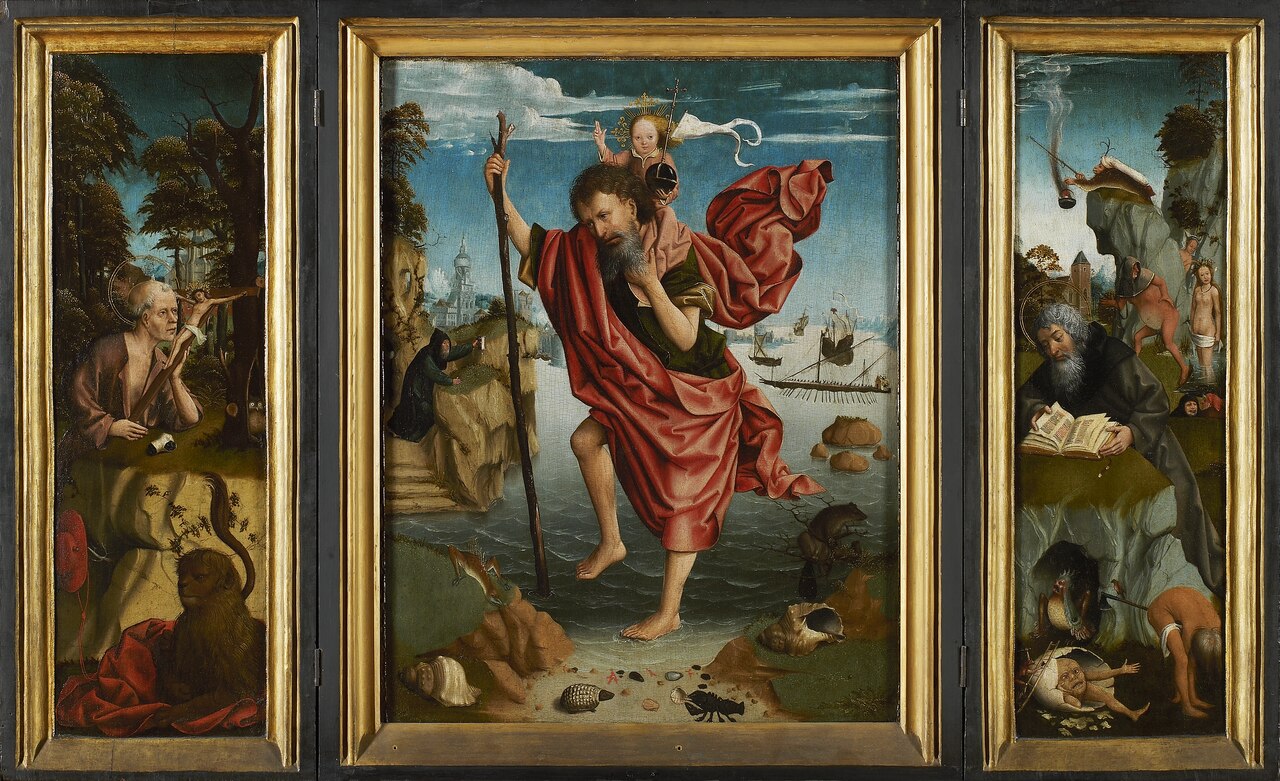

Early life The Master of the Legend of the Magdalene remains an unidentified individual, and no documentary evidence records his birth or family background. Art historians place his activity between the early 1480s and the mid‑1520s, a period that coincides with the flourishing of Early Netherlandish painting in the Habsburg Netherlands. The notname was coined by Max Friedländer after a dispersed polyptych depicting scenes from the life of Mary Magdalene, which provided the first clear reference point for attributing a body of work to a single hand.
Career and style The Master worked primarily for ecclesiastical patrons and private donors, producing altarpieces, devotional panels and portraiture. His style is firmly rooted in the tradition of Rogier van der Weyden, evident in the solemnity of his figures, the careful modelling of drapery and the measured compositional balance. At the same time, he absorbed contemporary developments introduced by Bernard van Orley, whose exposure to Italian Renaissance motifs introduced a subtle dynamism and more elaborate spatial constructions. The result is a hybrid style that respects the established Netherlandish visual vocabulary while allowing for modest innovations in colour, perspective and narrative detail.
Signature techniques Several technical hallmarks help scholars recognise works by the Master. First, his palette often combines deep, saturated blues and reds with luminous, almost translucent flesh tones, creating a striking contrast between the divine and the earthly. Second, the painter favours a finely detailed surface treatment, rendering textures such as velvet, fur and metal with a tactile realism that recalls van der Weyden’s attention to materiality. Third, the facial types are characterised by elongated noses, narrow eyes and a calm, introspective expression; these features recur across donor portraits and saintly figures alike. Finally, the composition frequently employs a central vertical axis that anchors the Virgin or Christ figure, flanked by symmetrical subsidiary figures or architectural elements, a layout that reinforces the devotional focus of the piece.
Major works The oeuvre attributed to the Master includes a number of documented panels that illustrate his range.
* Diptych: "Virgin and Child" and "Portrait of Willem van Bibaut" (c. 1530) – This paired work demonstrates the Master’s skill in both sacred imagery and portraiture. The "Virgin and Child" panel shows the Madonna seated on a richly embroidered throne, her gaze directed toward the infant, while the companion portrait presents the donor, Willem van Bibaut, in contemporary attire, his hands clasped in prayer. The harmonious colour scheme links the two panels, suggesting they were intended for private devotion.
* Madonna Nursing the Christ Child (attributed, c. 1450) – Although the date precedes the artist’s known active period, scholars treat this panel as a later copy or an early work by a workshop associated with the Master. The tender interaction between mother and child reflects the emotive qualities typical of his devotional pieces, and the delicate handling of light on the infant’s skin is characteristic of his technique.
* The Virgin and Child (c. 1520) – This single‑panel altarpiece underscores the Master’s mature style. The Virgin is depicted within an elaborate architectural niche, her mantle rendered in deep ultramarine, while the Christ Child reaches toward a golden crucifix. The background features a faint landscape, a modest nod to the emerging interest in naturalistic space.
* Triptych of St Christopher (c. 1510) – In this work the central panel portrays the saint bearing the Christ Child across a turbulent sea, a motif popular in Netherlandish art. The side panels contain donor portraits, allowing the Master to showcase his ability to integrate narrative and portraiture. The vigorous brushwork on the water and the dramatic chiaroscuro set this piece apart from his more conservative compositions.
* Triptych Madonna and Child with Saints Catherine and Barbara (c. 1500) – This early triptych displays the Virgin and Child flanked by the two saints, each identifiable by their traditional attributes (the wheel of Saint Catherine and the tower of Saint Barbara). The composition is balanced, with a subdued colour palette that emphasizes the spiritual serenity of the scene. The saints’ garments are rendered with meticulous attention to pattern, reflecting the Master’s interest in textile representation.
Influence and legacy Although the Master of the Legend of the Magdalene never achieved the fame of contemporaries such as Jan van Eyck or Rogier van der Weyden, his work contributed to the continuity of the Early Netherlandish tradition at a time of transition. By synthesising the devotional intensity of the 15th‑century masters with the subtle innovations of Bernard van Orley, he helped bridge the gap between the medieval iconographic framework and the more humanist concerns that would dominate later Renaissance painting in the Low Countries. His panels were widely disseminated through ecclesiastical commissions and private devotion, influencing lesser‑known workshop practices and providing a visual template for subsequent generations of Flemish painters who sought to balance reverence with approachable realism.
The Master’s anonymity also underscores the collaborative nature of workshop production in the period. Attributions remain provisional, and ongoing technical analysis—particularly infrared reflectography and pigment studies—continues to refine our understanding of his hand. Nonetheless, the distinct combination of colour, texture and compositional balance that marks his surviving works offers a reliable basis for recognising his contributions to the rich tapestry of Early Netherlandish art.
Frequently asked questions
Who was the Master of the Legend of the Magdalene?
He was an anonymous Early Netherlandish painter active in the Habsburg Netherlands between roughly 1480 and 1537, known for religious panels and donor portraits.
What artistic movement or style is he associated with?
His work belongs to the Early Netherlandish painting tradition, blending the solemnity of Rogier van der Weyden with subtle influences from Bernard van Orley’s more progressive style.
What are his most famous works?
Key works include the diptych "Virgin and Child" and "Portrait of Willem van Bibaut" (c. 1530), the Triptych of St Christopher (c. 1510), and the Triptych Madonna and Child with Saints Catherine and Barbara (c. 1500).
Why does he matter in art history?
He represents a transitional figure who helped sustain the Early Netherlandish aesthetic while incorporating modest innovations, influencing later Flemish painters and preserving the devotional visual language of his era.
How can I recognise a painting by the Master of the Legend of the Magdalene?
Look for a muted yet rich colour palette, finely rendered textures, elongated facial types, and compositions centered on a vertical axis that often feature a Virgin‑Christ pair flanked by symmetrical figures or donor portraits.