Master of the Legend of Saint Catherine
In short
The Master of the Legend of Saint Catherine is an anonymous Early Netherlandish painter active in the late 15th century, probably around Brussels in the Habsburg Netherlands. He is known for richly detailed religious panels such as the Episodes from the Life of Saint Catherine (1487) and a series of altarpieces that combine vivid colour with meticulous modelling.
Notable works



Early life The artist identified today as the Master of the Legend of Saint Catherine remains a figure of mystery. No documentary evidence records his birth, family background, or formal training, and his actual name has never been recovered. Scholarship places his activity in the latter half of the 15th century, roughly between 1470 and 1500, within the cultural sphere of the Habsburg Netherlands. The region’s artistic centres—particularly Brussels, which served as a hub for court commissions and guild activity—provide the most plausible setting for his workshop. Although the precise circumstances of his apprenticeship are unknown, the stylistic affinities of his work suggest exposure to the leading Early Netherlandish masters, such as Rogier van der Weyden and Jan van Eyck, whose techniques dominated the local visual language.
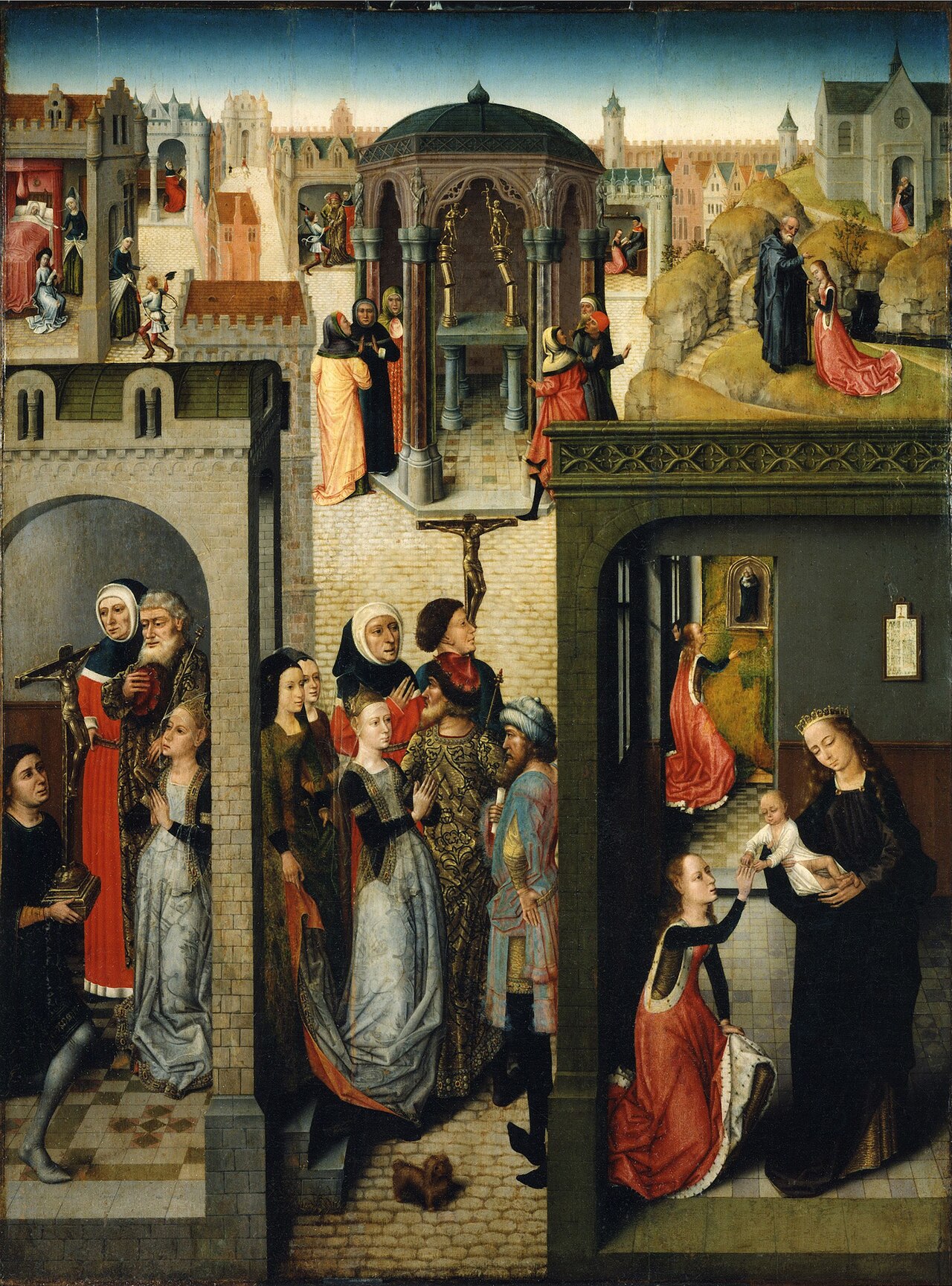
Career and style The Master’s oeuvre is characterised by a synthesis of the devotional intensity of the early Netherlandish tradition with a burgeoning interest in narrative complexity. His panels often combine multiple scenes within a single composition, a device that allows the viewer to follow a saint’s life or a biblical episode in a seamless visual flow. The colour palette is typically rich yet restrained, favouring deep blues, reds, and golds that enhance the sanctity of the subjects while maintaining a naturalistic rendering of fabrics and skin. Light is deployed with subtle gradations, modelling forms in a way that recalls the chiaroscuro of van der Weyden but with a distinct softness that softens the overall effect.
The artist’s iconography aligns closely with the devotional practices of the period, especially the veneration of saints and the celebration of liturgical events. In many of his works, donors are incorporated into the sacred narrative, reflecting the patronage patterns of the time where private devotion and public display intersected. This integration of contemporary figures into holy scenes underscores the Master’s awareness of the social function of art in the late medieval Netherlands.
Signature techniques Several technical hallmarks allow scholars to attribute works to the Master of the Legend of Saint Catherine. First, his handling of grisaille—monochrome painting that imitates sculpture—is evident in the closed shutters of the Descent from the Cross altarpiece, where the Annunciation is rendered in a muted palette that emphasises form over colour. Second, the artist’s meticulous attention to the texture of textiles, especially the intricate brocades and velvets of liturgical vestments, demonstrates a mastery of oil glazing that creates luminous depth. Third, his use of delicate, almost ethereal, facial modelling—particularly the gentle modelling of eyes and lips—creates a serene, contemplative quality across his figures. Finally, the compositional arrangement often employs a central vertical axis that anchors the narrative, while subsidiary scenes are placed in the surrounding registers, a layout that facilitates both liturgical focus and narrative expansion.
Major works - **Episodes from the Life of Saint Catherine (1487)** – This multi‑panel work, which gave the Master his notname, depicts key moments from the martyrdom of Saint Catherine. The scenes are linked by a consistent visual language: the saint is portrayed with a crown and a wheel, symbols of her legend, rendered in vivid colour that contrasts with the muted backgrounds. The composition demonstrates the artist’s skill in integrating multiple episodes within a coherent spatial framework.
- Altarpiece of the Descent from the Cross (1487) – The altarpiece consists of three shutters. The left shutter presents a donor kneeling with Saint Jerome; the right shutter shows the Resurrection; when closed, the central panel reveals an Annunciation in grisaille. The use of grisaille on the closed view showcases the Master’s ability to simulate sculptural relief, while the open shutters reveal a vibrant colour scheme that accentuates the drama of the descent and the triumph of the Resurrection.
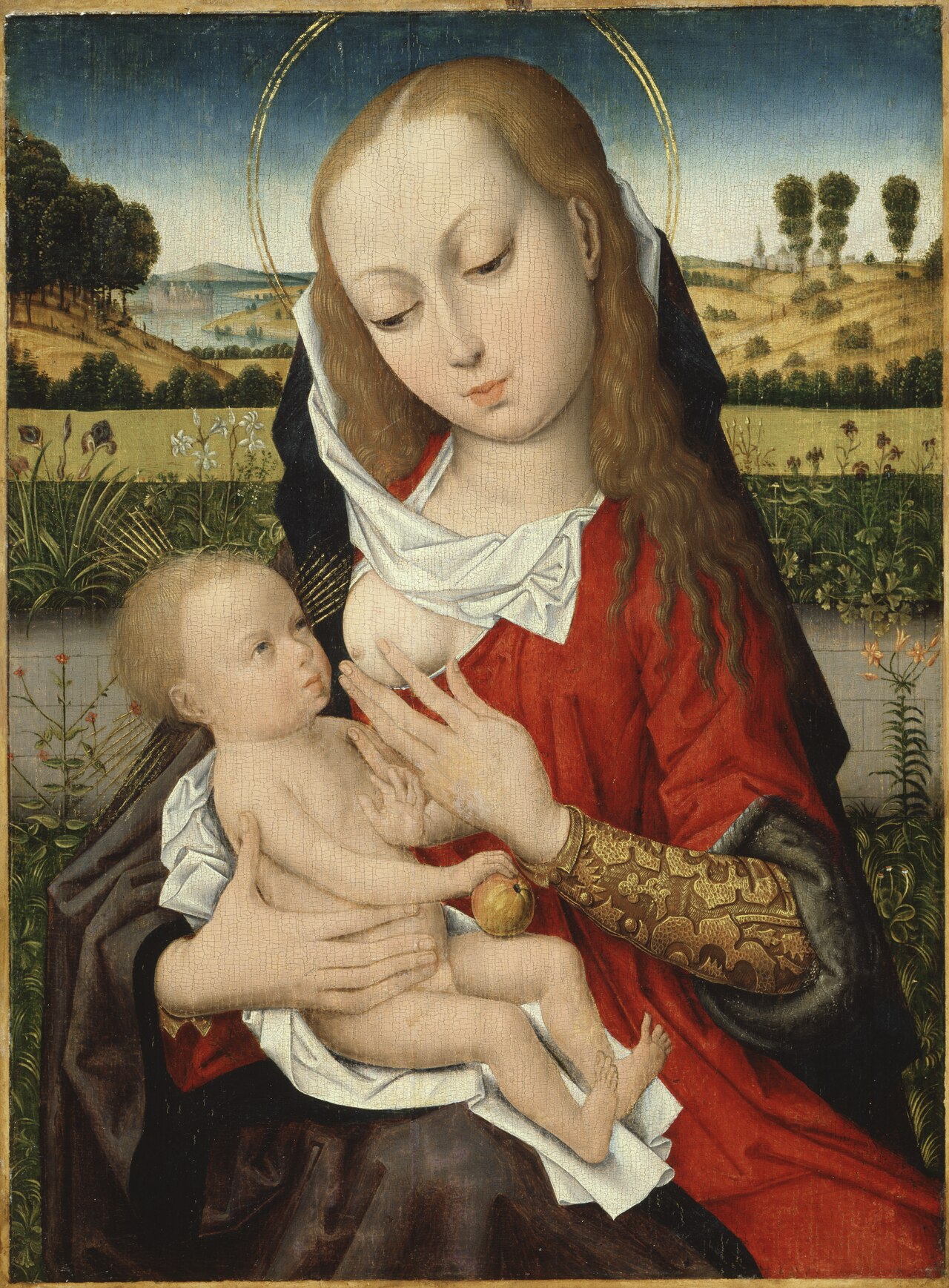
- Madonna and Child (1474) – One of the earliest securely attributed works, this panel presents the Virgin enthroned with the infant Christ, surrounded by a delicate halo of gold leaf. The tender interaction between mother and child, coupled with the fine rendering of the Virgin’s veil, exemplifies the Master’s capacity for intimate devotional imagery.
- Saint Michael; The Mass of Saint Gregory; Saint Jerome (1490) – This trio of panels reflects the artist’s continued engagement with saintly subjects. Saint Michael is depicted in a dynamic pose, sword raised, while the Mass of Saint Gregory captures a miraculous vision of Christ appearing on the altar. Saint Jerome is shown in a scholarly pose, his study filled with books and a lion, highlighting the Master’s narrative versatility.
- Triptych of the Last Supper (1480) – The central panel illustrates the Last Supper with Christ and the apostles seated around a long table, rendered with careful attention to perspective and individual expression. Flanking panels likely contained complementary saints, though they are now lost. The triptych exemplifies the Master’s ability to balance monumental religious themes with intricate human detail.
Influence and legacy Although the Master of the Legend of Saint Catherine left no signed works, his paintings contributed to the diffusion of Early Netherlandish visual culture across the Habsburg territories. His integration of donor portraits within sacred narratives anticipated later developments in the Northern Renaissance, where personal piety and public display became increasingly intertwined. The subtle handling of light and texture in his panels influenced contemporaneous workshops in Brussels, encouraging a move toward more atmospheric and emotionally resonant depictions.
Modern scholarship continues to refine the attribution of works to his hand, employing technical analysis such as infrared reflectography and pigment testing to confirm stylistic consistencies. The Master’s oeuvre provides valuable insight into the transitional period between the height of the early Netherlandish tradition and the emergence of more individualistic approaches that characterised the 16th‑century Flemish painting. By preserving a distinct visual language that bridges narrative complexity with devotional intimacy, the Master of the Legend of Saint Catherine remains a key figure for understanding the artistic currents of late medieval Holland.
--- In sum, the Master of the Legend of Saint Catherine stands as an emblem of the anonymous yet highly skilled artists who shaped the visual culture of the Habsburg Netherlands. His surviving panels, marked by refined technique and rich iconography, continue to inform both scholars and the wider public about the rich tapestry of Early Netherlandish art.
Frequently asked questions
Who was the Master of the Legend of Saint Catherine?
He was an anonymous Early Netherlandish painter active in the late 15th century, probably around Brussels in the Habsburg Netherlands.
What artistic style or movement is he associated with?
He worked within the Early Netherlandish painting tradition, blending detailed realism with devotional narrative.
What are his most famous works?
Key works include Episodes from the Life of Saint Catherine (1487), the Descent from the Cross altarpiece with its grisaille Annunciation, Madonna and Child (1474), and the Triptych of the Last Supper (1480).
Why is he important in art history?
His paintings illustrate the transition from the high‑point of Early Netherlandish art to later Flemish styles, and they exemplify the integration of donor portraiture with sacred narrative.
How can I recognise a work by the Master of the Legend of Saint Catherine?
Look for finely glazed textiles, soft facial modelling, a balanced vertical composition, and occasional use of grisaille to mimic sculpture, especially in altarpiece shutters.