Maarten Pepyn
1575 – 1643
In short
Maarten Pepyn (1575–1643) was a Flemish painter from Antwerp who specialised in large‑scale history paintings and, to a lesser extent, smaller genre scenes. He worked mainly for local religious institutions and guilds, producing works such as Simeon in the Temple and the Altarpiece of the Guild of Saint Luke.
Notable works

_-_Saint_Luke_preaches_to_the_crowd.jpg)

Early life Maarten Pepyn was born in Antwerp in 1575, a city that was then part of the Habsburg Netherlands and a thriving centre of artistic production. Little is known of his family background, but contemporary records indicate that he most likely received his initial training within the city's vibrant workshop system. Antwerp’s guild structure, especially the Guild of Saint Luke, regulated artistic apprenticeships, and Pepyn would have been required to complete an apprenticeship before attaining master status. The city’s artistic climate during his formative years was dominated by the legacy of the late‑Renaissance masters and the emerging Baroque style, providing a fertile environment for a young painter to develop a taste for narrative and religious subjects.
Career and style Pepyn’s professional career unfolded almost entirely in Antwerp, where he established himself as a painter of large‑scale religious and historical compositions. His work reflects the transitional aesthetic of the early 17th century, bridging the meticulous compositional logic of the late Renaissance with the emerging dynamism of the Baroque. While he never achieved the fame of contemporaries such as Peter Paul Rubens, Pepyn’s paintings demonstrate a solid grasp of anatomical rendering, spatial organization, and a restrained colour palette that favours earth tones and muted blues. He favoured a sober, almost didactic approach to narrative, emphasizing clarity of story over dramatic theatricality.
Pepyn’s output includes both monumental altarpieces for churches and guild halls and smaller genre scenes that were likely intended for private devotion or the domestic market. The larger works were typically executed on canvas or wood panels, often commissioned by ecclesiastical bodies or civic organisations. His style shows the influence of earlier Antwerp masters, notably the emphasis on linear perspective and balanced groupings, while also adopting a subtle chiaroscuro that hints at the Baroque sensibility developing in the region.
Signature techniques Pepyn’s paintings are characterised by several recurring technical choices. First, he employed a clear, structured composition in which figures are arranged in tiered groups, guiding the viewer’s eye through the narrative. He often used a limited, harmonious colour scheme, allowing the emphasis to fall on the subject matter rather than on flamboyant decoration. Second, his handling of light is measured; illumination typically comes from an implied source above or to the side, creating gentle modelling of forms without the high contrast favoured by later Baroque artists. Third, Pepyn paid particular attention to the rendering of textiles and drapery, using fine brushwork to suggest the texture of fabrics while maintaining overall compositional unity. Finally, his treatment of facial expressions is restrained, favouring solemnity and introspection, which reinforces the didactic purpose of his religious subjects.
Major works Among Pepyn’s surviving oeuvre, several works stand out for their historical importance and the insight they provide into his artistic priorities.
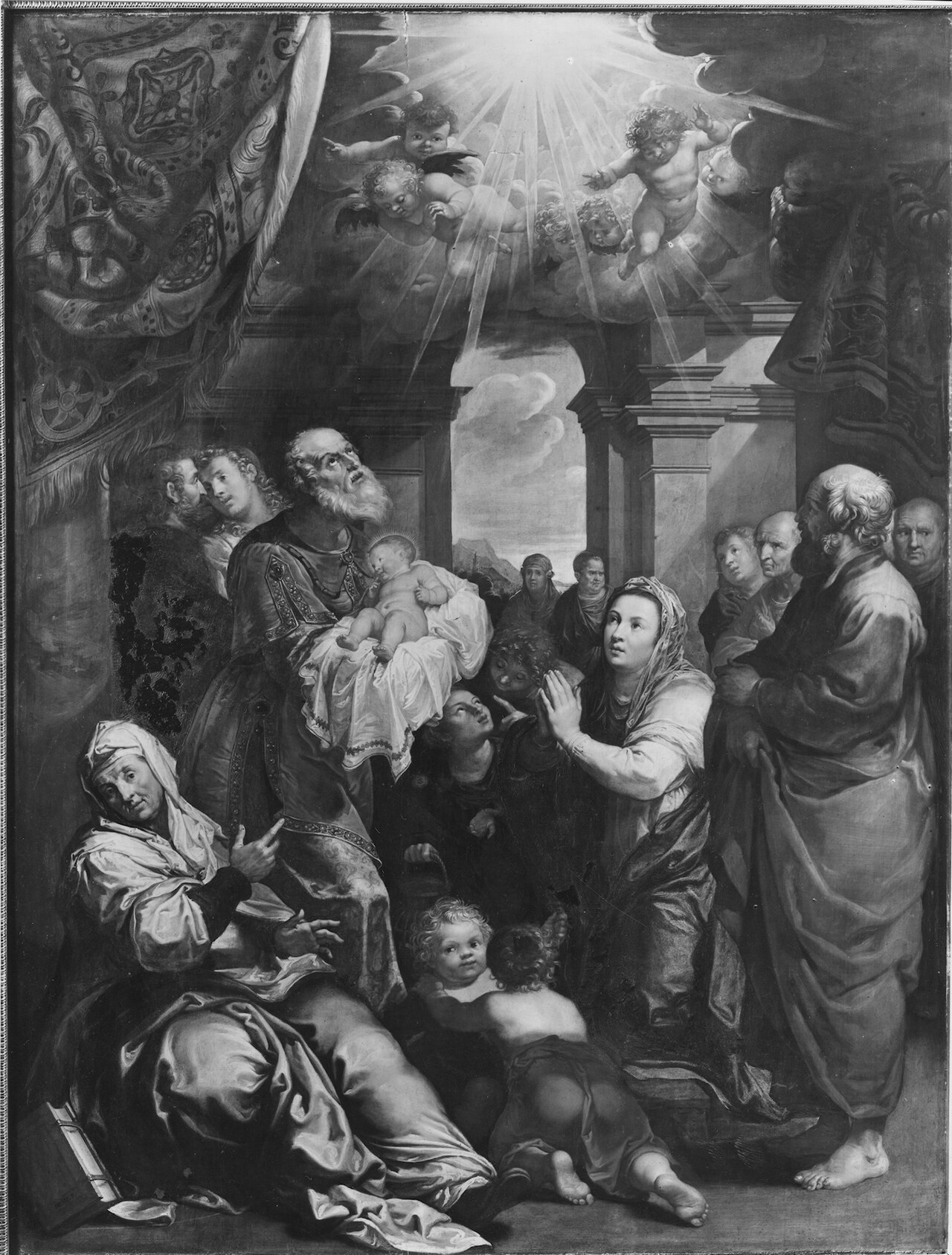
- Simeon in the Temple (1616) – This canvas depicts the biblical episode in which the aged Simeon recognises the infant Jesus as the Messiah. Pepyn arranges the figures around a central focal point, with Simeon’s outstretched hands drawing attention to the child. The work exemplifies his balanced composition, modest lighting, and careful rendering of garments, conveying the solemnity of the moment.
- Altarpiece of the Guild of Saint Luke (1602) – Created for the guild hall of Antwerp’s painters, this altarpiece combines allegorical and devotional elements. The central panel portrays Saint Luke, patron of artists, surrounded by a cohort of saints and patrons. Pepyn’s use of a restrained palette and orderly figure placement reflects his respect for the guild’s institutional identity while demonstrating his skill in handling large, multi‑figure narratives.
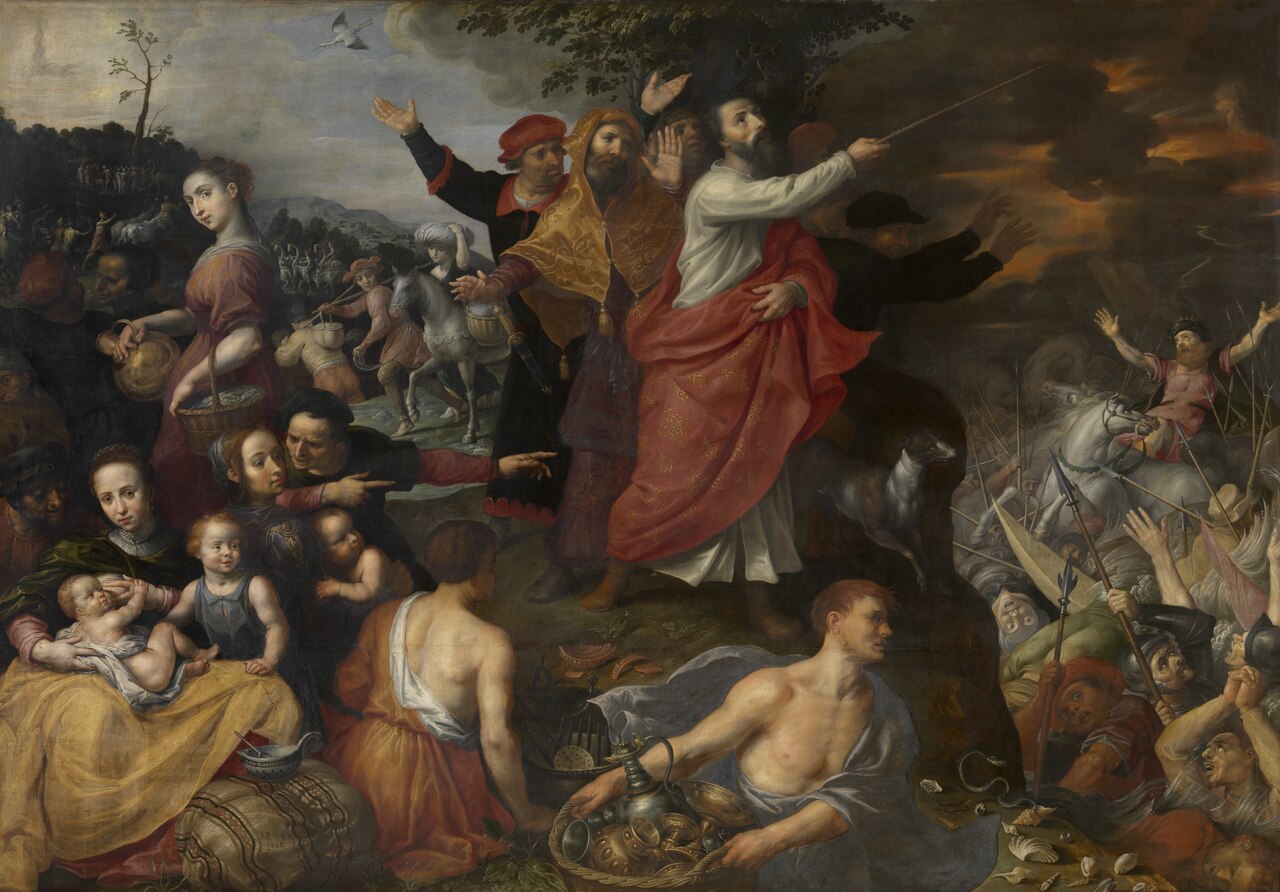
- Passage through the Red Sea (1626) – This later work illustrates the Old Testament miracle of the Israelites’ escape from Egypt. Pepyn captures the dramatic movement of the waters with a controlled compositional rhythm, avoiding overt sensationalism. The piece underscores his continued interest in biblical history and his capacity to convey complex scenes within a coherent visual framework.
- Saint Luke preaches to the people (1602) – Another work linked to the Guild of Saint Luke, this painting shows the saint addressing a gathering, underscoring the didactic role of art. Pepyn’s careful placement of figures and his subtle use of light convey the authority of the saint without resorting to theatrical excess.
- Saints John and Saint Matthew (1602) – This paired composition presents the two evangelists in a contemplative pose, each holding their respective symbols. The work demonstrates Pepyn’s skill in rendering individual saints with distinct attributes while maintaining a harmonious visual dialogue between the two figures.
These works collectively illustrate Pepyn’s consistent approach to religious narrative, his reliance on structured composition, and his preference for a sober, contemplative aesthetic.
Influence and legacy Although Maarten Pepyn never achieved the international renown of some of his Antwerp contemporaries, his paintings contributed to the visual culture of the Habsburg Netherlands during a period of religious and artistic transition. By providing reliable, didactic images for churches and guilds, Pepyn helped sustain the visual language of Counter‑Reformation devotion in the region. His disciplined compositional methods and restrained colour palette offered a model for smaller workshop productions that required efficiency and clarity.
Later Flemish artists, particularly those working in the second half of the 17th century, inherited the functional aspects of Pepyn’s approach: a focus on narrative intelligibility, careful handling of light, and an emphasis on the moral message of the subject. While his name appears less frequently in modern exhibition catalogues, his surviving works remain valuable for scholars studying the evolution of Flemish religious painting between the late Renaissance and the full flowering of the Baroque. Moreover, his altarpieces for the Guild of Saint Luke provide insight into the civic and professional networks that underpinned Antwerp’s artistic community.
In contemporary art‑historical discourse, Pepyn is recognised as a representative figure of the modest yet competent tier of painters who sustained the visual needs of their local societies. His oeuvre, though not groundbreaking, exemplifies the high level of craftsmanship and theological commitment that characterised much of Flemish painting in the early 17th century. As such, Maarten Pepyn occupies a respectable place within the broader narrative of Netherlandish art, offering scholars and visitors alike a window into the devotional aesthetics of his time.
Frequently asked questions
Who was Maarten Pepyn?
Maarten Pepyn (1575–1643) was a Flemish painter from Antwerp who specialised in large‑scale religious and historical works, producing altarpieces and genre scenes for churches and guilds.
What style or movement is Pepyn associated with?
Pepyn worked during the transitional period between the late Renaissance and early Baroque, adopting a restrained, narrative‑focused style that blends balanced composition with modest chiaroscuro.
What are Pepyn’s most famous works?
His most notable pieces include Simeon in the Temple (1616), the Altarpiece of the Guild of Saint Luke (1602), Passage through the Red Sea (1626), Saint Luke preaches to the people (1602), and Saints John and Saint Matthew (1602).
Why is Pepyn important in art history?
Pepyn exemplifies the competent, locally‑focused painters who sustained Counter‑Reformation visual culture in the Habsburg Netherlands, bridging Renaissance compositional rigour and emerging Baroque sensibilities.
How can I recognise a painting by Maarten Pepyn?
Look for a sober colour palette, orderly groupings of figures, gentle modelling of light, and a calm, didactic atmosphere that prioritises narrative clarity over dramatic excess.