Ma Lin
1180 – 1256
In short
Ma Lin (1180–1256) was a Chinese court painter of the Southern Song dynasty, renowned for his refined landscape paintings that continued the ‘one‑corner’ style pioneered by his father, the eminent artist Ma Yuan.
Notable works
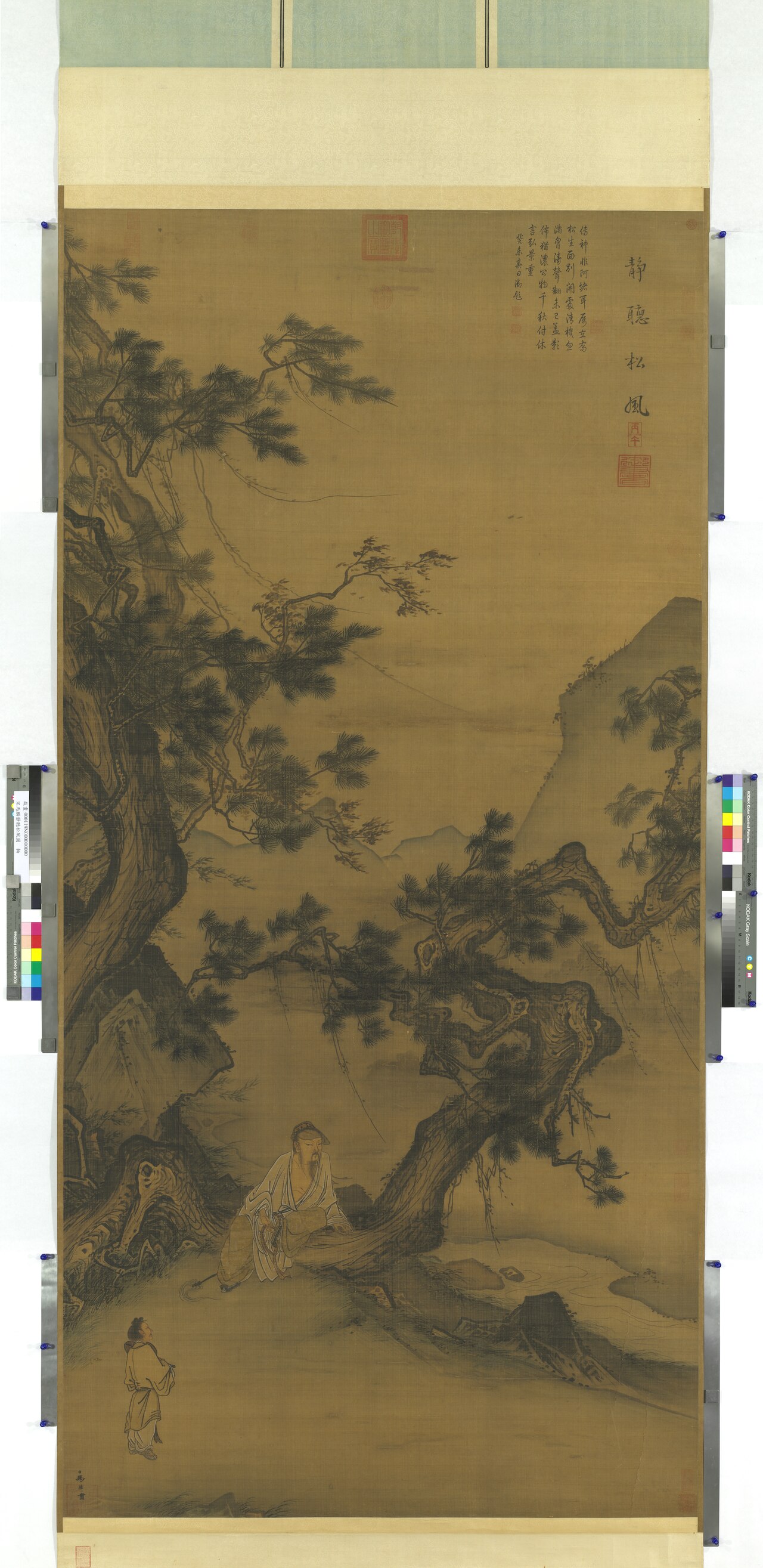


Early life Ma Lin was born in 1180 into a family already distinguished in the world of Chinese painting. His father, Ma Yuan, was one of the most celebrated court artists of the Southern Song, and the younger Ma grew up in an environment saturated with brushwork, calligraphy and the aesthetic ideals of the imperial academy. Precise details of his birthplace and early education are not recorded, but it is clear that his formative years were spent learning directly from his father, absorbing the techniques and compositional principles that would define the Ma family’s artistic legacy.
Career and style By the early thirteenth century Ma Lin had entered the service of the Southern Song court, where he worked as a professional painter attached to the imperial workshops. The court valued paintings that could convey both natural beauty and moral virtue, and Ma Lin’s works exemplify this dual purpose. He continued the “one‑corner” composition pioneered by Ma Yuan, in which the primary subject is placed in a corner of the picture plane, allowing empty space to suggest mist, distance or the vastness of nature. This compositional device creates a sense of intimacy while simultaneously evoking the expansive, poetic landscapes cherished by Song literati.
Ma Lin’s style is characterised by delicate ink washes, subtle colour washes of light green and cinnabar, and a restrained yet expressive brushstroke. He favoured a lyrical rendering of trees, rocks and water, often employing soft, feather‑like strokes to suggest the movement of wind through pine needles or the ripple of a river. His paintings also integrate poetic inscriptions, a practice that reinforces the close relationship between visual art and literature in Song culture.
Signature techniques The most recognisable elements of Ma Lin’s technique include:
* One‑corner composition – a compositional focus that places the main motif in a corner, leaving large areas of empty space to convey atmosphere. * Ink‑and‑wash layering – multiple translucent layers of ink create depth, allowing distant mountains to recede into mist. * Fine brushwork for foliage – the use of short, controlled strokes to render pine needles, bamboo leaves and reeds with a sense of texture. * Integration of poetry – calligraphic inscriptions, often by contemporary poets such as Wang Wei, are incorporated into the painting, linking the visual and literary arts. * Subtle colour accents – restrained use of mineral pigments, especially light green and soft red, highlights focal points without overwhelming the monochrome ink base.
These techniques combine to produce works that are both visually restrained and emotionally resonant, reflecting the Song dynasty’s emphasis on scholarly refinement.
Major works Ma Lin’s surviving oeuvre is limited, but several works have become canonical examples of his style.
1. Listening Quietly to Soughing Pines – This painting depicts a solitary scholar seated beneath a towering pine, his attention turned to the faint rustle of the wind. The composition places the scholar in the lower left corner, while the vast sky and distant mountains recede into mist. The work exemplifies the one‑corner principle and showcases Ma Lin’s mastery of ink wash to render atmospheric depth.
2. The Three Taoist Officials Making an Inspection Tour – A narrative scene that captures three Taoist figures traveling through a rugged landscape. Ma Lin employs a panoramic view that still respects the one‑corner emphasis, with the officials positioned near a cliff edge, surrounded by towering peaks and a winding river. The painting demonstrates his ability to blend figurative storytelling with landscape.
3. Solitary Fisherman on a Wintry River – In this work a lone fisherman is shown ice‑fishing on a frozen river, his boat anchored among snow‑covered reeds. The cool palette of muted greys and soft blues, combined with delicate ink strokes, conveys the chill of winter while maintaining a sense of calm contemplation.
4. Scholar Reclining and Watching Rising Clouds, Poem by Wang Wei (1225) – Two versions of this composition survive, both portraying a scholar lying on a low platform, gazing at clouds that rise over distant peaks. The poem by Wang Wei, inscribed in elegant calligraphy, reinforces the theme of contemplation. The painting’s expansive sky, rendered in layered washes, exemplifies Ma Lin’s skill at depicting atmospheric phenomena.
These works collectively illustrate Ma Lin’s thematic preoccupations: the scholar‑artist in harmony with nature, the use of poetic allusion, and the subtle rendering of seasonal ambience.
Influence and legacy Ma Lin’s contribution to Chinese art lies in his consolidation and refinement of the Ma family’s one‑corner aesthetic. By the mid‑13th century his paintings were collected by emperors and scholars alike, and they served as models for later generations of literati painters who prized the balance of restraint and expressive brushwork. Although the Southern Song fell to the Mongol‑established Yuan dynasty shortly after his death, Ma Lin’s approach continued to inform the Yuan and early Ming landscape traditions.
Later artists such as Xia Gui, a contemporary of Ma Lin, shared similar compositional concerns, and the two are often mentioned together as exemplars of the “Ma‑Xia” school. The subtle colour washes and atmospheric perspective that Ma Lin perfected can be traced in the works of later masters like Shen Zhou of the Ming period, who admired the Song masters for their poetic sensitivity.
In modern scholarship Ma Lin is recognised not only for his technical skill but also for his role in bridging the visual and literary cultures of his time. His paintings remain important primary sources for understanding Song‑era aesthetics, court patronage, and the integration of poetry within visual art. Contemporary exhibitions of Song dynasty art frequently include Ma Lin’s works as representative of the period’s sophisticated landscape painting.
Overall, Ma Lin stands as a pivotal figure who helped shape the visual language of Chinese landscape painting, ensuring that the poetic ideals of the Song dynasty endured well beyond his own lifetime.
Frequently asked questions
Who was Ma Lin?
Ma Lin (1180–1256) was a Chinese court painter of the Southern Song dynasty, best known for his refined landscape paintings that continued his father Ma Yuan’s ‘one‑corner’ style.
What artistic style or movement is Ma Lin associated with?
He is linked to the Song dynasty court painting tradition, especially the “one‑corner” composition that emphasizes a focal point in a corner of the picture and extensive use of ink‑and‑wash techniques.
What are Ma Lin’s most famous works?
His most celebrated pieces include Listening Quietly to Soughing Pines, The Three Taoist Officials Making an Inspection Tour, Solitary Fisherman on a Wintry River, and the two versions of Scholar Reclining and Watching Rising Clouds (inscribed with a poem by Wang Wei).
Why is Ma Lin important in art history?
Ma Lin refined and transmitted the elegant landscape aesthetic of the Southern Song court, influencing later Yuan, Ming and even modern Chinese painters, and his works exemplify the integration of poetry and painting.
How can I recognise a painting by Ma Lin?
Look for a composition that places the main subject in a corner, delicate ink washes creating misty depth, subtle colour accents, fine brushwork for foliage, and often a poetic inscription integrated into the image.