Leonaert Bramer
1596 – 1674
In short
Leonaert Bramer (1596–1674) was a Dutch painter from Delft noted for his nocturnal genre and religious scenes, as well as rare fresco work in the Dutch Republic. He combined dramatic lighting with exotic detail, producing a distinctive body of work that includes the Circumcision of Christ and several lively interior scenes.
Notable works


Early life Leonaert Bramer was born in Delft in 1596, a city that would remain his lifelong home and artistic centre. Little is known about his family background, but archival records indicate that he was baptized in the Dutch Reformed Church, reflecting the religious milieu of the Dutch Republic at the turn of the 17th century. Delft, with its thriving guilds and a vibrant market for paintings, provided an early exposure to the visual culture of the period. Bramer likely received his initial training within the local workshop system, though the identity of his master has not been conclusively documented. By the early 1620s he was already producing works for local patrons, suggesting a rapid development of technical skill and a growing reputation in his hometown.
Career and style Bramer’s career unfolded during the Dutch Golden Age, a time when the Republic witnessed an unprecedented flourishing of art, science and commerce. While many of his contemporaries specialized in either the highly detailed domestic interiors of the Haarlem school or the grand historical canvases of the Antwerp tradition, Bramer occupied a middle ground. He produced religious and historical narratives, genre scenes of everyday life, and occasional portrait commissions. A hallmark of his oeuvre is the frequent use of night‑time settings, a predilection that earned him the nickname "the Dutch Caravaggio" among later collectors. Unlike the Caravaggisti, however, Bramer combined chiaroscuro with a distinctly Dutch sensibility for atmospheric detail, often populating his compositions with exotic costumes, curiosities and a subdued colour palette that heightens the sense of mystery.
Bramer was also one of the few Dutch painters to experiment with fresco and mural techniques, a practice more typical of Italian art. Though most of his frescoes have not survived—due to the climatic unsuitability of the Netherlands for true wet‑lime plaster work—contemporary accounts note that he executed large‑scale decorative schemes on canvas that were then affixed to walls. This hybrid approach allowed him to bring the grandeur of Italian frescoes to Dutch interiors while circumventing the technical limitations of the medium in a northern climate.
Signature techniques Bramer’s paintings are characterised by several recurring technical choices:
1. Nocturnal illumination – A dominant light source, often a candle or a moonlit window, creates deep shadows and dramatic contrasts. The effect is achieved through layered glazing, which builds a luminous depth while preserving fine detail in the darker areas. 2. Exotic detailing – Costumes, textiles and objects in his works frequently draw on Oriental and Mediterranean motifs, reflecting the growing interest in global trade and the Dutch East India Company's influence. 3. Dynamic composition – Figures are arranged in a circular or diagonal pattern that guides the viewer’s eye across the canvas, enhancing narrative tension. 4. Fine draftsmanship – Bramer’s preparatory sketches, many of which survive in museum collections, reveal a meticulous approach to anatomy and gesture, underpinning the fluidity of his painted figures. 5. Mural‑like scale – Even on canvas, Bramer often worked on a large format, allowing him to create immersive scenes that echo the spatial ambition of true frescoes.
These techniques collectively give his work a distinctive visual identity that can be recognised amidst the broader Dutch artistic landscape.
Major works Among Bramer’s surviving paintings, several stand out for their historical significance and exemplary use of his signature style.
- Circumcision of Christ (1640) – This religious composition depicts the infant Christ surrounded by solemn attendants. The scene is lit by a single, almost ethereal light that falls on the central figures, casting the surrounding space into deep shadow. Bramer’s handling of the fabrics and the subtle expressions of the onlookers demonstrate his ability to convey theological gravitas through intimate detail.
- St Peter’s denial (1642) – In this narrative, Bramer captures the moment of Peter’s betrayal of Christ. The dramatic tension is heightened by the stark contrast between the harsh illumination of the foreground and the dimly lit background, a hallmark of his nocturnal approach. The work also showcases his skill in rendering varied textures, from the roughness of the street stones to the softness of the characters’ garments.
- Pashur smiting Jeremiah in the Temple (1648) – This biblical episode is rendered with a theatrical flair. Bramer uses a limited colour range, emphasizing the red of blood and the golden hue of temple architecture, while the surrounding darkness focuses attention on the violent act. The composition’s dynamism reflects his interest in narrative movement.
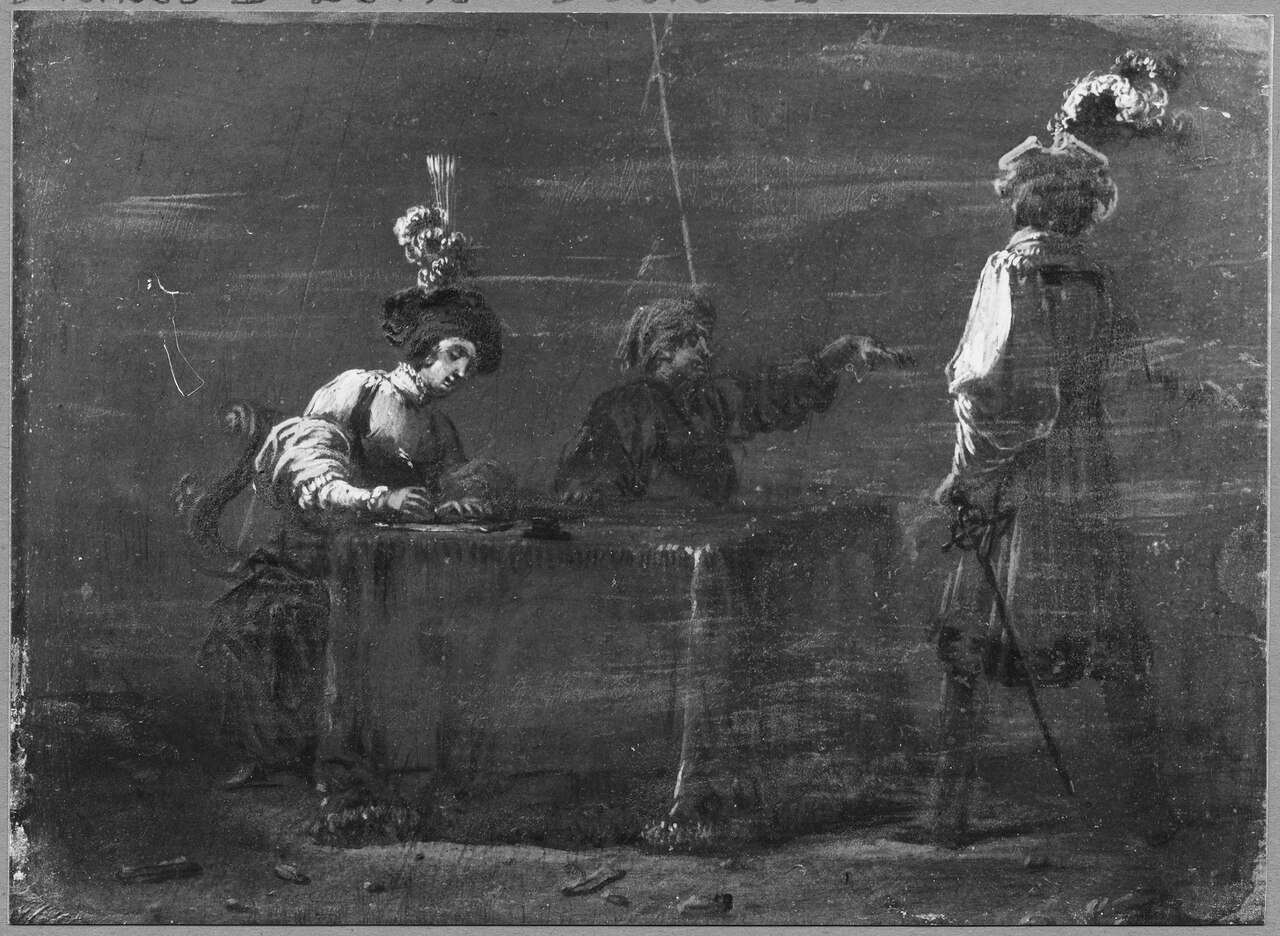
- Company around a Table – Though the exact date is uncertain, this genre painting illustrates a convivial gathering, possibly a banquet or an informal meeting. The work is notable for its careful observation of social interaction, the play of candlelight across the faces, and the inclusion of luxurious objects that hint at the patrons’ status.
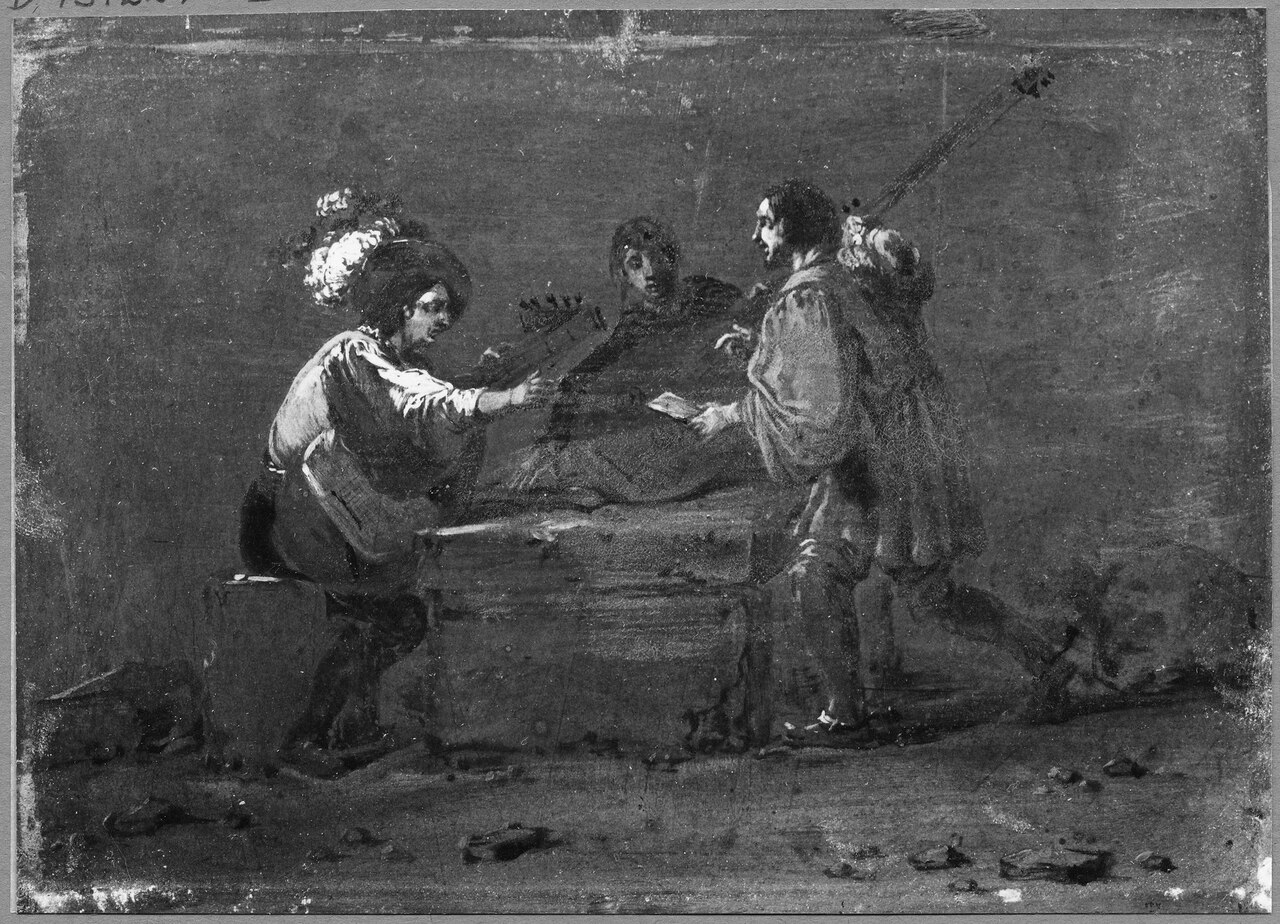
- Musical Company – Another genre piece, this painting portrays musicians engaged in performance. The nocturnal lighting creates a warm, intimate atmosphere, allowing Bramer to explore the interplay of sound and sight through visual means. The detailed rendering of instruments and the subtle expressions of the players underline his interest in everyday cultural life.
These works collectively illustrate Bramer’s versatility, moving fluidly between sacred narrative and secular genre while maintaining a cohesive visual language.
Influence and legacy Leonaert Bramer occupies a unique niche in the narrative of Dutch Golden Age painting. While he never achieved the commercial fame of Rembrandt or Vermeer, his commitment to nocturnal scenes and his experimentation with fresco‑like techniques set him apart from his peers. Contemporary artists such as Pieter Codde and Jacob van Campen were aware of Bramer’s work, and later 18th‑century collectors praised his ability to convey dramatic light.
Modern scholarship has reassessed Bramer’s contribution, emphasizing his role as a bridge between Northern realism and Southern theatricality. His paintings are held in major European collections, including the Rijksmuseum, the Mauritshuis and the Kunsthistorisches Museum, where they continue to attract interest for their atmospheric qualities. Moreover, his surviving sketches provide valuable insight into the workshop practices of the period, influencing studies of Dutch draftsmanship.
Bramer’s legacy also lies in the way he reflects the cultural currents of his time—namely, the fascination with exoticism, the rise of a middle‑class market for art, and the adaptation of continental techniques to a Northern context. As scholars continue to explore his oeuvre, Bramer remains a compelling figure for understanding the diversity and experimentation that underpinned Dutch art in the 17th century.
Frequently asked questions
Who was Leonaert Bramer?
Leonaert Bramer (1596–1674) was a Dutch painter from Delft known for his nocturnal genre, religious and history paintings, and rare fresco‑like works.
What style or movement is Bramer associated with?
Bramer is not linked to a single movement; his work blends Dutch realism with dramatic chiaroscuro, often described as a Dutch version of Caravaggism.
What are his most famous works?
His most renowned paintings include the Circumcision of Christ (1640), St Peter’s denial (1642), Pashur smiting Jeremiah (1648), and genre scenes such as Company around a Table and Musical Company.
Why does Bramer matter in art history?
He demonstrates the Dutch Republic’s engagement with dramatic lighting and exotic detail, and his experimental mural techniques make him a rare example of northern fresco practice.
How can I recognise a Bramer painting?
Look for nocturnal lighting, deep shadows, richly detailed exotic costumes, and a balanced composition that often centers a candle or moonlit source.