Lemuel Francis Abbott
1758 – 1802
In short
Lemuel Francis Abbott (1758–1802) was a British portrait painter best known for his depictions of naval heroes such as Horatio Nelson. Working in the late 18th century, he produced a series of formal portraits that captured the stature and character of his subjects.
Notable works

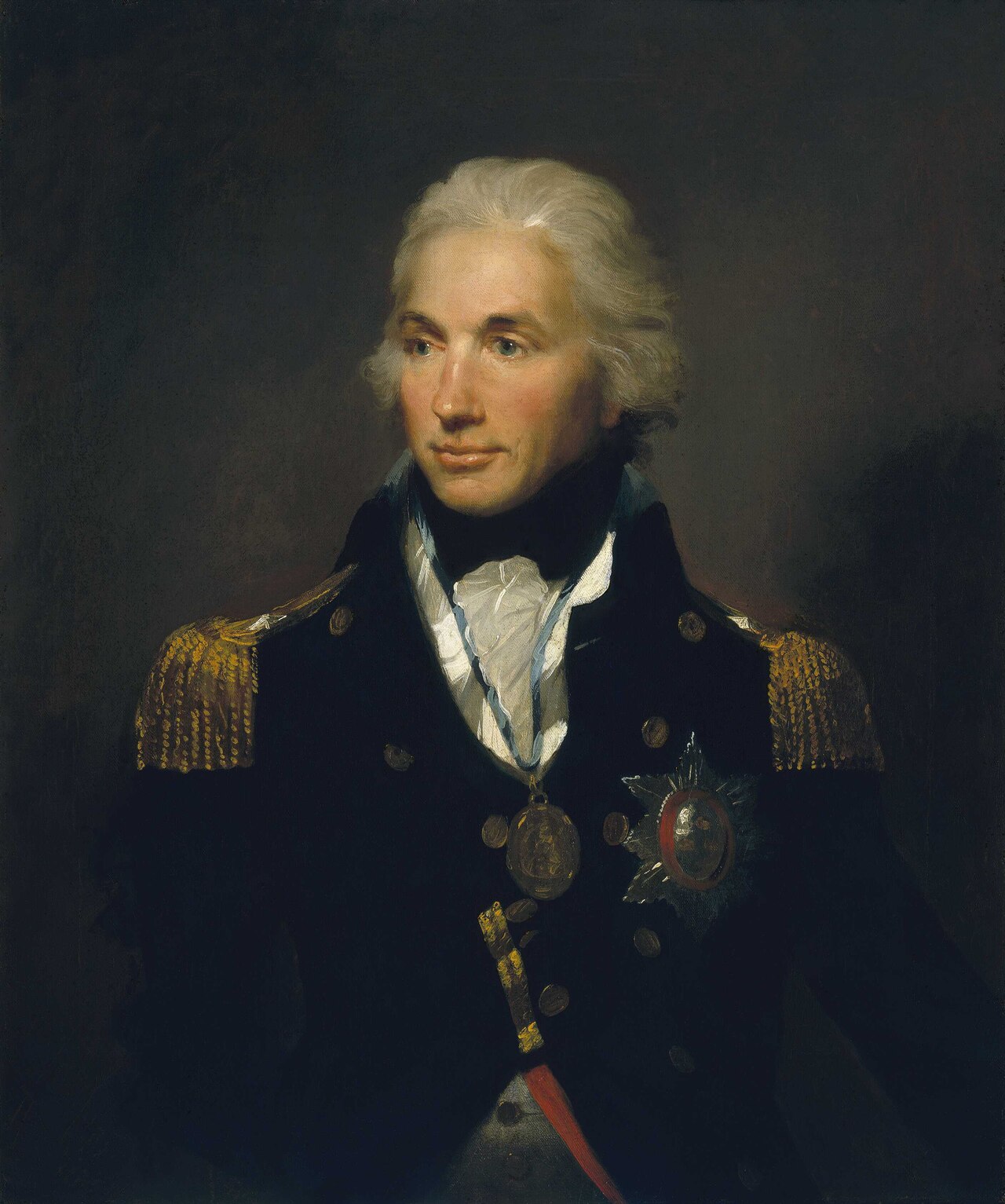


Early life Lemuel Francis Abbott was born in 1758 in the county of Leicestershire, England. Little is recorded about his family background, but the region’s modest rural setting provided the early environment from which he would later emerge as a professional artist. Abbott moved to London as a young man, a common step for aspiring painters seeking apprenticeship and exposure to the capital’s vibrant artistic community. In London he would have encountered the Royal Academy of Arts, which had been founded in 1768, and the dominant influence of Sir Joshua Reynolds, the Academy’s first president, whose principles of Grand Manner portraiture shaped the expectations of portrait painters of the period.
Career and style Abbott established himself as a portrait specialist in the 1780s, a time when the British elite—gentry, aristocracy, and senior naval officers—demanded painted likenesses to commemorate status, achievement, and lineage. His career coincided with Britain’s expanding naval power, and he found a niche in portraying naval officers, a clientele that valued the combination of personal representation with patriotic symbolism. Abbott’s style adhered to the conventions of late‑Georgian portraiture: a restrained palette, careful rendering of fabrics, and a focus on the sitter’s face as the locus of character. While he never achieved the fame of contemporaries such as Thomas Lawrence, his work was respected for its solidity, compositional balance, and ability to convey the dignified bearing of his subjects.
Signature techniques Abbott’s portraits are marked by several recurring techniques. First, he employed a controlled chiaroscuro that softened the transition between light and shadow, giving his sitters a three‑dimensional presence without dramatic contrast. Second, his handling of fabrics—particularly military uniforms and naval dress—demonstrated meticulous attention to texture, reflecting the status of the wearer through accurate depiction of gold embroidery, lace, and polished buttons. Third, Abbott favoured a restrained background, often a muted drapery or a simple interior, allowing the figure to dominate the composition. Finally, his brushwork was generally smooth and blended, a hallmark of the academic approach that sought to hide the hand of the painter and present an idealised, timeless image.
Major works Among Abbott’s surviving works, several stand out for their historical importance and continued visibility in British collections.
* Joseph Nollekens (1797) – This portrait of the eminent sculptor captures Nollekens in a thoughtful pose, with the artist’s studio tools subtly suggested in the background. Abbott renders the sculptor’s facial features with precision, highlighting the intellectual vigor associated with his profession.
* Rear‑Admiral Sir Horatio Nelson (1798) – Painted shortly after Nelson’s death at the Battle of Trafalgar, the portrait presents the admiral in a naval uniform, his gaze directed forward, embodying both personal bravery and national heroism. Abbott’s rendering of the uniform’s gold braid and the admiral’s weathered face contributes to a sense of gravitas.
* Captain Robert Calder (1787) – In this earlier work, Abbott portrays Captain Calder in a modest naval uniform, emphasizing the officer’s command presence rather than opulent decoration. The composition’s simplicity underscores the sitter’s professional dedication.
* Admiral Lord Bridport (1795) – This portrait shows the admiral seated against a dark backdrop, his uniform richly detailed with medals that denote his service. Abbott’s careful rendering of the medals’ insignia provides a visual record of Bridport’s accolades.
* Horatio Nelson, Viscount Nelson (1797) – A second portrait of the famed admiral, this version presents Nelson in a more relaxed stance, with a subtle hint of the sea in the background. The work is notable for its balance between personal intimacy and public commemoration, reinforcing Nelson’s mythic status in British cultural memory.
These pieces collectively illustrate Abbott’s ability to blend individual likeness with the symbolic trappings of rank and achievement, a skill that made his portraits desirable to the naval elite of his day.
Influence and legacy Although Lemuel Francis Abbott did not found a distinct artistic movement, his contributions to British portraiture are significant for several reasons. His portraits provide a visual record of the key naval figures who shaped Britain’s maritime dominance during the Revolutionary and Napoleonic wars. By capturing both the physical appearance and the ceremonial regalia of his subjects, Abbott helped cement the iconography of naval heroism that later artists and illustrators would echo.
In the decades following his death in London in 1802, Abbott’s works were collected by institutions such as the National Maritime Museum and various regional galleries, where they continue to serve as primary sources for historians studying the period’s visual culture. Moreover, his disciplined approach to portraiture—emphasising clarity, compositional balance, and faithful rendering of dress—reinforced the academic standards that dominated British art academies well into the 19th century. While later portraitists such as Sir Thomas Lawrence and Sir John Everett Millais would push stylistic boundaries, Abbott’s oeuvre remains a reliable benchmark for the conventional portrait style of his era.
Today, scholars and curators reference Abbott’s paintings when contextualising the visual representation of Britain’s naval elite, and his works are frequently reproduced in publications that explore the nation’s maritime heritage. In this way, Lemuel Francis Abbott endures as a chronicler of a pivotal chapter in British history, his canvases preserving the faces behind the nation’s naval triumphs.
Frequently asked questions
Who was Lemuel Francis Abbott?
Lemuel Francis Abbott (1758–1802) was a British portrait painter best known for his depictions of naval officers such as Horatio Nelson.
What artistic style or movement is Abbott associated with?
Abbott worked within the late‑Georgian academic portrait tradition, emphasizing balanced composition, smooth brushwork, and accurate rendering of clothing.
What are his most famous works?
His most renowned portraits include those of Joseph Nollekens (1797), Rear‑Admiral Sir Horatio Nelson (1798), Captain Robert Calder (1787), Admiral Lord Bridport (1795), and a 1797 portrait of Horatio Nelson.
Why does Abbott matter in art history?
He provides a reliable visual record of Britain’s naval elite during a formative era, reinforcing academic portrait standards and influencing later representations of naval heroism.
How can I recognise an Abbott portrait?
Look for a restrained background, smooth blended brushwork, careful detailing of uniforms and medals, and a subtle chiaroscuro that gives a three‑dimensional, dignified presence to the sitter.