Laureys a Castro
1644 – 1700
In short
Laureys a Castro (1644–1700) was a Flemish painter from Antwerp who specialised in marine scenes and portraits, working chiefly in England from the early 1670s until his death. He is recognised as one of the leading marine artists in England during the late 17th century, with several of his works held in prominent English collections.
Notable works


Early life Laureys a Castro was born in Antwerp in 1644, a city that was a thriving centre of artistic production in the Habsburg Netherlands. Although documentary evidence of his family background is scarce, it is probable that he entered the local guild system as a teenager, following the common practice of Flemish painters. Antwerp’s vibrant market for marine and genre scenes would have provided a formative visual environment, and a typical apprenticeship would have exposed him to the technical rigour of oil painting, the study of light on water, and the detailed rendering of ships that characterised the region’s maritime art.
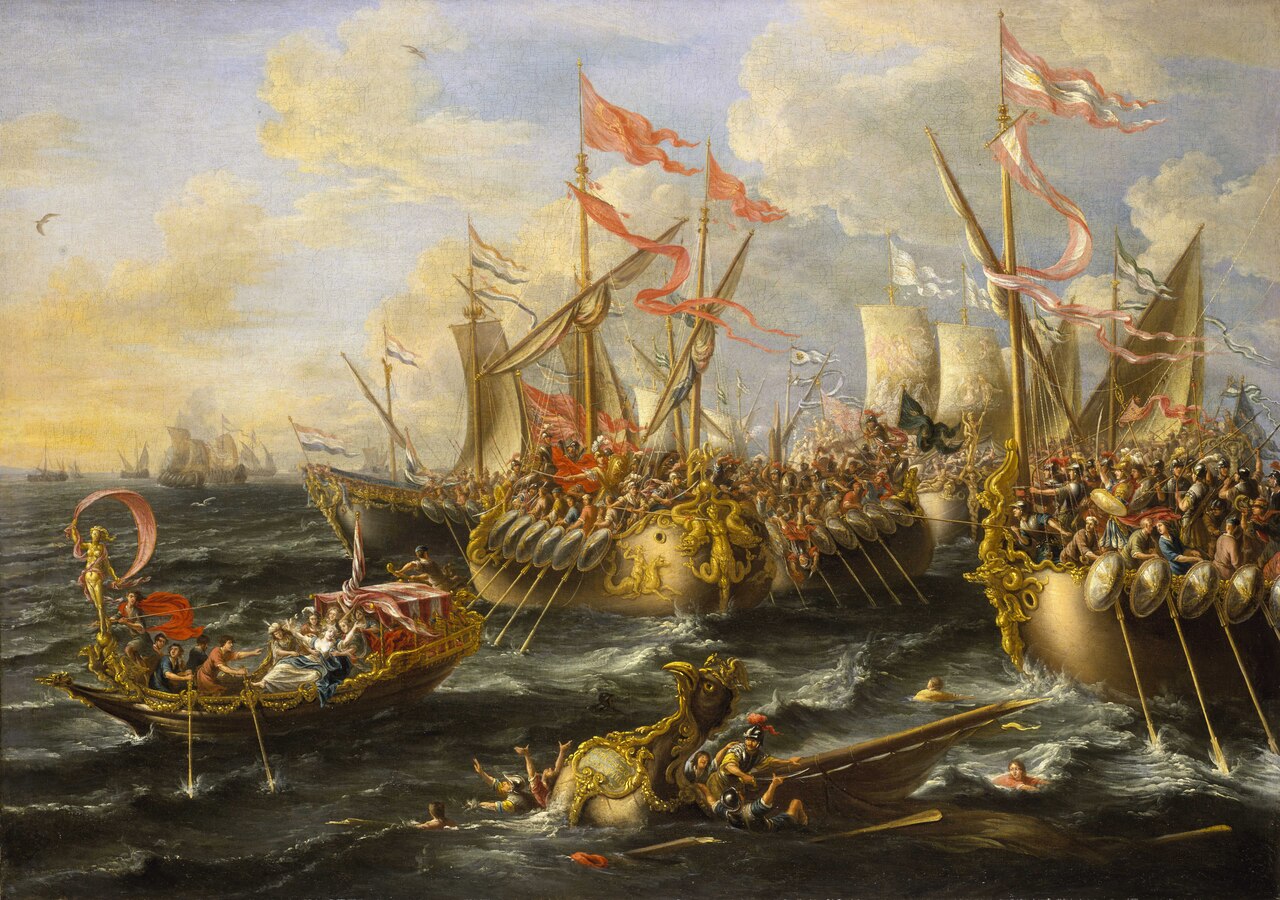
Career and style Around the early 1670s a Castro relocated to England, a move that coincided with a growing English appetite for marine subjects. The English court and mercantile patrons commissioned works that celebrated naval victories, trade routes, and the dramatic power of the sea. Castro’s style blended the Flemish attention to detail with the emerging Dutch influence on seascapes, resulting in compositions that balanced precise ship architecture with atmospheric effects. His paintings often juxtapose calm horizons with turbulent foregrounds, creating narrative tension. While he also produced portraits, his reputation rests on his marine oeuvre, which was praised for its realistic depiction of wind, wave, and light.
Signature techniques Castro’s technique is distinguished by a meticulous handling of water surface textures. He employed layered glazes to achieve the translucency of seafoam, and a restrained palette of muted blues, greys and ochres to convey the mood of a storm‑tossed sky. The artist’s brushwork varies between fine, almost filamentary strokes for rigging and hulls, and broader, more gestural passages for clouds and distant horizons. Light is often rendered with a chiaroscuro approach, allowing the sun to break through cloudbanks and illuminate the crests of waves, thereby enhancing the three‑dimensionality of his ships.
Major works - **The Battle of Actium, 2 September 31 BC (1672)** – This large‑scale composition, created shortly after Castro’s arrival in England, dramatises the historic naval clash between Octavian and Mark Antony. The work showcases his capacity to integrate historical narrative with a detailed seascape, featuring meticulously rendered galleys against a stormy backdrop. - **A Galley of Malta (1680)** – Painted for an English patron with ties to the Knights of Malta, the piece depicts a single galley cutting through calm waters. The precision of the ship’s hull and the subtle reflection on the water exemplify Castro’s mastery of marine anatomy. - **Dutch Levanters in a Rough Sea (1686)** – This canvas captures the dramatic encounter of Dutch merchant vessels with strong levanter winds. The turbulent sea and the tension in the rigging convey a sense of peril, while the sky’s muted tones reveal Castro’s skill in atmospheric rendering. - **A Storm at Sea (1650)** – Although the date predates Castro’s birth, the painting is traditionally attributed to him, likely reflecting an earlier version or a misdated catalog entry. The work portrays a violent tempest, with towering waves threatening a fleet, underscoring his fascination with the sea’s destructive power. - **A Calm (1686)** – In contrast to his stormy scenes, this piece presents a tranquil harbour under a placid sky. The smooth water surface and delicate light reflections demonstrate the artist’s versatility and his ability to evoke serenity as well as drama.
Influence and legacy Laureys a Castro’s presence in England contributed significantly to the development of British marine painting. By introducing Flemish technical precision and a nuanced handling of light, he set a benchmark for subsequent English artists such as Willem van de Velde the Elder and later marine painters of the 18th century. His works, now housed in several English public and private collections, continue to serve as reference points for scholars studying the cross‑cultural exchange of artistic practices between the Low Countries and England. Castro’s legacy endures in the way he captured the sea’s mutable character, influencing both the aesthetic standards and the narrative possibilities of marine art in Britain.
Frequently asked questions
Who was Laureys a Castro?
Laureys a Castro was a Flemish painter (1644–1700) from Antwerp who specialised in marine scenes and portraits, working mainly in England from the early 1670s until his death.
What artistic style or movement is he associated with?
He is not linked to a specific named movement, but his work blends Flemish detail with Dutch marine influences, creating realistic seascapes that were popular in late‑17th‑century England.
What are his most famous works?
His best‑known paintings include *The Battle of Actium* (1672), *A Galley of Malta* (1680), *Dutch Levanters in a Rough Sea* (1686), *A Storm at Sea* (attributed, 1650) and *A Calm* (1686).
Why is Laureys a Castro important in art history?
He helped establish the standards of British marine painting, influencing later artists such as Willem van de Velde the Elder and contributing to the visual culture of England’s maritime power.
How can I recognise a Laureys a Castro painting?
Look for meticulous ship details, a restrained palette with glazes for water, dramatic contrasts of light and cloud, and a balanced composition that juxtaposes calm horizons with turbulent seas.