Lambert Jacobsz
1598 – 1636
In short
Lambert Jacobsz (1598–1636) was a Dutch Golden Age painter and preacher from Amsterdam who worked mainly in Leeuwarden. He is noted for his religious compositions that blend biblical narrative with a sober, didactic style.
Notable works
_-_RMCC_s365_-_Museum_Catharijneconvent.jpg)


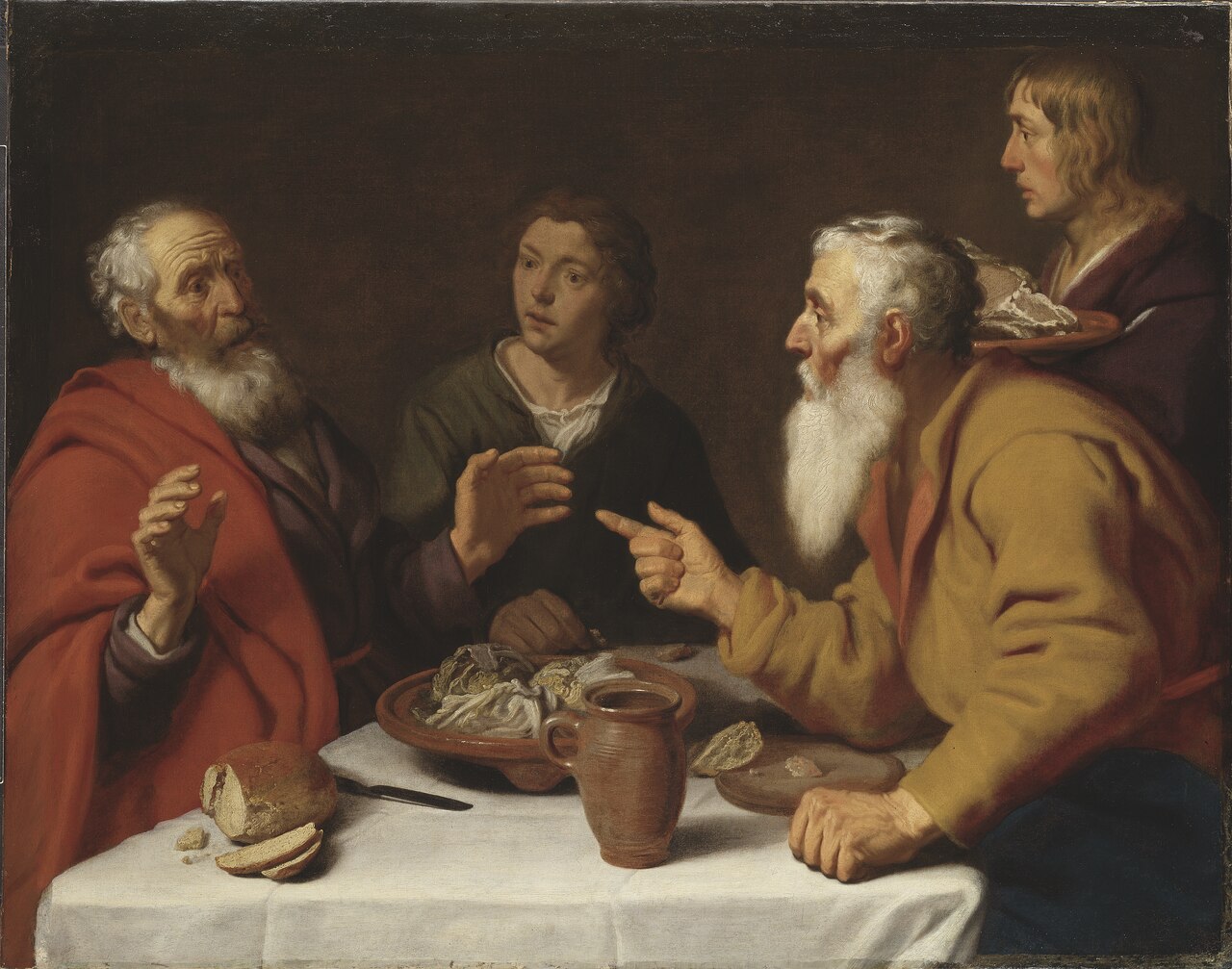

Early life Lambert Jacobsz was born in Amsterdam in 1598, during a period of rapid economic growth and cultural flowering in the Dutch Republic. Little is known about his family background, but records indicate that he received a basic education that included a grounding in both theology and the visual arts. By his early twenties he had relocated to the northern province of Friesland, where he would spend the remainder of his life. In Friesland he combined his artistic pursuits with a vocation as a preacher, a dual career that shaped his thematic focus on biblical subjects.
Career and style Jacobsz established himself as a painter in Leeuwarden, the provincial capital, where he joined a modest community of artists and craftsmen. His work aligns with the broader Dutch Golden Age movement, characterised by a shift away from the dramatic chiaroscuro of the earlier Baroque toward a more restrained realism. Jacobsz’s paintings are distinguished by their clear narrative intent; he favoured straightforward compositions that convey moral lessons without excessive ornamentation. The influence of the Reformed Church is evident in his choice of subjects—primarily scenes from the Old and New Testaments—rendered with an emphasis on didactic clarity rather than theatrical drama.
Signature techniques Jacobsz employed a limited colour palette dominated by earth tones, muted blues, and occasional touches of warm reds to highlight focal points. His brushwork is generally tight and controlled, allowing fine detail in facial expressions and clothing to support the storytelling. Light is used subtly, often to illuminate the central figures while the surrounding environment recedes into softer tones. This restrained illumination underscores the moral gravity of the scenes. Jacobsz also incorporated a modest degree of linear perspective, mainly to organise groups of figures within interior spaces, though his spatial constructions remain relatively simple compared to contemporaries in Amsterdam.
Major works Among the works attributed to Jacobsz, several stand out for their thematic coherence and technical execution. **"Joseph sold to the Medianites by his brothers" (1629)** depicts the moment Joseph is handed over to traders, a scene rendered with a focus on the emotional tension between the brothers and the transaction. The composition places Joseph in the centre, his expression a mixture of resignation and resolve, while the surrounding figures are rendered with muted gestures that convey betrayal.
"Elisha Refusing Naaman’s Gifts" (1630) illustrates the biblical prophet Elisha turning away from material offerings, underscoring the Protestant ethic of spiritual over worldly wealth. Jacobsz captures the moment with a restrained palette; the gifts are depicted in subdued gold, contrasting with the austere clothing of Elisha, whose solemn gaze draws the viewer’s attention.
"The prophet of Bethel meets the man of God from Judah" (1629) presents a meeting between two prophetic figures, each representing different regional traditions. Jacobsz uses subtle contrasts in attire to differentiate the characters, while the background remains vague, keeping the focus on the interaction.
"The Disobedient Prophet" (1620) is an early work that shows a prophet in a moment of defiance. The painting’s composition is straightforward, with the central figure occupying the majority of the canvas, his posture and expression communicating the narrative without reliance on elaborate settings.
"Jesus and the doctors in the temple" (attributed 1639) is an interesting case; the date post‑dates Jacobsz’s death, suggesting either a later copy or a misattribution. Nevertheless, the work exemplifies his typical approach: a clear, narrative‑driven scene where the young Jesus engages with the scholars, rendered with precise linework and a calm colour scheme.
These paintings collectively illustrate Jacobsz’s commitment to biblical storytelling, his restrained aesthetic, and his role as a visual educator within the Reformed tradition.
Influence and legacy Although Lambert Jacobsz did not achieve the fame of contemporaries such as Rembrandt or Frans Hals, his contributions are significant within the context of Frisian art. By integrating his preaching with his painting, he helped establish a local tradition of devotional artwork that emphasised moral instruction over decorative excess. His works were circulated among churches and private patrons in the northern provinces, influencing younger painters who adopted his clear narrative style and modest palette. Modern scholarship regards Jacobsz as a representative figure of the provincial Dutch Golden Age, illustrating how regional artists interpreted broader artistic currents while catering to the spiritual needs of their communities. Today, his paintings are held in several Dutch museums and continue to be studied for their insight into the interplay of art, theology, and daily life in early‑17th‑century Netherlands.
Frequently asked questions
Who was Lambert Jacobsz?
Lambert Jacobsz was a Dutch Golden Age painter and preacher (1598–1636) who worked mainly in Leeuwarden, producing religious paintings that combined narrative clarity with a modest aesthetic.
What artistic style or movement is he associated with?
He is associated with the Dutch Golden Age, particularly a restrained, didactic style that reflects the Reformed Church’s emphasis on moral instruction rather than theatrical drama.
What are his most famous works?
His most noted works include "Joseph sold to the Medianites by his brothers" (1629), "Elisha Refusing Naaman’s Gifts" (1630), "The prophet of Bethel meets the man of God from Judah" (1629), "The Disobedient Prophet" (1620), and the attributed "Jesus and the doctors in the temple" (1639).
Why does Lambert Jacobsz matter in art history?
Jacobsz exemplifies how provincial artists in the Dutch Republic interpreted the Golden Age’s broader trends, using art as a tool for religious teaching and influencing later Frisian painters.
How can I recognise a Lambert Jacobsz painting?
Look for a calm colour palette, tight brushwork, clear biblical narratives, modest use of light to highlight central figures, and an overall sober, instructional tone typical of his devotional works.