Konoe Nobutada
1565 – 1614
In short
Konoe Nobutada (1565–1614) was a Japanese courtier of the Momoyama period celebrated for his poetry, calligraphy, painting and diary writing. He is noted for works such as The Poet Hitomaro (1607) and Tenjin Traveling to China (1610), and for his role in the cultural life of the imperial court.
Notable works


Early life Born in 1565 into the aristocratic Konoe family, Nobutada was raised in the privileged environment of the Japanese court. His childhood name was Nobumoto (信基) and later Nobusuke (信輔), reflecting the customary practice of adopting new names at different stages of a noble's life. From an early age he received a classical education that encompassed Chinese literature, poetry, and the arts of calligraphy and painting, all of which were integral to the courtly curriculum. The Konoe lineage traced its ancestry to the Fujiwara clan, granting Nobutada access to the highest circles of power and culture. Although details of his birthplace are not recorded, it is certain that his formative years were spent within the imperial precincts of Kyoto, where he absorbed the aesthetic sensibilities that would later define his artistic output.
Career and style Nobutada came of age during the turbulent Momoyama period, a time when warlords vied for supremacy and the court sought to reaffirm its cultural authority. He served as a courtier and official diarist, documenting the ceremonies, political events, and artistic gatherings that characterised the era. His artistic style was rooted in the yamato‑e tradition, which emphasized delicate lines, subtle colour washes, and a reverence for classical Japanese subjects. At the same time, he incorporated influences from Chinese Song and Yuan painting, particularly in his depictions of scholarly figures and mythological narratives. His calligraphy displayed a refined, semi‑cursive script (gyōsho) that balanced fluidity with disciplined structure, reflecting his mastery of both literary and visual expression.
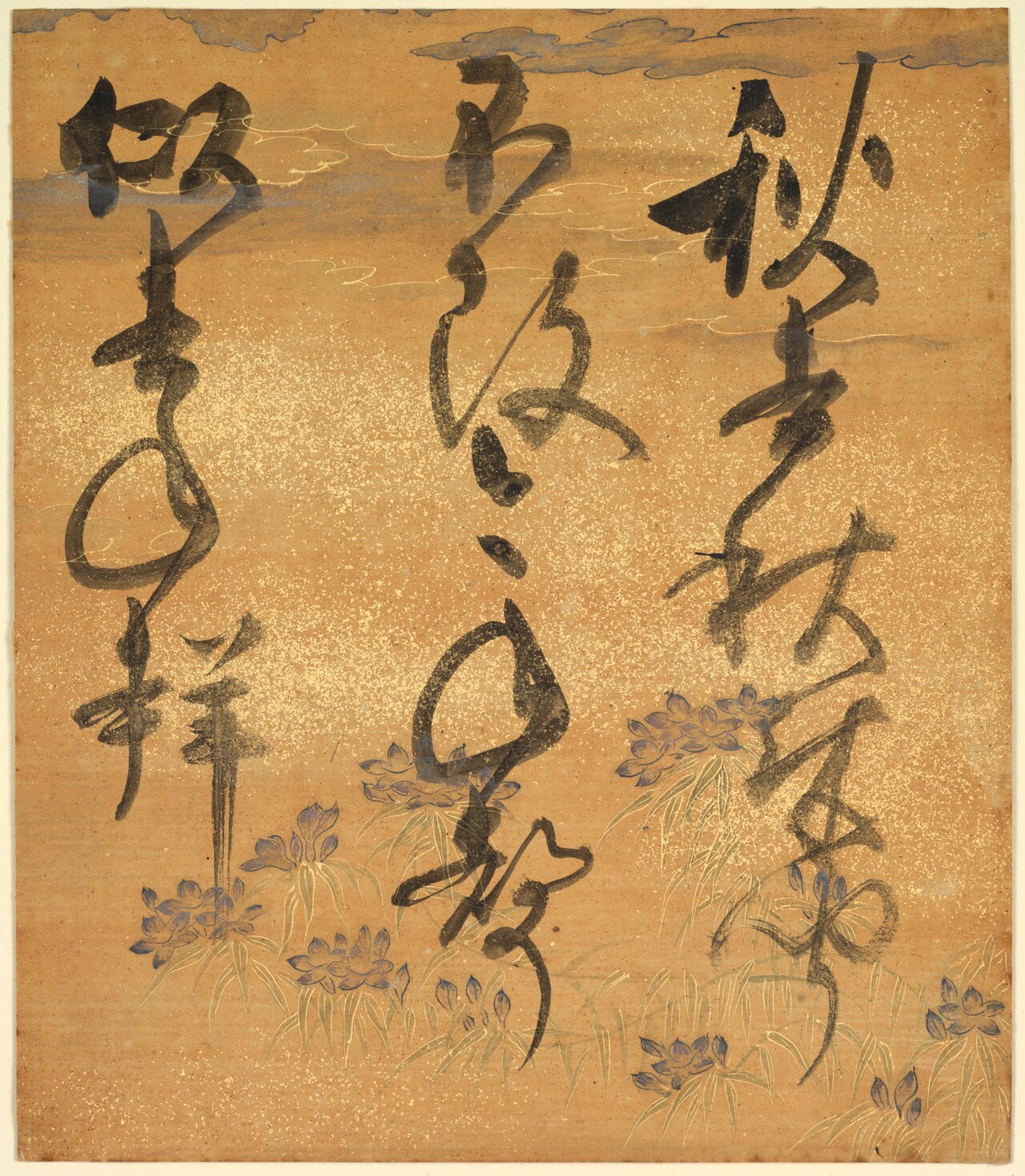
Signature techniques Nobutada’s paintings are distinguished by several recurring techniques. First, he employed a restrained palette of muted blues, greens, and earth tones, allowing the composition to convey a sense of quiet contemplation rather than overt drama. Second, his brushwork combined fine, hair‑like strokes for foliage with broader, expressive sweeps for human figures, creating a dynamic contrast that highlighted the central subjects. Third, he often integrated poetry directly onto the surface of his paintings, a practice known as shigajiku, where verses were rendered in his own calligraphic hand. This melding of text and image reinforced the intellectual atmosphere of the court and underscored his identity as a poet‑painter. Lastly, his attention to detail—such as the meticulous rendering of insects, clouds, and architectural elements—demonstrated a meticulous observation of the natural world.
Major works Among Nobutada’s extant works, three stand out for their artistic and historical significance.
* The Poet Hitomaro (1607) – This hanging scroll portrays the revered Nara poet Kakinomoto no Hitomaro, a figure venerated by the aristocracy for his mastery of waka poetry. Nobutada renders Hitomaro seated in a contemplative pose, surrounded by a stylised landscape of mist‑clad mountains. The painting is notable for its elegant brushwork and the integration of a short poem inscribed in graceful calligraphy, exemplifying the seamless union of visual and literary art.
* Tenjin Traveling to China (1610) – In this work Nobutada depicts the deity Tenjin—originally the deified scholar Sugawara no Michizane—embarking on a mythic journey to China to acquire esoteric knowledge. The composition features Tenjin on a boat, flanked by attendant figures and a procession of scholarly icons. The piece reflects a synthesis of Japanese myth with Chinese cultural motifs, illustrating Nobutada’s engagement with trans‑regional artistic dialogues.
* Portion of a Poetry Anthology: Cicada, from "Shinsen Roeishu" (1599) – This calligraphic page is part of the imperial anthology "Shinsen Roeishu," a collection of poems commissioned by the emperor. Nobutada’s rendering of the poem about a cicada is executed in a fluid, semi‑cursive script that captures the fleeting sound of the insect while maintaining a dignified aesthetic. The work demonstrates his skill as a calligrapher and his contribution to the preservation of courtly poetry.
These works, together with numerous diary entries and lesser‑known paintings, provide a comprehensive picture of Nobutada’s artistic range and his dedication to the cultural life of the court.
Influence and legacy Konoe Nobutada’s legacy endures primarily through his role as a conduit between the classical courtly traditions of the Heian period and the evolving visual culture of the early Edo era. His paintings and calligraphic works were admired by contemporaries and later collected by aristocratic families, ensuring their transmission across generations. By integrating Chinese artistic motifs with native Japanese sensibilities, he helped to broaden the visual vocabulary of the court, influencing subsequent generations of court painters who sought to balance domestic and foreign influences.
Although he left no legitimate male heir, Nobutada adopted his nephew, Nobuhiro, to continue the family line, a decision that underscores the importance he placed on preserving both his lineage and artistic heritage. Modern scholars regard his diary entries as valuable primary sources for understanding the social and cultural dynamics of the Momoyama court. In museum collections, his works are frequently exhibited alongside those of contemporaries such as Kanō Eitoku and Hasegawa Tōhaku, highlighting his position within the broader tapestry of late‑sixteenth‑century Japanese art.
Overall, Konoe Nobutada remains a representative figure of the courtly artist‑scholar, embodying the synthesis of poetry, painting, and calligraphy that defined elite Japanese culture at the turn of the seventeenth century.
Frequently asked questions
Who was Konoe Nobutada?
Konoe Nobutada (1565–1614) was a Japanese courtier of the Momoyama period celebrated as a poet, calligrapher, painter and diarist.
What artistic style or movement is he associated with?
His work aligns with the yamato‑e tradition, blending native Japanese painting techniques with Chinese influences and refined calligraphic practice.
What are his most famous works?
His best‑known pieces include the painting The Poet Hitomaro (1607), Tenjin Traveling to China (1610), and the calligraphic page "Cicada" from the poetry anthology Shinsen Roeishu (1599).
Why is Konoe Nobutada important in art history?
He exemplifies the courtly scholar‑artist who merged poetry, painting, and calligraphy, influencing later Edo‑period court painters and providing valuable primary sources on Momoyama‑era culture.
How can I recognise a work by Konoe Nobutada?
Look for a restrained colour palette, delicate line work, the integration of poetry in semi‑cursive calligraphy, and subjects drawn from classical Japanese literature or myth.