Keisai Eisen
1790 – 1848
In short
Keisai Eisen (1790–1848) was a Japanese ukiyo‑e artist renowned for his bijin‑ga (pictures of beautiful women) and his contributions to the Bunsei era’s vibrant print culture. He produced celebrated series such as The Sixty‑nine Stations of the Kiso Kaidō and is noted for his elegant, often sensual portraiture.
Notable works


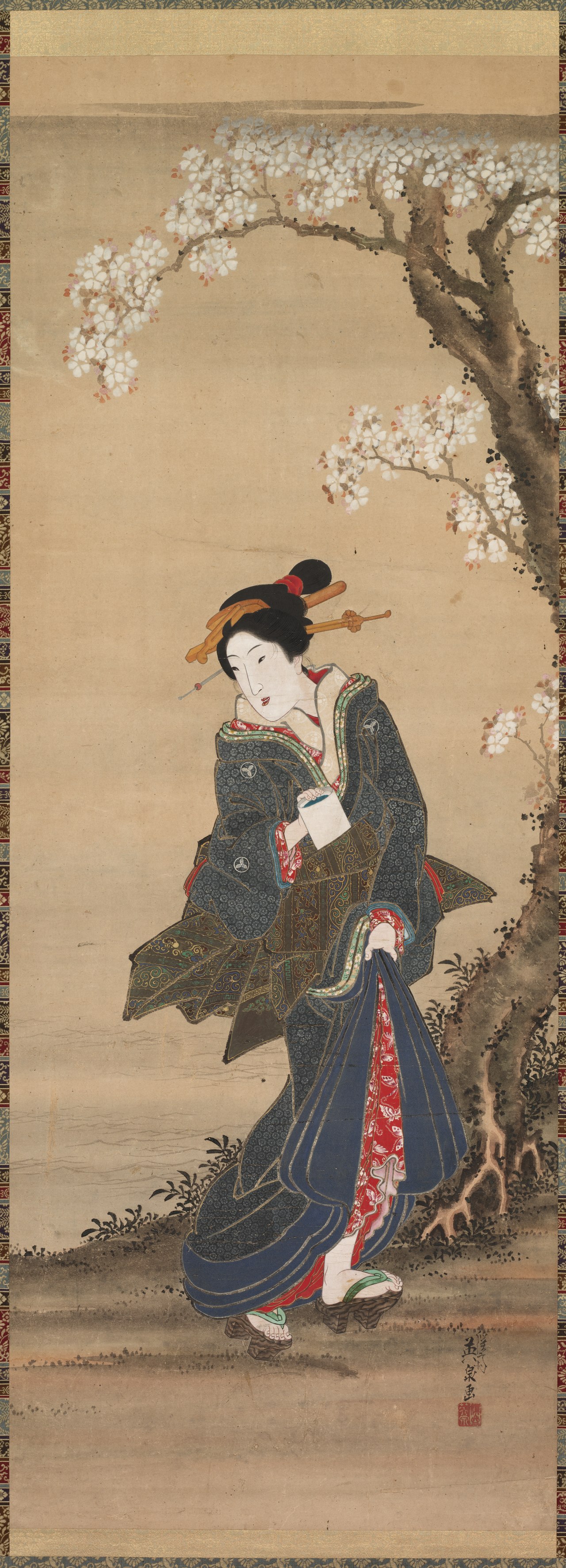
Early life Keisai Eisen was born in 1790 in Edo, the bustling capital of the Tokugawa shogunate (present‑day Tokyo). Little is recorded about his family background, but the urban environment of Edo provided a fertile ground for artistic apprenticeship. Like many ukiyo‑e practitioners of his generation, Eisen likely entered a workshop as a teenager, receiving training in woodblock printing, drawing, and the commercial aspects of art production. He adopted the name Ikeda Eisen early in his career and later wrote under the pen‑name Ippitsuan, reflecting the common practice among Edo‑period artists of using multiple art‑names.
Career and style Eisen emerged as a prominent figure in the ukiyo‑e world during the Bunsei era (1818–1830), a period noted for its refined aesthetic and a shift toward more sophisticated depictions of urban life. Specialising in bijin‑ga, Eisen focused on the portrayal of women—courtesans, geisha, and fashionable city dwellers—capturing the nuances of clothing, posture, and ambience. His work aligns with the broader trend of ōkubi‑e (large‑head pictures) that emphasised facial expression and individuality, a departure from earlier, more generic representations.
Stylistically, Eisen combined delicate line work with a subtle colour palette, often employing muted tones to evoke an atmosphere of quiet elegance. His figures are rendered with a gentle realism that conveys both the grace and the fleeting nature of beauty. While his contemporaries, such as Utamaro, leaned toward more exaggerated, eroticised compositions, Eisen’s prints tend toward a restrained sensuality, reflecting the “decadent” yet cultured spirit of the Bunsei period.
Signature techniques Eisen’s prints are distinguished by several recurring technical hallmarks. First, his use of fine, flowing lines to delineate facial features and garments creates a sense of movement within a static image. Second, he often employed a limited but harmonious colour scheme, favouring soft pinks, blues, and greys that complement the ink outlines without overwhelming them. Third, Eisen made frequent use of the ōkubi‑e format, focusing on the head and upper torso to draw the viewer’s attention to expression and attire. Finally, his compositional balance often incorporates asymmetrical placements, allowing negative space to enhance the elegance of the subject.
Major works Eisen’s oeuvre includes several notable series and individual prints that exemplify his mastery of bijin‑ga.
- The Sixty‑nine Stations of the Kiso Kaidō (1834) – This series presents the famous post‑road stretching from Edo to Kyoto, each station illustrated with a graceful woman who embodies the local character of the locale. Eisen’s contribution to this collaborative project showcases his ability to integrate narrative travel themes with his signature portraiture.
- Beauty Tokaido – Although the exact date is uncertain, this work forms part of the broader Tokaido series that depicted the iconic route between Edo and Kyoto. Eisen’s interpretation focuses on the elegance of women encountered along the road, using delicate line work to highlight the fashions of the time.
- Among twelve months – In this thematic series, Eisen rendered a woman for each month, using seasonal accessories and attire to convey the passage of time. The prints are praised for their subtle colour variations that correspond to the changing seasons.
- Woman with a Veil (1790) – Attributed to the very beginning of his career, this early piece illustrates a young woman partially concealed by a translucent veil. The work demonstrates Eisen’s early skill in rendering translucency and the delicate interplay of light and shadow.
- Courtesan (1834) – This print captures a high‑ranking courtesan in full regalia, emphasising the opulent kimono patterns and the poised confidence of the subject. It exemplifies Eisen’s later style, where the combination of refined line and restrained colour achieves a sophisticated visual impact.
These works collectively highlight Eisen’s versatility: from travel narratives to seasonal cycles, and from intimate portraits to elaborate courtly scenes.
Influence and legacy Keisai Eisen occupies a respected position within the ukiyo‑e tradition, particularly for his contributions to bijin‑ga. His emphasis on realistic, individualised portraiture influenced later artists who sought to move beyond the stylised conventions of earlier Edo prints. While his name may not be as instantly recognisable as Utamaro’s, scholars acknowledge Eisen’s role in shaping the aesthetic of the late Bunsei period and the transition toward the more realistic approaches of the subsequent Kyoho era.
Eisen’s prints continue to be exhibited in major museums worldwide, and reproductions appear in academic texts on Japanese art. His works provide valuable insight into the fashion, social customs, and urban atmosphere of early‑19th‑century Japan, making him an essential figure for both art historians and enthusiasts of Japanese visual culture.
Frequently asked questions
Who was Keisai Eisen?
Keisai Eisen (1790–1848) was a Japanese ukiyo‑e artist best known for his bijin‑ga, or pictures of beautiful women, produced during the Bunsei era.
What artistic style or movement is he associated with?
He worked within the ukiyo‑e tradition, specialising in ōkubi‑e portraiture and contributing to the refined, ‘decadent’ aesthetic of the Bunsei period.
What are his most famous works?
His most recognised prints include The Sixty‑nine Stations of the Kiso Kaidō (1834), Beauty Tokaido, the seasonal series Among twelve months, Woman with a Veil (1790), and the Courtesan (1834).
Why does Keisai Eisen matter in art history?
Eisen’s nuanced, realistic portrayals of women helped evolve ukiyo‑e portraiture, influencing later artists and providing a vivid record of Edo‑period fashion and society.
How can I recognise a Keisai Eisen print?
Look for delicate, flowing line work, a restrained colour palette, often in ōkubi‑e format, with elegant depictions of women that emphasise subtle expression and fine textile detail.