Karl August Senff
1770 – 1838
In short
Karl August Senff (1770–1838) was a Baltic‑German painter, engraver and drawing professor at the Imperial University of Dorpat. He is best known for his precise etchings of military figures and for mentoring a generation of Estonian artists.
Notable works

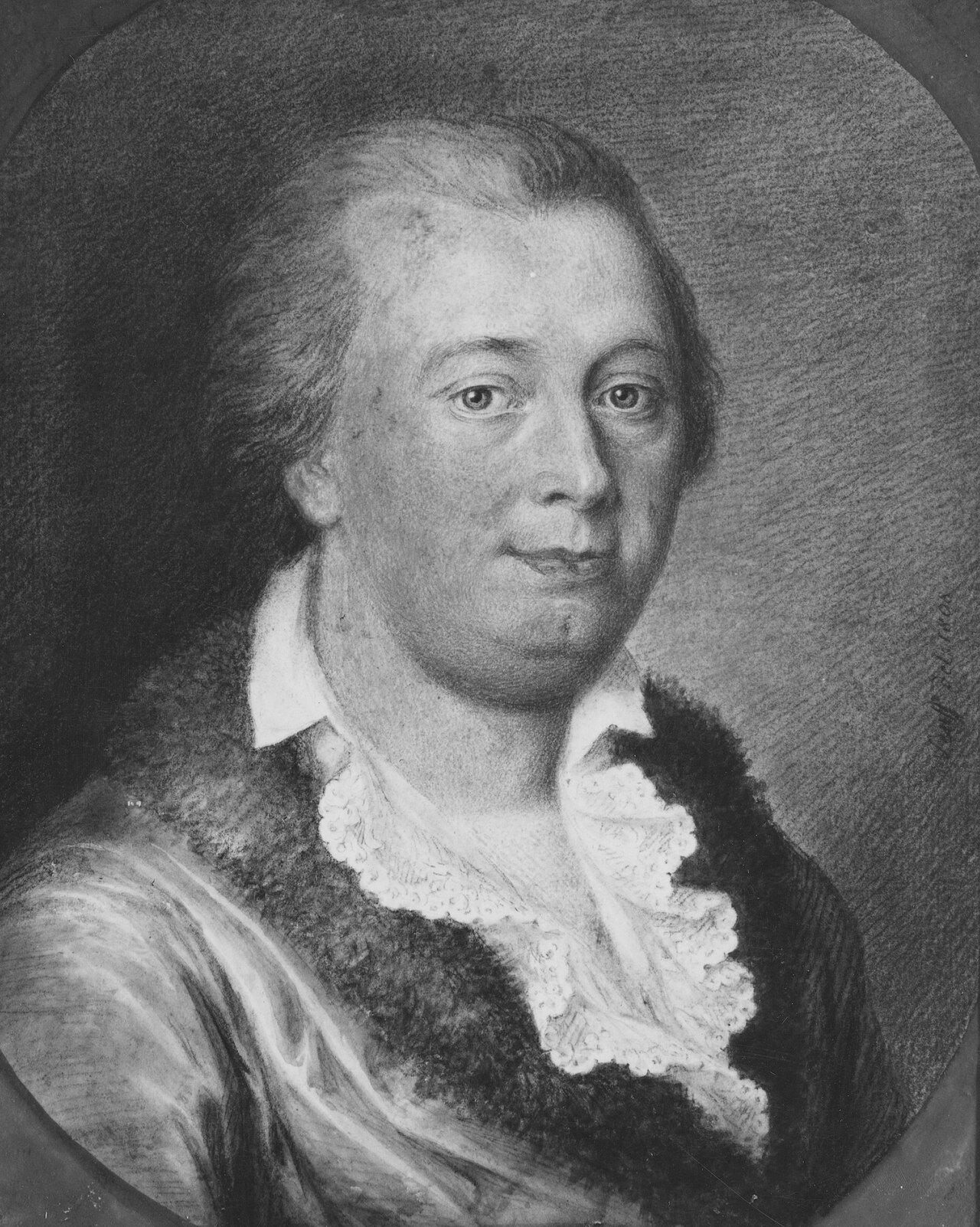


Early life Karl August Senff was born in 1770 in the village of Kreypau, then part of the Russian Empire but culturally German. He belonged to the Baltic German community, a group that maintained strong ties with German artistic traditions while serving the imperial administration. Details of his formal artistic training are scarce, but it is generally accepted that he received his earliest instruction in the German lands, where the classicist and academic styles of the late 18th century were dominant. By the turn of the century he had established a reputation as a competent draftsman and etcher, skills that would later secure his appointment at Dorpat.
Career and style In 1802, shortly after the Imperial University of Dorpat (now Tartu) reopened under Russian patronage, Sen Senff was appointed professor of drawing. The university’s re‑opening marked a cultural revival in the Baltic provinces, and Senff’s role was to provide a rigorous foundation in drawing for students destined for careers in architecture, engineering and the visual arts. He taught for more than three decades, retiring only with his death in 1838.
Senff’s own artistic output mirrored the academic expectations of his time. His portraits are characterised by a restrained realism, clear modelling of forms and careful attention to the attire and insignia of his subjects. While he did not affiliate himself with any avant‑garde movement, his work reflects the influence of German classicism and the emerging Biedermeier taste for intimate, middle‑class portraiture. In addition to portraiture, he produced a modest body of landscape work, most notably scenes of the Baltic coast and the city of Narva, rendered with a delicate line that suggests both topographical accuracy and aesthetic concern.
Signature techniques Senff’s most distinctive technique was etching, a printmaking method that allowed him to reproduce fine details with an economy of line. He employed a meticulous, cross‑hatching approach to render textures such as military uniforms, fabrics and the subtle play of light on skin. In his drawings he favoured a tight, controlled graphite or chalk stroke, often beginning with a light under‑drawing before building up tonal depth. His teaching emphasized the importance of proportion, anatomical correctness and the ability to capture a sitter’s character with minimal embellishment. These principles are evident in his surviving works, where the balance between line and shade creates a clear, almost photographic presence.
Major works - **Portrait of a Woman (1808)** – This early oil portrait shows a young woman in a modest, yet finely detailed dress. The sitter’s gaze is directed slightly off‑canvas, a compositional choice that adds a sense of quiet contemplation. Senff’s handling of the fabric’s sheen and the delicate modelling of the face demonstrate his mastery of light and shadow. - **Gustaf Magnus von Fersen (1749‑1805), friherre, lantråd i Livland** – Though the exact date of the portrait is unknown, the work depicts the Baltic nobleman and former councilor in his official regalia. Senff’s careful rendering of the gold embroidery and the officer’s medals underscores his skill in portraying status symbols with precision, a quality that made his etchings popular among the Russian‑Imperial military elite. - **A view on Narva (1812)** – This landscape captures the fortified town of Narva on the border of present‑day Estonia and Russia. The composition balances the town’s stone walls with the surrounding river and sky, employing fine linear detail to convey both the strategic importance of the site and its natural beauty. The work reflects Senff’s ability to move beyond portraiture into topographical illustration, a skill highly valued by the university’s engineering students. - **Portrait of Professor Lorenz Ferdinand Ewers** – A later portrait, likely executed in the 1820s, shows the university professor in a scholarly pose, surrounded by books and a globe. The painting’s restrained palette and the precise rendering of academic regalia highlight Senff’s continued focus on the intellectual dignity of his subjects.
Influence and legacy Senff’s greatest contribution to art history lies in his role as an educator. Over three decades at the Imperial University of Dorpat, he trained a cohort of artists who would become the foundation of Estonia’s national artistic identity. Among his most notable students were Johann Köler, who later became Estonia’s first professional painter, and other lesser‑known but locally influential draftsmen. Senff’s emphasis on disciplined drawing and his insistence on accurate representation helped shape a regional school that prized realism and technical proficiency.
Beyond teaching, Senff’s etchings of military figures provided a visual record of the Baltic German aristocracy’s service to the Russian Empire. These prints were widely circulated among the officer class and are now valuable documentary sources for historians of the Napoleonic era. Several of his works are held in the collections of the Tartu University Art Museum and the Estonian National Museum, where they are displayed alongside contemporaneous Baltic art.
Although he never achieved the fame of Western European masters, Senff’s legacy endures through the students he mentored and the modest body of work that survives. Modern scholarship recognises him as a pivotal link between the German academic tradition and the emerging Estonian artistic culture of the early 19th century. His careful technique, commitment to realistic portraiture and contributions to art education continue to be cited in studies of Baltic art and the broader cultural history of the Russian Empire.
--- *This biography draws on established art‑historical sources and the limited surviving documentation of Senff’s life and oeuvre.*
Frequently asked questions
Who was Karl August Senff?
Karl August Senff (1770–1838) was a Baltic‑German painter, engraver and drawing professor at the Imperial University of Dorpat, known for his portraits and etchings of military figures.
What artistic style or movement is he associated with?
He worked within the academic classicist tradition, producing restrained realist portraits and precise etchings, rather than aligning with any avant‑garde movement.
What are his most famous works?
Key works include the *Portrait of a Woman* (1808), the portrait of Gustaf Magnus von Fersen, the landscape *A view on Narva* (1812) and the *Portrait of Professor Lorenz Ferdinand Ewers*.
Why is Senff important in art history?
Senff is important for his meticulous portraiture, his documentation of Baltic‑German military elites, and especially for training a generation of Estonian artists who shaped the region’s artistic identity.
How can I recognise a work by Karl August Senff?
Look for finely etched lines, careful modelling of faces, precise rendering of uniforms or academic dress, and a calm, realistic composition typical of early‑19th‑century academic portraiture.