Karel van Mander III
1609 – 1670
In short
Karel van Mander III (1609–1670) was a Dutch Golden‑Age painter, grandson of the celebrated Karel van Mander, who worked mainly in Denmark and is known for a handful of portrait‑type paintings that blend Dutch realism with exotic costume elements.
Notable works
_-_Standing_Man_in_Oriental_Costume_-_NG.K%26H.B.15596_-_National_Museum_of_Art,_Architecture_and_Design.jpg)
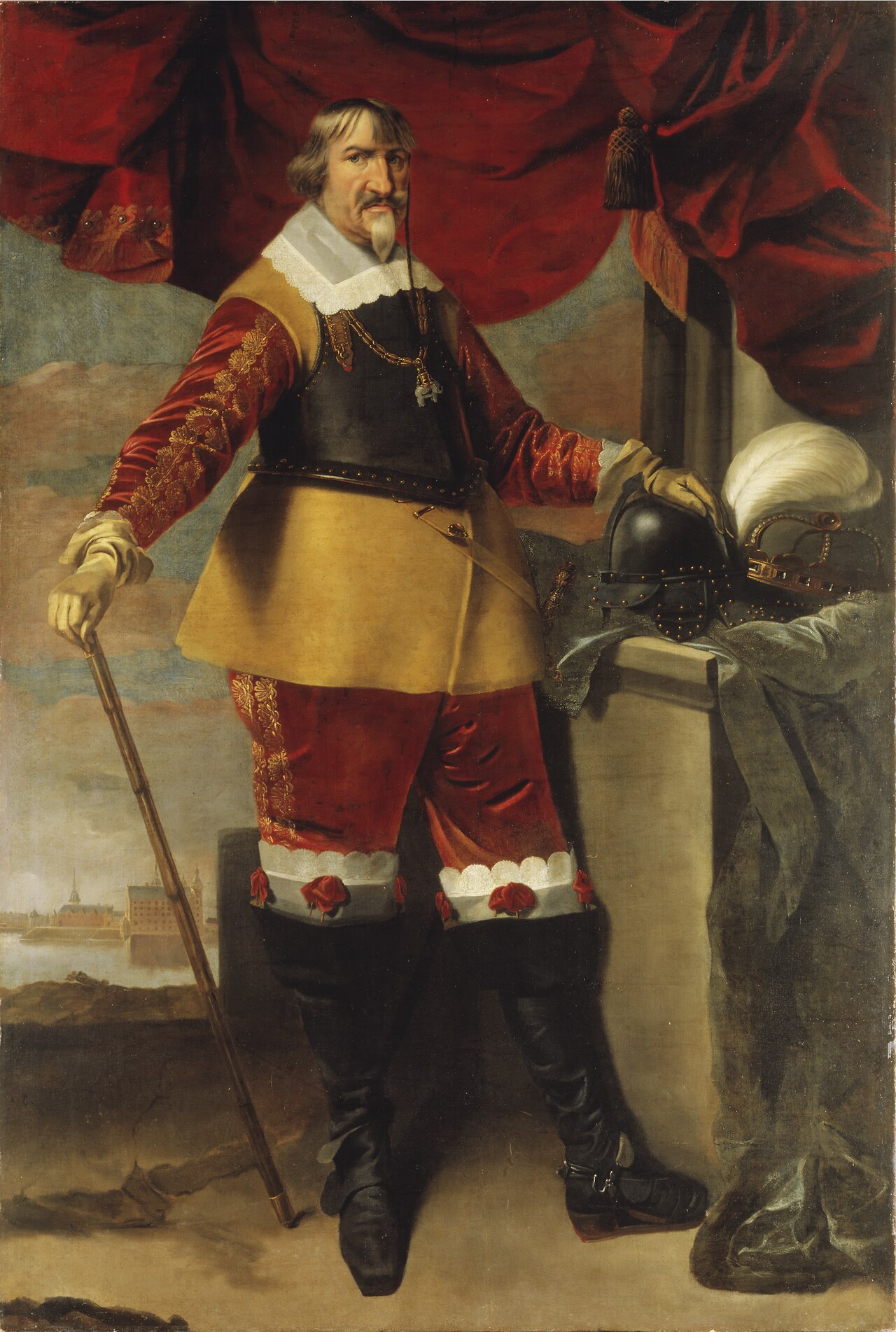


_-_KMS1381_-_Statens_Museum_for_Kunst.jpg)
Early life Karel van Mander III was born in 1609 in Delft, a thriving artistic centre of the Dutch Republic. He was the grandson of Karel van Mander (1548–1606), the eminent painter, poet and art theorist whose *Schilder‑Boeck* laid the foundations of Dutch art historiography. Growing up in a family steeped in artistic practice, the younger Karel would have been exposed to the elder’s writings and to the workshop environment of his father, who is thought to have continued the family studio. While precise details of his apprenticeship are lacking, it is reasonable to assume that he received a conventional training in drawing, oil painting and the handling of colour typical of Delft workshops in the early seventeenth century.
Career and style Around the 1630s Karel van Mander III appears to have left the Dutch Republic for the Danish court, a move that mirrors the broader migration of Dutch artists to northern Europe during the period. In Copenhagen he found patronage among the Danish aristocracy, most notably the court of King Christian IV (1588–1648). The artist’s style does not fit neatly into a single movement; it reflects the pragmatic synthesis of Dutch realism, the emerging Baroque sensibility, and a fascination with exotic attire that was fashionable in court circles. His compositions are generally straightforward, focusing on the sitter rather than elaborate narrative settings, and they display a careful observation of facial features, textiles and armour.
Signature techniques Van Mander’s technique is characterised by three recurring elements: 1. **Textural fidelity** – He rendered fabrics, metal and skin with a subtle modelling that captures tactile qualities. In the turbaned portraits the folds of silk and the sheen of armour are rendered with fine brushwork that suggests a keen interest in materiality. 2. **Controlled chiaroscuro** – Light is used sparingly to model the face and to accentuate decorative details. The contrast is less dramatic than in the works of Caravaggio, but it serves to isolate the sitter from a muted background, creating a sense of presence. 3. **Narrative restraint** – Unlike many Dutch genre painters, van Mander rarely incorporated symbolic objects or complex backgrounds. When allegorical meaning is present, as in the 1647 *En gammel kone*, it is conveyed through the sitter’s expression and the limited iconography of hearing (e.g., a small ear‑symbol or a listening pose).
Major works - **Standing Man in Oriental Costume (1670)** – Completed the year of his death, this painting shows a full‑length figure dressed in an elaborate oriental outfit, complete with a turban and embroidered cloak. The work demonstrates van Mander’s mature handling of exotic costume, a trend popular among northern European courts seeking to display cosmopolitan taste. - **King Christian IV of Denmark, 1577‑1648 (1643)** – A formal portrait of the Danish monarch, likely commissioned for a state building. The king is portrayed in regal attire, with a modest background that highlights his authority. Van Mander’s careful rendering of the royal insignia underscores his skill in court portraiture. - **En gammel kone. Allegorisk fremstilling af hørelsen (1647)** – Translated as “An old woman. Allegorical representation of hearing,” this piece presents an elderly female figure whose posture and expression suggest attentive listening. The work is notable for its subtle allegorical intent, conveyed without overt symbols. - **A Man Wearing a Turban and Armour (1647)** – This portrait combines military and exotic elements, a fashionable juxtaposition in the mid‑seventeenth century. The armour is painted with a metallic sheen, while the turban adds a touch of the exotic, reflecting the cross‑cultural curiosity of the Danish court. - **Portrait of an Old Woman, Wife of Christian Jacobsen Drakenberg, née Bagge (?) (1647)** – A dignified portrait of an elderly woman, possibly the spouse of the noted Danish sailor Christian Jacobsen Drakenberg. The painting focuses on the sitter’s age‑marked features, rendered with respect and a measured realism that typifies van Mander’s approach to portraiture.
Influence and legacy Karel van Mander III occupies a modest but distinct niche in the artistic exchange between the Dutch Republic and Denmark. His works are among the few Dutch‑origin portraits that survive in Danish collections, offering insight into the visual culture of the Danish court during the mid‑Seventeenth century. Although he never achieved the fame of contemporaries such as Rembrandt or Vermeer, his paintings are valued for their technical proficiency and for the way they document the diffusion of Dutch portrait conventions northwards. Modern scholarship often cites van Mander when discussing the broader network of Dutch artists who worked abroad, and his surviving pieces are held in the Statens Museum for Kunst and other Danish institutions. The artist’s legacy endures primarily through these works, which continue to inform studies of cross‑regional artistic influence and the visual representation of exotic costume in early modern Europe.
Frequently asked questions
Who was Karel van Mander III?
He was a Dutch Golden‑Age painter (1609–1670), grandson of the art theorist Karel van Mander, who spent much of his career working for the Danish court.
What artistic style or movement is he associated with?
His style does not belong to a single movement; it blends Dutch realist portraiture with Baroque influences and a taste for exotic costume, reflecting the preferences of the Danish aristocracy.
What are his most famous works?
Key works include *Standing Man in Oriental Costume* (1670), the portrait of King Christian IV (1643), and a series of 1647 paintings such as *A Man Wearing a Turban and Armour* and *En gammel kone*.
Why does he matter in art history?
He exemplifies the cultural exchange between the Dutch Republic and Denmark, showing how Dutch portrait techniques were adapted for northern European courts and contributing to the visual record of 17th‑century aristocratic taste.
How can I recognise a Karel van Mander III painting?
Look for meticulous rendering of fabrics and armour, restrained backgrounds, a subtle use of light to model the face, and often the inclusion of exotic costume elements such as turbans.