Kanō Naonobu
1607 – 1650
In short
Kanō Naonobu (1607–1650) was a Japanese painter of the early Edo period, a member of the Kanō school and younger brother of the celebrated Kanō Tan'yū. He specialised in ink‑wash landscapes and bird‑and‑flower subjects, using striking negative space to create a sense of atmosphere.
Notable works

_-_2006.142.1_-_Cleveland_Museum_of_Art.jpg)
_-_2006.142.2_-_Cleveland_Museum_of_Art.jpg)
Early life Kanō Naonobu was born in 1607 in Kyoto, a city that had long been a cultural hub for the Japanese aristocracy and the arts. He grew up in a family that was already deeply embedded in the Kanō painting tradition; his father, Kanō Mitsunobu, was a respected master of the school, and his elder brother, Kanō Tan'yū, would later become one of the most eminent painters of the Tokugawa era. From a young age Naonobu received formal training in the Kanō workshop, learning the fundamentals of brushwork, composition, and the use of pigment on silk and paper. The disciplined environment of the workshop emphasized both technical mastery and the ability to respond to official commissions, skills that would shape his later career.
Career and style Naonobu entered the professional sphere during the early decades of the Edo period, a time when the Tokugawa shogunate was consolidating its power and patronising the arts as a means of legitimising rule. He worked closely with his brother Tan'yū on a series of large‑scale projects for the shogunate, including wall paintings for castles and screen decorations for official residences. While his brother favoured a more ornate, colour‑rich approach, Naonobu developed a style characterised by restraint and an emphasis on the emptiness of the picture plane. He preferred monochrome ink wash (sumi-e) techniques, allowing subtle gradations of tone to suggest depth and atmosphere. This aesthetic aligns with the broader Zen‑influenced sensibility that valued simplicity, but Naonobu’s particular use of negative space gave his works a distinctive, almost lyrical quality.
Signature techniques The hallmark of Naonobu’s technique is his skilful manipulation of void. By leaving expanses of the paper untouched, he creates a visual tension between the painted elements and the surrounding emptiness, a method that heightens the sense of distance and quiet. His brush strokes are bold yet controlled, often employing a single, confident line to suggest the trunk of a tree or the outline of a bird. In ink wash landscapes he layered washes of varying density, allowing the darker underlayers to peek through lighter top coats, thereby evoking mist or distant mountains. He also experimented with subtle colour accents—typically a wash of muted green or a touch of vermilion—to highlight focal points without disrupting the overall austerity of the composition.
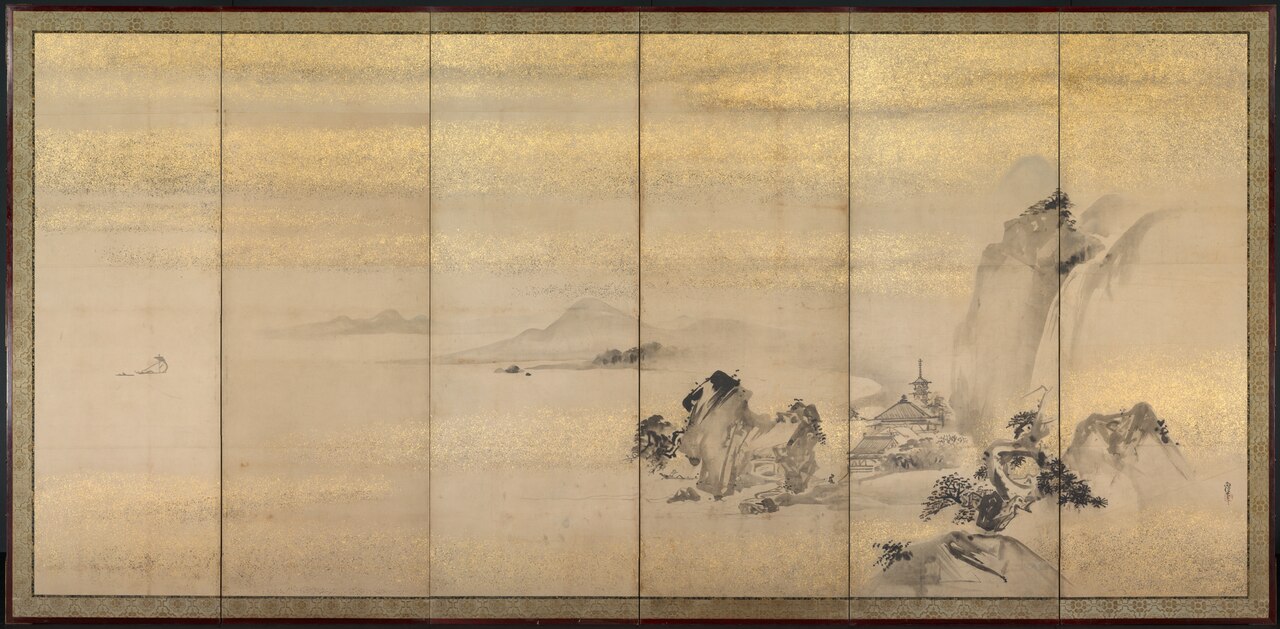
Major works Among Naonobu’s surviving pieces, several stand out for both their artistic merit and their documentation of his evolving style. *Summer and Winter Landscapes* (1628) demonstrates his early command of seasonal contrast, juxtaposing a lush summer scene with a stark winter vista on a single hand‑scroll. The winter half is notable for its sparse pine silhouettes against a wash of pale grey, illustrating his emerging interest in negative space.
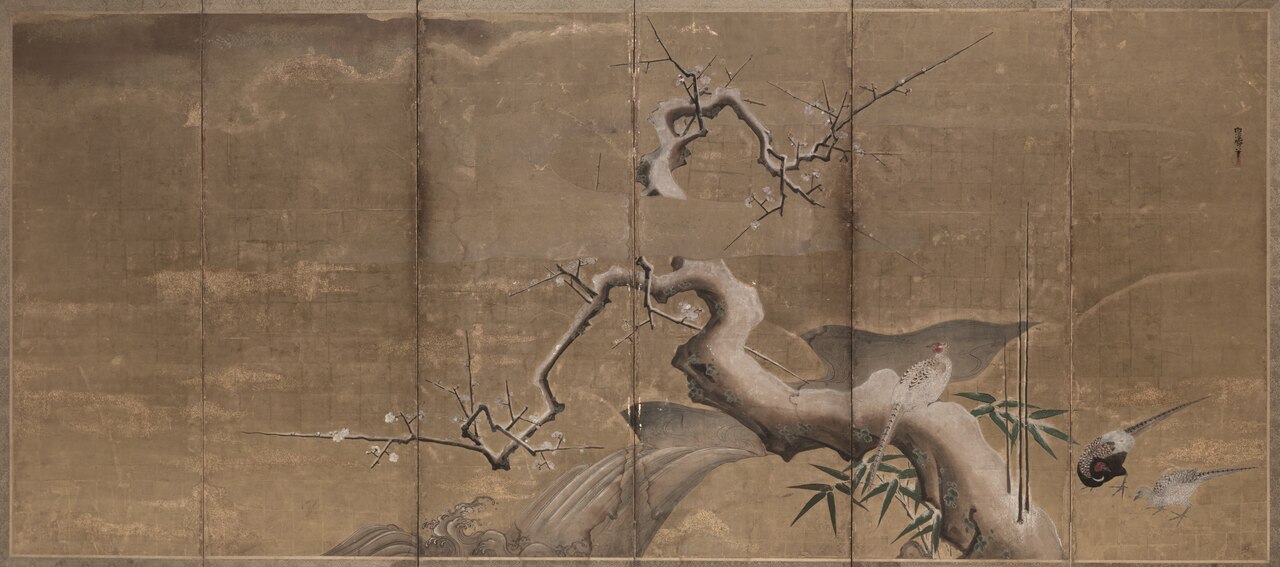
The *Winter Scene with Plum Trees and Pheasants* series (1649) consists of three related panels: the central composition and two flanking sections titled “Birds Left” and “Birds Right.” Here Naonobu captures a quiet courtyard where plum blossoms burst through snow‑covered branches, while pheasants perch on the lower branches. The central panel balances the delicate pink of the blossoms with the starkness of the snow, while the side panels extend the narrative, showing the birds in varying poses. The use of subtle ink gradations conveys the chill of winter, and the careful placement of the birds demonstrates his skill in integrating fauna within a landscape.
*Birds and Flowers* (1650), completed shortly before his death, epitomises his mature style. The composition features a single crane standing amid a profusion of blossoms, rendered with a deft ink line that suggests both movement and stillness. The background is left almost entirely blank, allowing the bird and flowers to command the viewer’s attention.
Influence and legacy Kanō Naonobu’s contributions to the Kanō school were significant, though historically he has been eclipsed by his more famous brother. His emphasis on negative space and restrained palette anticipated later developments in Japanese ink painting, influencing artists who sought to blend the formal discipline of the Kanō tradition with a more contemplative aesthetic. Contemporary scholars credit Naonobu with helping to diversify the visual language of the school, providing a counterpoint to the more decorative tendencies that dominated court commissions.
In modern exhibitions, Naonobu’s works are often displayed alongside those of his brother to highlight the stylistic dialogue within the family workshop. His paintings continue to be studied for their technical mastery and their subtle integration of Zen principles into courtly art. For collectors and curators, Naonobu’s pieces represent a rare glimpse into the quieter, introspective side of early Edo visual culture, and they remain valuable for understanding the broader evolution of Japanese ink painting.
Frequently asked questions
Who was Kanō Naonobu?
Kanō Naonobu (1607–1650) was a Japanese painter of the early Edo period, a member of the Kanō school and younger brother of the celebrated painter Kanō Tan'yū.
What artistic movement or style is he associated with?
He worked within the Kanō school tradition but is noted for a restrained ink‑wash style that emphasizes bold negative space and subtle tonal gradations.
What are his most famous works?
His most recognised pieces include *Summer and Winter Landscapes* (1628), the *Winter Scene with Plum Trees and Pheasants* series (1649), and *Birds and Flowers* (1650).
Why is Kanō Naonobu important in art history?
He broadened the visual vocabulary of the Kanō school by integrating Zen‑inspired minimalism, influencing later Japanese ink painters and offering a quieter counterpoint to the more decorative court art of his era.
How can I recognise a painting by Kanō Naonobu?
Look for monochrome ink washes with large areas of untouched paper, precise single‑brush lines, and a calm composition where birds or blossoms are placed against a sparsely rendered landscape.