Kamisaka Sekka
1866 – 1942
In short
Kamisaka Sekka (1866–1942) was a Japanese artist from Kyoto who became the last major exponent of the Rinpa school, working across painting, design, and lacquer. He is known for works such as Bugaku Dancer (1916) and Plum Blossoms (1919), and his art blends traditional motifs with early‑twentieth‑century aesthetics.
Notable works
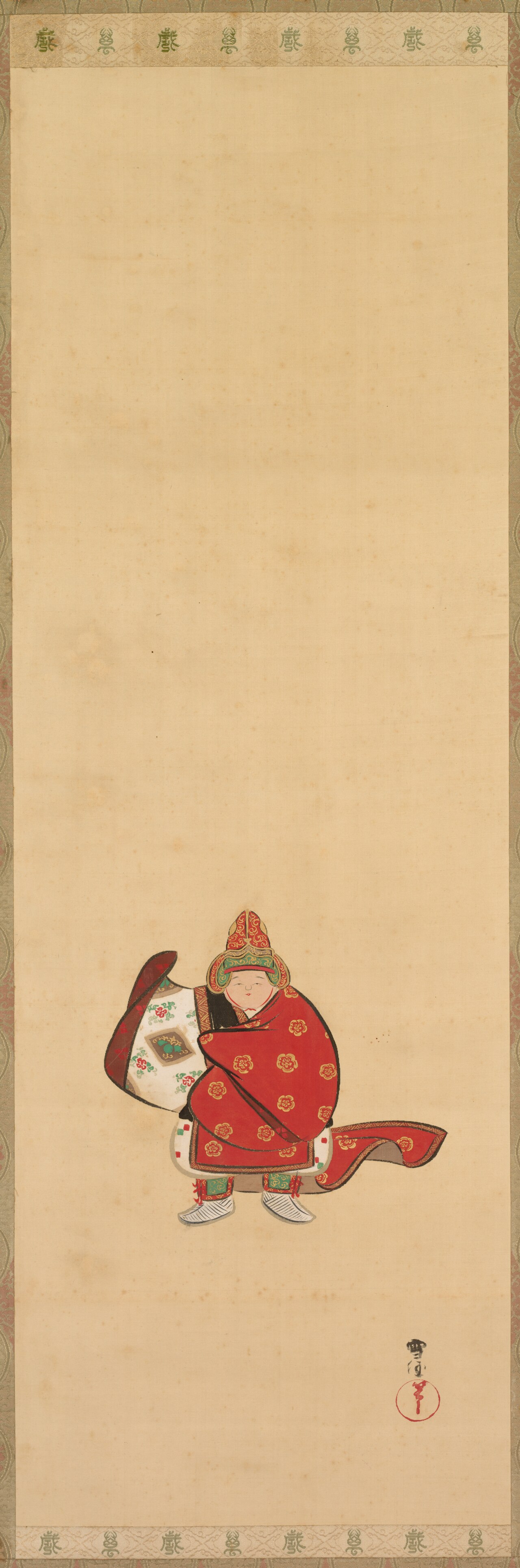


Early life Kamisaka Sekka was born in 1866 in Kyoto, the cultural heart of Japan, into a samurai family that valued education and the arts. From a young age he displayed an aptitude for drawing and calligraphy, which was nurtured by his parents. He received a classical education that included exposure to Chinese literature and Japanese poetry, both of which would later inform his visual vocabulary. Kyoto's rich artistic environment, with its temples, gardens and long‑standing crafts, provided a fertile backdrop for his formative years.
Career and style Sekka’s professional trajectory began in the late 1880s when he entered the Imperial Art School (later the Tokyo Fine Arts School). There he encountered the revivalist movement that sought to reinterpret traditional Japanese painting for a modern audience. He soon aligned himself with the Rinpa school, a lineage founded in the early Edo period that emphasized decorative colour, bold outlines and a reverence for nature. Sekka absorbed the teachings of earlier Rinpa masters such as Hon'ami Kōetsu and Ogata Kōrin, but he also infused his work with contemporary sensibilities, drawing on Western techniques of perspective and composition that were being introduced to Japanese art schools.
Throughout the 1910s and 1920s Sekka held positions as a teacher, designer and lacquer artist. He worked for the Imperial Household Agency, contributing decorative panels and lacquerware for official residences. His style is characterised by a synthesis of the traditional Rinpa emphasis on flat, luminous colour fields with a more fluid, expressive brushwork that reflects his personal engagement with the natural world. He frequently employed gold leaf and precious pigments, a hallmark of Rinpa, yet his compositions often display a dynamic sense of movement, suggesting an awareness of modern artistic developments.
Signature techniques Sekka’s technique is distinguished by several recurring elements. First, he favoured a limited but vivid palette, often juxtaposing deep indigo or black with bright reds, golds and greens to create striking contrast. Second, he employed the "tarashikomi" method, a wet‑on‑wet technique that allows pigments to bleed and pool, producing soft, atmospheric effects. Third, his use of gold leaf was both decorative and structural, framing motifs and reinforcing the sense of depth without relying on linear perspective. In his lacquer work, he combined traditional urushi (Japanese lacquer) with inlaid mother‑of‑pearl and metal fittings, achieving a tactile richness that complemented his painted surfaces.
Major works - **Bugaku Dancer (1916)** – This painting captures a court dancer in elaborate costume, rendered with flowing lines and a luminous gold background. The composition reflects Sekka’s interest in performance arts and his ability to convey movement through stylised forms. - **Plum Blossoms (1919)** – A study of early‑spring blossoms, the work showcases Sekka’s mastery of tarashikomi, with ink and pigment bleeding to suggest the delicate texture of petals. The piece balances restraint with vibrant colour, exemplifying his Rinpa lineage. - **Kusunoki Masashige before the Battle at Minato River (1918)** – A historic subject rendered with dramatic intensity; Sekka employs bold outlines and a vivid red‑black palette to evoke the samurai’s resolve. The painting demonstrates his skill in integrating narrative content with decorative aesthetics. - **Chrysanthemums, Hydrangeas, and Asters (1925)** – A later work that brings together three botanical motifs in a harmonious arrangement. The composition is structured yet fluid, with each flower rendered in distinct colour blocks that interlock, highlighting Sekka’s continued exploration of nature as a decorative principle.
Influence and legacy Kamisaka Sekka is widely regarded as the final great practitioner of the Rinpa tradition, bridging the gap between classical Japanese painting and the modernising impulses of the early twentieth century. His teaching roles helped disseminate Rinpa techniques to a new generation of artists, many of whom adopted his approach to colour and decorative pattern. Sekka’s lacquer designs influenced the development of Japanese decorative arts, particularly in the realm of tea‑ceremony objects and interior furnishings. Although he did not found a distinct movement, his work embodies a synthesis of tradition and innovation that continues to inform contemporary Japanese design. Today, his paintings are held in major museum collections, and his legacy endures in the ongoing appreciation of Rinpa aesthetics within both scholarly and popular contexts.
Frequently asked questions
Who was Kamisaka Sekka?
Kamisaka Sekka (1866–1942) was a Japanese artist from Kyoto, best known as the last major exponent of the Rinpa school, working in painting, design and lacquer.
What artistic style or movement is he associated with?
He is closely linked to the Rinpa school, a decorative tradition that emphasizes bold colour, gold leaf and stylised natural motifs.
What are his most famous works?
His best‑known pieces include Bugaku Dancer (1916), Plum Blossoms (1919), Kusunoki Masashige before the Battle at Minato River (1918) and Chrysanthemums, Hydrangeas, and Asters (1925).
Why does Kamisaka Sekka matter in art history?
He bridged classical Japanese painting with early twentieth‑century modernism, preserving Rinpa techniques while introducing new compositional ideas, and his teaching helped spread these methods to later artists.
How can I recognise a work by Kamisaka Sekka?
Look for a vivid, limited palette combined with gold leaf, flat colour blocks, and the tarashikomi wet‑on‑wet technique that creates soft, bleeding edges, often depicting nature or historic subjects with a decorative, rhythmic composition.