Kaihō Yūshō
1533 – 1615
In short
Kaihō Yūshō (1533–1615) was a Japanese painter of the Azuchi‑Momoyama period, born in Ōmi Province as the fifth son of Kaihō Tsunachika. He is noted for ink‑wash works such as Pine and Plum by Moonlight (1591) and Winter and Summer Flowers (1600).
Notable works


Early life Kaihō Yūshō was born in 1533 in Ōmi Province, a region that later became part of Shiga Prefecture. He was the fifth son of Kaihō Tsunachika, a samurai who served the warlord Azai Nagamasa. The Kaihō family belonged to the warrior‑aristocratic class, and Yūshō received a classical education that included both martial training and exposure to Chinese literature and calligraphy. His early immersion in the cultural practices of the courtly elite laid the foundation for his later artistic career.
Career and style Yūshō emerged as a painter during the tumultuous Azuchi‑Momoyama period (c. 1568–1600), a time when Japan witnessed a surge in patronage for the arts from powerful daimyō such as Oda Nobunaga and Toyotomi Hideyoshi. Although specific records of his patrons are scarce, his work reflects the aesthetic preferences of the era: an emphasis on bold, expressive brushwork combined with a restrained, monochrome palette derived from Chinese ink traditions.
His style is characterised by a synthesis of the native yamato-e sensibility with the monochrome ink techniques (suiboku-ga) imported from Ming‑China. Yūshō favoured spontaneous, gestural strokes that convey the essence of a subject rather than its literal appearance. This approach aligns him with the broader literati movement, which valued personal expression and scholarly learning over decorative polish.
Signature techniques Yūshō’s paintings are distinguished by several recurring technical choices:
* Ink wash (sumi) layering – He built depth by applying multiple translucent washes of ink, allowing darker underlayers to emerge through lighter upper coats. * Dry brush (fude‑kake) effect – By loading the brush with a modest amount of ink and dragging it across the paper, he produced textured, bark‑like strokes that suggest foliage or rock surfaces. * Negative space – Large expanses of untouched paper serve as atmospheric voids, hinting at mist, sky, or the interior of a garden. * Monochrome composition – While occasional touches of subtle colour appear in some works, the dominant visual language remains black ink on white paper, underscoring a meditative quality.
These techniques, combined with a disciplined yet fluid hand, gave his paintings a sense of immediacy that resonated with contemporary connoisseurs.
Major works Yūshō’s surviving oeuvre is limited but includes several celebrated pieces:
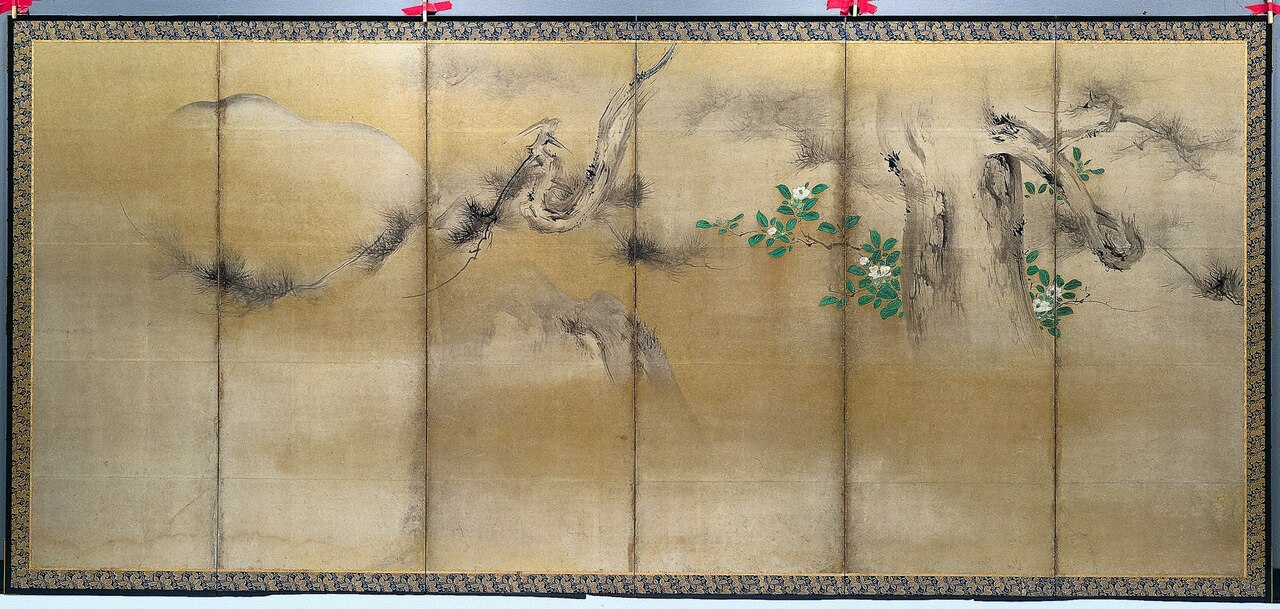
* Pine and Plum by Moonlight (1591) – This ink painting depicts a solitary pine tree and a blossoming plum set against a moonlit sky. The contrast between the dark, rugged bark of the pine and the delicate, almost translucent rendering of the plum blossoms exemplifies his mastery of texture and atmospheric perspective. * Winter and Summer Flowers (1600) – Executed as a paired scroll, the work juxtaposes winter camellias with summer peonies. The composition highlights the seasonal cycle, a common theme in Japanese art, while Yūshō’s brushwork captures the fleeting beauty of each flower with minimal, decisive strokes. * Figure of Daruma (1533) – Though dated to his birth year, this small ink portrait of the Buddhist monk Daruma (known in the West as Bodhidharma) is traditionally attributed to Yūshō. The piece is notable for its stark, almost calligraphic representation of the monk’s austere visage, reflecting the artist’s early engagement with spiritual subjects.
These works illustrate Yūshō’s ability to render both natural and human subjects with a unified visual language that balances simplicity and depth.
Influence and legacy Kaihō Yūshō occupies a modest but respected position within Japanese art history. His integration of Chinese literati techniques with native Japanese sensibilities contributed to the development of suiboku‑ga as a distinct Japanese genre. Later painters of the Edo period, such as the Kanō and Tosa schools, drew upon the expressive brushwork that Yūshō exemplified, particularly in their landscape and flower‑and‑bird compositions.
Scholars also credit Yūshō with helping to disseminate the aesthetic of *wabi‑sabi*—the appreciation of imperfection and transience—through his use of empty space and subtle tonal variations. While his name is not as widely known as contemporaries like Kanō Eitoku, his surviving pieces continue to be studied for their technical finesse and philosophical resonance.
In modern times, Yūshō’s paintings are housed in several Japanese museums and appear in academic publications on Azuchi‑Momoyama art. His work remains a reference point for artists and historians interested in the cross‑cultural exchange between China and Japan during the late 16th century, and for those who seek to understand the evolution of ink painting in Japan.
Overall, Kaihō Yūshō’s career reflects the dynamic interplay of war‑time patronage, scholarly pursuit, and artistic innovation that defined one of Japan’s most vibrant cultural epochs.
Frequently asked questions
Who was Kaihō Yūshō?
Kaihō Yūshō (1533–1615) was a Japanese painter of the Azuchi‑Momoyama period, known for his monochrome ink works that blend Chinese literati techniques with native Japanese aesthetics.
What artistic style or movement is he associated with?
He is linked to the suiboku‑ga (ink‑wash) tradition and the broader literati movement, which valued expressive brushwork and scholarly inspiration over decorative detail.
What are his most famous works?
His best‑known paintings include Pine and Plum by Moonlight (1591), Winter and Summer Flowers (1600), and the Figure of Daruma (1533).
Why is Kaihō Yūshō important in art history?
Yūshō helped integrate Chinese ink techniques into Japanese painting, influencing later schools such as Kanō and contributing to the development of the wabi‑sabi aesthetic in visual art.
How can I recognise a painting by Kaihō Yūshō?
Look for bold, gestural ink strokes, extensive use of negative space, subtle layering of washes, and a calm, monochrome palette that conveys atmosphere rather than precise detail.