Juan Lepiani
1864 – 1932
In short
Juan Lepardi (1864–1932) was a Peruvian painter renowned for his large‑scale historical and patriotic canvases, especially scenes from the War of the Pacific. Born in Lima and dying in Rome, his work bridges Peruvian national narrative with European academic painting traditions.
Notable works


Early life Juan Lepardi was born in 1864 in Lima, the capital of Peru, into a family with a strong cultural background. His full name, José Juan de Dios Mateo Osbaldo Botaro Lepiani Toledo, reflects the customary practice of using multiple given names and surnames in Hispanic societies. Growing up in a period when Peru was consolidating its republican identity after the wars of independence, Lepardi was exposed early to the stories of national heroes and battles that would later dominate his artistic output. Formal artistic training was limited in Lima at the turn of the century, so he likely began his studies under local masters before seeking further instruction abroad, a common path for ambitious South American artists of his generation.
Career and style Lepardi’s career unfolded against a backdrop of rapid modernization in both Peru and Europe. By the late 19th century, a number of Peruvian artists travelled to Europe to study at academies in Paris, Madrid, and Rome, absorbing the techniques of academic realism, historicism, and the burgeoning Impressionist movement. Although specific records of Lepardi’s studies are scarce, his later works display a command of composition, chiaroscuro, and anatomical accuracy that suggests formal training in a European academy, most plausibly in Rome where he eventually died.
His style can be described as academic realism with a strong narrative drive. He employed a clear, often dramatic lighting scheme to highlight central figures, a technique derived from the French academic tradition of history painting. The colour palette is typically sober, favouring earthy tones and deep blues that convey the gravity of historical events. Lepardi avoided the loose brushwork of the avant‑garde; instead, his canvases are meticulously rendered, reflecting an intention to document rather than to abstract. This approach resonated with Peruvian patrons who sought visual reinforcement of national myths and collective memory.
Signature techniques Lepardi’s signature techniques include:
1. Narrative focalisation – He arranges multiple figures in a way that guides the viewer’s eye toward a single, emotionally charged moment, often a pivotal gesture or expression. 2. Layered glazing – Using thin layers of oil paint, he achieves depth of colour and subtle tonal shifts, especially in sky and water surfaces. 3. Historical accuracy in costume – While artistic licence is evident, Lepardi paid careful attention to military uniforms, civilian dress, and architectural details, consulting contemporary photographs and written accounts. 4. Dramatic chiaroscuro – Strong contrasts between light and shadow enhance the three‑dimensionality of figures and underscore the moral weight of the scene. 5. Monumental scale – Many of his canvases exceed life‑size dimensions, a choice that reinforces the epic nature of the subjects he portrayed.
These techniques combine to produce works that function both as visual records and as emotive storytelling devices.
Major works Lepardi’s most celebrated paintings are tied to pivotal episodes in Peruvian history:
- "Battle of Arica – War of the Pacific" (1894) – This canvas captures the fierce clash at Arica during the War of the Pacific (1879–1884). Lepardi places Peruvian troops in the foreground, their faces illuminated by the glow of cannon fire. The composition balances chaos with a heroic centre, illustrating both the tragedy and the valor of the conflict.
- "La respuesta" (1894) – Although less documented than his war scenes, this work likely depicts a moment of diplomatic or civic response, aligning with Lepardi’s interest in moments of decisive action. The painting’s restrained palette and tight grouping of figures are characteristic of his narrative focus.
- "Entrada de Piérola a Lima por la Puerta de Cocharcas" (1900) – This historical tableau records the arrival of former President Nicolás de Piérola through the historic Cocharcas gate. Lepardi renders the crowd’s varied reactions, from jubilant celebration to cautious watchfulness, using a balanced perspective that foregrounds both the leader and the architecture.
- "Los trece de la Isla del Gallo" (1902) – Depicting the thirteen Peruvian patriots who defended the Gallo Island during the war, the painting emphasizes collective bravery. Lepardi’s use of muted earth tones underscores the harshness of the battlefield while the central figures are bathed in a hopeful light.
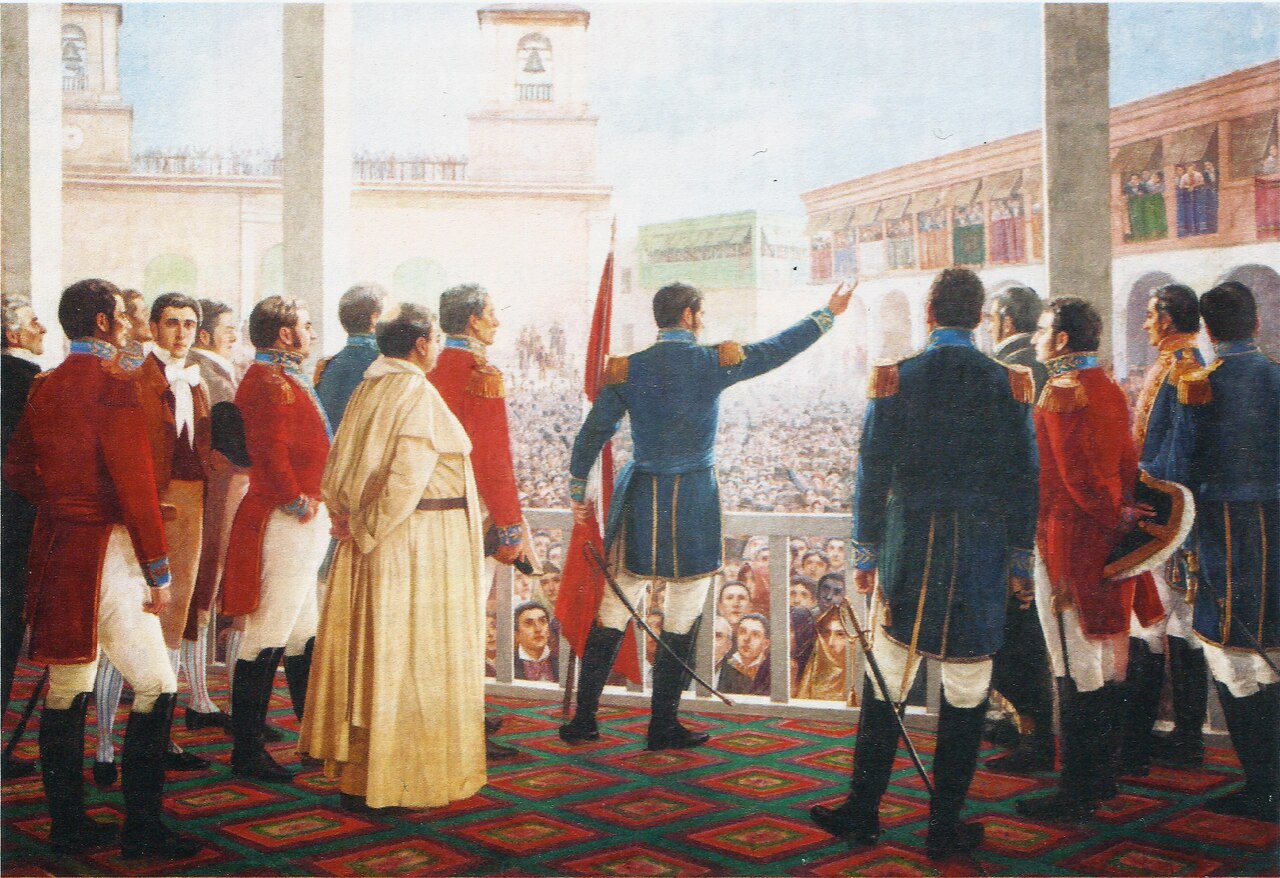
- "Proclamation of the Independence of Peru" (1904) – Perhaps his most overtly patriotic piece, it portrays the declaration of independence with an assembly of dignitaries, military officers, and civilians. The composition is reminiscent of European historical murals, with a central figure—presumably José de San Martín or another founding leader—elevated by a subtle halo of light, symbolising the dawn of nationhood.
These works were frequently exhibited in Lima’s public galleries and later reproduced in textbooks, cementing Lepardi’s reputation as the visual chronicler of Peru’s formative episodes.
Influence and legacy Juan Lepardi’s legacy endures in several ways. First, his paintings continue to serve as visual references for historians and educators teaching Peruvian history; the fidelity of his costume and architectural details offers a rare glimpse into late‑19th‑century visual culture. Second, his commitment to academic realism provided a counterpoint to the avant‑garde movements that later swept Latin America, preserving a strand of traditional figurative painting that would inspire subsequent generations of Peruvian artists seeking to balance modern techniques with national subject matter.
Third, the presence of his works in major Peruvian institutions—such as the Museo Nacional de Arte in Lima—ensures that his contributions remain accessible to the public. Scholars note that Lepardi’s oeuvre helps articulate a visual identity for Peru, one that intertwines European artistic standards with distinctly local narratives. While his name is less known outside specialist circles, within the realm of Latin American historical painting he occupies a distinct niche as a bridge between colonial academic conventions and the emerging nationalist visual language of the early 20th century.
Finally, Lepardi’s death in Rome in 1932 underscores the trans‑Atlantic dimension of his career; he spent his final years in the European capital that had shaped his technique, suggesting a lifelong dialogue between his Peruvian roots and the broader artistic currents of his time. His works, therefore, stand as testament to the cultural exchange that defined the era and continue to inform contemporary discussions about the role of art in nation‑building.
Overall, Juan Lepardi remains a pivotal figure for anyone studying the intersection of art, history, and national identity in Peru.
Frequently asked questions
Who was Juan Lepardi?
Juan Lepardi (1864–1932) was a Peruvian painter best known for large, historically themed canvases that depict key events of Peru’s past, especially the War of the Pacific.
What artistic style or movement is he associated with?
Lepardi worked in an academic realist style, employing detailed narrative composition, chiaroscuro and a disciplined, European‑influenced technique rather than aligning with any avant‑garde movement.
What are his most famous works?
His most celebrated paintings include "Battle of Arica – War of the Pacific" (1894), "Entrada de Piérola a Lima por la Puerta de Cocharcas" (1900), "Los trece de la Isla del Gallo" (1902) and "Proclamation of the Independence of Peru" (1904).
Why is Juan Lepardi important in art history?
He provides a visual record of Peru’s formative historical moments, linking European academic painting with Peruvian nationalist themes, and his works continue to inform historical scholarship and public memory.
How can I recognise a Juan Lepardi painting?
Look for large‑scale, meticulously rendered scenes with strong narrative focus, precise historical costumes, dramatic lighting, and a sober colour palette that together convey a sense of national heroism.