Joseph Heintz the Elder
1564 – 1609
In short
Joseph Heintz the Elder (1564–1609) was a Swiss painter, draftsman and architect who worked in the Baroque style, primarily for the Habsburg courts in Central Europe, and is noted for his religious compositions and court portraits.
Notable works


_in_ganzer_Figur_mit_einem_Hofzwerg_-_GG_9453_-_Kunsthistorisches_Museum.jpg)
Early life Joseph Heintz the Elder was born in 1564 in Basel, a city that was a thriving centre of the Northern Renaissance. Little is known of his family background, but Basel’s rich artistic environment provided ample opportunity for early exposure to drawing and painting. He likely received his initial training in local workshops, where the emphasis on meticulous draftsmanship and the study of classical antiquity would shape his later work.
Career and style In the late 1580s Heintz moved beyond Switzerland, seeking patronage in the courts of the Holy Roman Empire. By the turn of the century he had established himself in Prague, the capital of the Bohemian lands, where he entered the service of the Habsburg dynasty. His career coincided with the emergence of the Baroque style, and he adapted the dramatic vigor of the movement to the more restrained tastes of his aristocratic patrons. He produced both sacred subjects—altarpieces, devotional panels—and secular portraits, often combining a clear narrative focus with a heightened sense of immediacy.
Signature techniques Heintz’s paintings are characterised by a careful handling of light and shadow, a technique derived from Italian chiaroscuro that enhances three‑dimensional modelling. His background as a draftsman is evident in the precise outlines of figures and architectural elements, while his training as an architect informs the harmonious composition of interior spaces. He frequently employed a subdued colour palette, allowing the subtle tonal contrasts to convey emotional depth. In portraiture, he captured the individuality of his sitters through attentive rendering of facial features and the inclusion of symbolic objects that hint at status or personal interests.
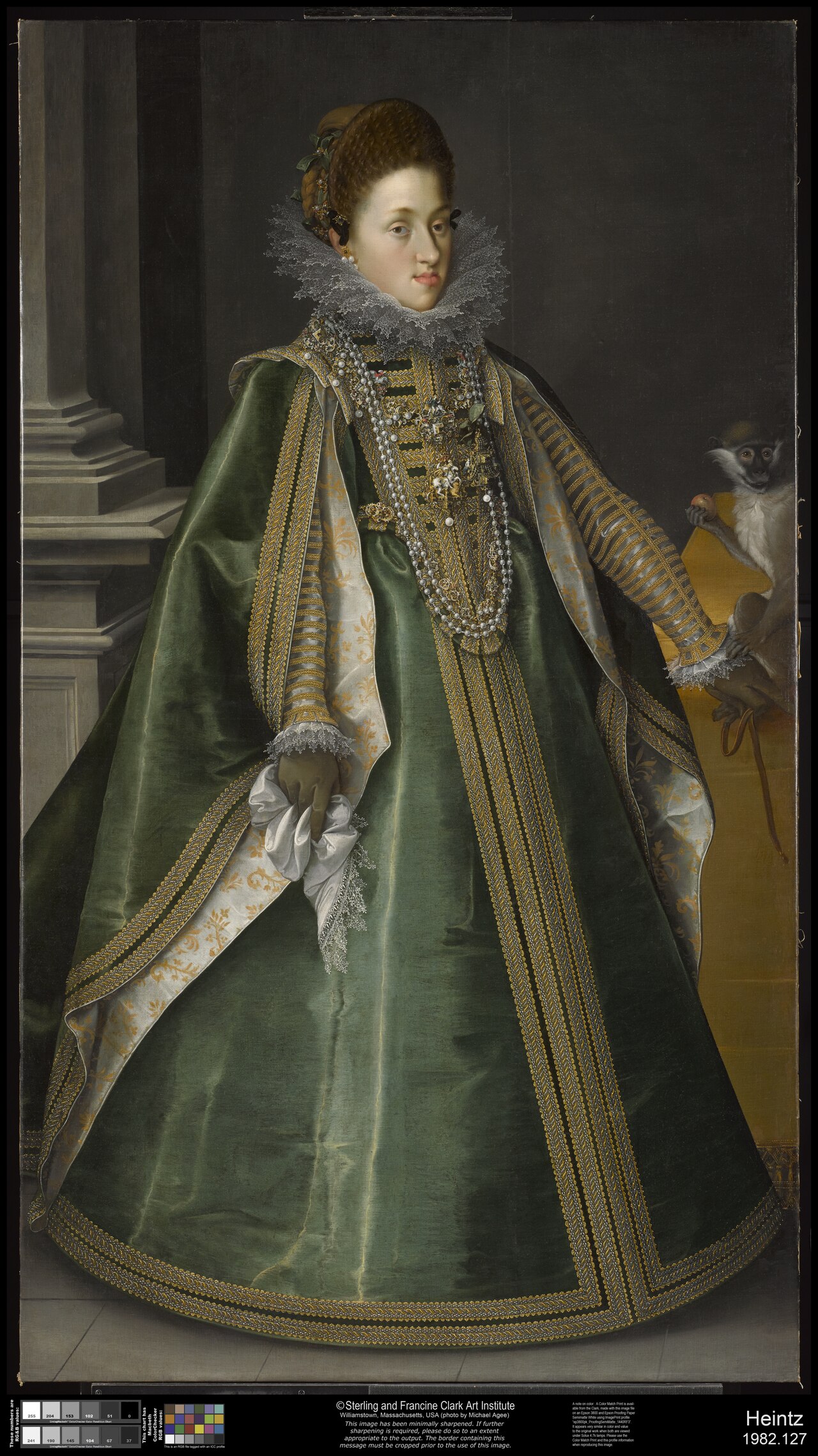
Major works - **Konstanze von Habsburg, Archduchess of Central Austria, Later Queen of Poland (1604)** – This full‑length portrait presents the archduchess in regal attire, her posture dignified and her gaze directed outward. Heintz’s use of a dark, neutral background isolates the figure, while the intricate detailing of jewellery and fabric demonstrates his skill in rendering texture. - **Annunciation (1598)** – A religious composition that illustrates the moment of the Angel Gabriel’s announcement to the Virgin Mary. The painter arranges the figures within an architectural setting, employing a gentle light that streams from an unseen source, highlighting the divine encounter. - **Madonna and Child with Saints John, Joseph, Anna and angels (1587)** This early work reflects Heintz’s grounding in the Northern Renaissance. The central Madonna is framed by a group of saints, each rendered with careful attention to individual expression. The inclusion of angels adds a celestial dimension, while the overall composition balances solemnity with tender intimacy. - **Erzherzog Maximilian Ernst mit Jagdhund (1604)** – In this portrait the archduke is shown accompanied by a hunting dog, a conventional symbol of nobility and martial prowess. Heintz places the figure against a muted landscape, allowing the rich colours of the aristocratic garments to stand out. - **Emperor Ferdinand II in Full Figure with a Court Dwarf (1604)** – This work combines portraiture with a subtle social commentary. The emperor is depicted in a commanding stance, while the accompanying dwarf provides a contrast that underscores the ruler’s stature. Heintz’s handling of the two figures showcases his ability to convey both authority and humanity within a single canvas.
Influence and legacy Joseph Heintz the Elder occupied a pivotal position at the crossroads of the Northern Renaissance and the burgeoning Baroque movement. By integrating Italianate compositional dynamism with the detailed realism of his Swiss training, he created a visual language that resonated with Central European patrons. His portraits set a standard for courtly representation, influencing subsequent generations of Bohemian and Austrian painters. Though many of his works remain in private collections, the surviving pieces continue to be studied for their technical proficiency and their role in the diffusion of Baroque aesthetics across the Habsburg lands. Modern scholarship recognises Heintz as a key conduit through which the artistic innovations of Italy and the disciplined craftsmanship of the North were merged, contributing to the development of a distinctly Central European Baroque tradition.
Frequently asked questions
Who was Joseph Heintz the Elder?
He was a Swiss painter, draftsman and architect (1564–1609) who worked mainly in Prague for the Habsburg courts, producing religious works and court portraits in the Baroque style.
What artistic movement is he associated with?
Heintz is linked to the Baroque movement, blending dramatic lighting and dynamic composition with the detailed realism of his Northern Renaissance training.
What are his most famous works?
Among his best‑known paintings are the portrait of Konstanze von Habsburg (1604), the Annunciation (1598), Madonna and Child with Saints (1587), Erzherzog Maximilian Ernst with hunting dog (1604), and Emperor Ferdinand II with a court dwarf (1604).
Why is Joseph Heintz the Elder important in art history?
He served as a bridge between the Northern Renaissance and Baroque periods, influencing Central European portraiture and helping to spread Baroque aesthetics throughout the Habsburg territories.
How can I recognise a painting by Joseph Heintz the Elder?
Look for precise draftsmanship, subtle chiaroscuro, careful rendering of textiles and jewellery, and often an architectural framework that gives a calm yet three‑dimensional presence to his figures.