Josef Kriehuber
1800 – 1876
In short
Josef Kriehuber (1800–1876) was an Austrian painter and lithographer renowned for his highly detailed lithographic portraits of aristocracy and notable figures of 19th‑century Central Europe.
Notable works

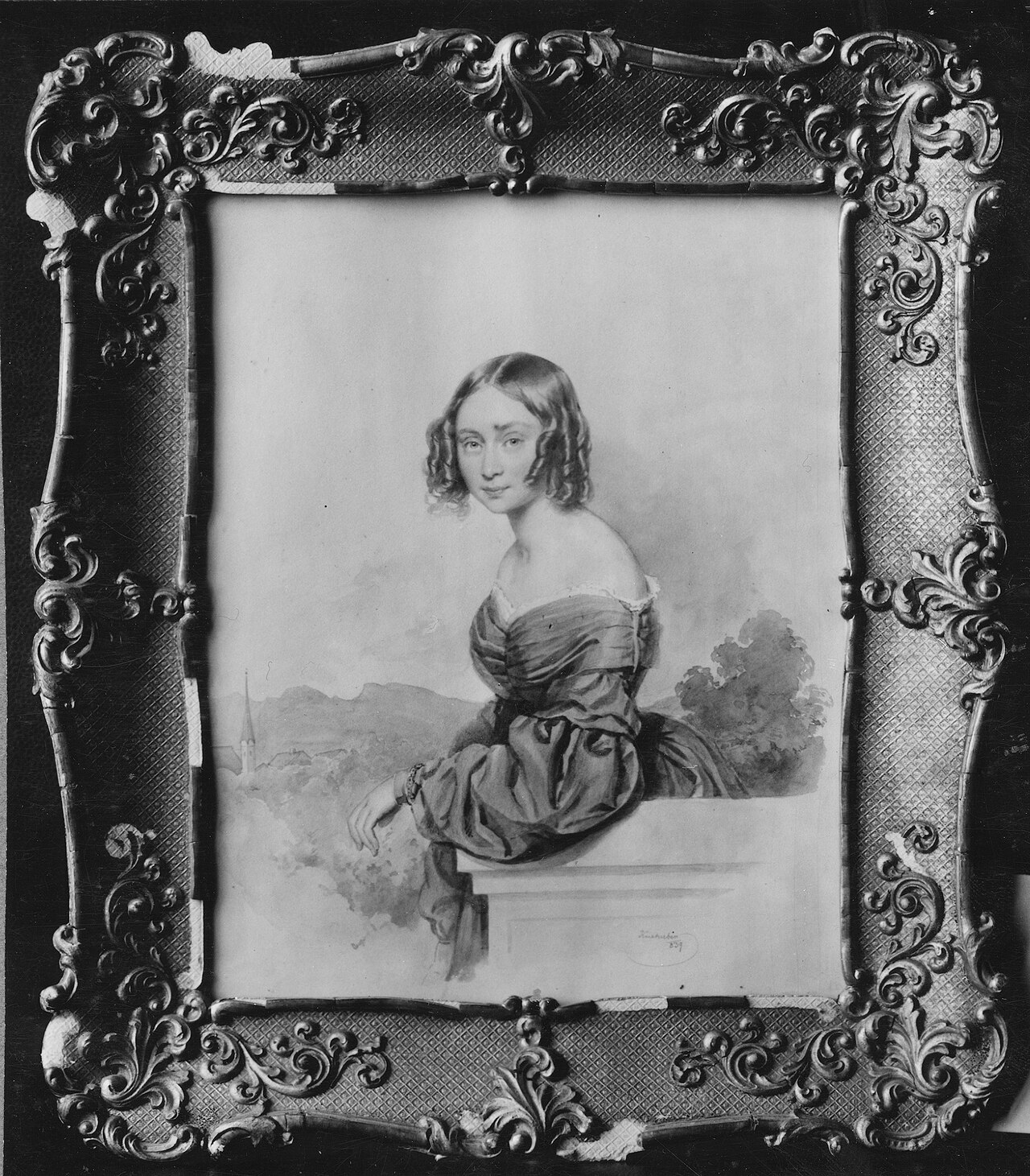
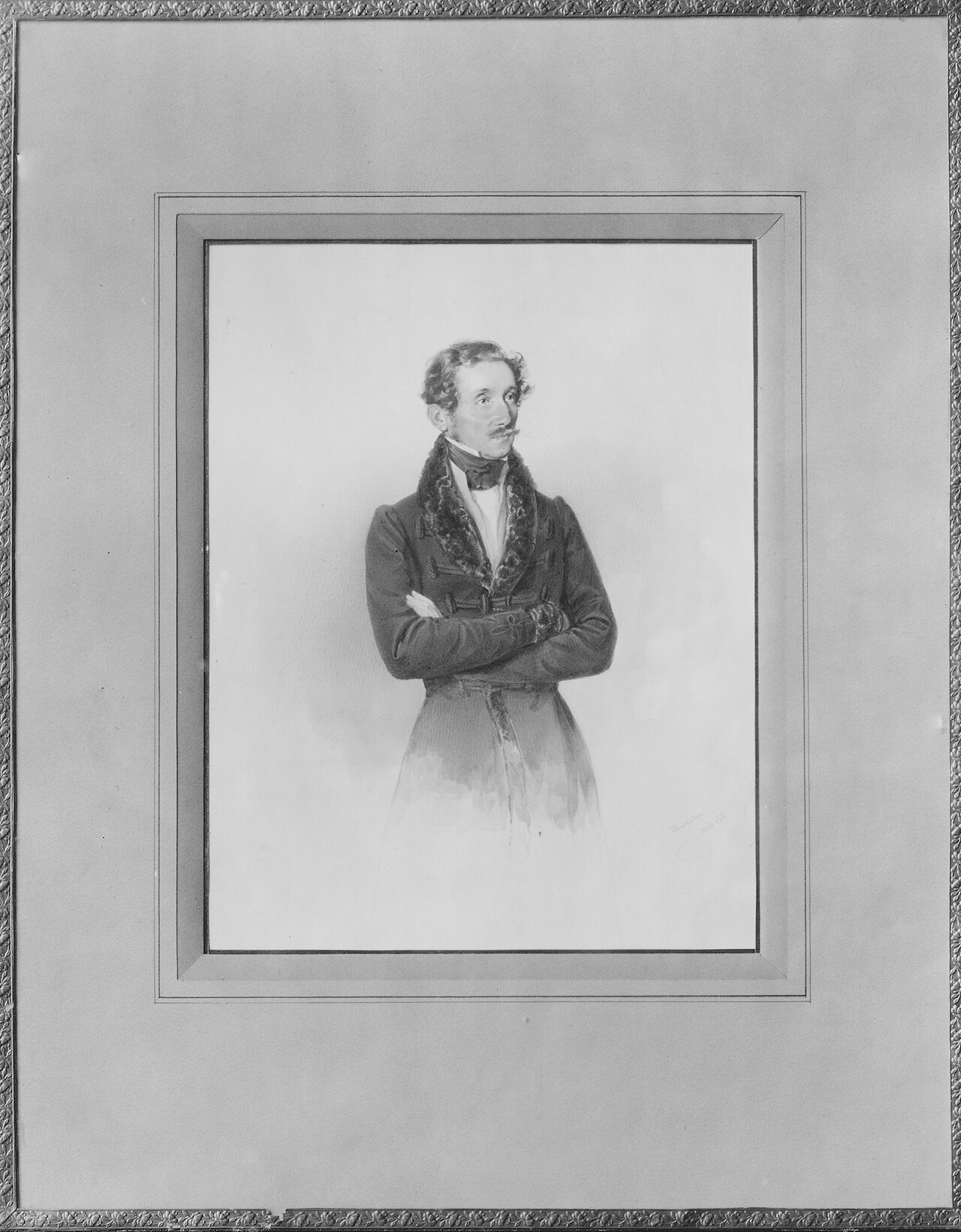


Early life Josef Kriehuber was born on 11 February 1800 in Vienna, then the capital of the Austrian Empire. He grew up in a family with modest means, but his talent for drawing was recognised early by local artists. After completing a basic education, Kriehuber enrolled at the Academy of Fine Arts in Vienna, where he received formal training in drawing, composition, and the emerging techniques of lithography. The academy’s emphasis on academic drawing and the study of classical models gave him a solid foundation that would later inform his meticulous portrait work.
Career and style Kriehuber’s professional career began in the 1820s, a period when lithography was gaining popularity as a reproducible medium for portraiture. He quickly established a reputation for creating lithographs that approached the clarity of the new daguerreotype photographs, yet retained the artistic nuance of hand‑drawn works. His style can be described as a blend of academic realism and the delicate line work characteristic of early‑19th‑century Austrian lithography. By the 1830s he was receiving commissions from the Viennese aristocracy, the imperial court, and leading cultural figures, cementing his status as the premier portrait lithographer of the Habsburg lands.
The consistency of his output—often producing multiple lithographs of the same sitter from different angles—reflected both an entrepreneurial spirit and a genuine fascination with the human face. Kriehuber’s portraits are noted for their precise rendering of facial features, careful attention to clothing textures, and subtle use of shading to suggest depth. While he never aligned himself with a formal avant‑garde movement, his work echoed the broader European trend toward realism and the documentation of contemporary society.
Signature techniques Kriehuber mastered the stone‑lithography process, employing a fine, almost calligraphic line to delineate contours before building up tonal areas with stippling and cross‑hatching. He preferred a limited palette of black and gray for his prints, allowing the contrast to highlight the sitter’s expression and attire. A distinctive element of his technique was the use of a “soft‑ground” drawing on the lithographic stone, which allowed him to capture delicate gradients that mimicked the subtle transitions of skin tone seen in early photography.
In addition to traditional lithography, Kriehuber occasionally incorporated watercolor washes into his finished prints, a practice that added a hint of colour without compromising the crispness of the line work. His meticulous preparation of the stone surface, combined with an exacting drawing hand, resulted in prints that retained their sharpness even after multiple impressions—a testament to his technical skill.
Major works Among Kriehuber’s extensive oeuvre, several works stand out for their cultural significance and artistic merit:
- A Morning with Franz Liszt (1846) – This lithograph captures the celebrated pianist and composer in a relaxed, informal setting, a rarity for the period’s portraiture. The composition balances Liszt’s charismatic presence with an atmospheric sense of early‑morning light, achieved through delicate hatching that suggests the soft glow of sunrise.
- Portrait of Franz Liszt (1856) – A later, more formal representation of the virtuoso, this work demonstrates Kriehuber’s evolution toward greater compositional restraint. The portrait’s clean lines and subtle tonal modulation underscore Liszt’s dignified stature while preserving the intimacy of the earlier 1846 piece.
- Natalie Alexandra von Buxhoeweden (1814‑1867) – Depicting the countess, maid of honour to Alexandra Fjodorovna of Russia, this portrait exemplifies Kriehuber’s ability to render aristocratic attire with exacting detail. The lacework of the gown and the delicate jewellery are rendered with such precision that the print conveys both texture and status.
- Karl Gustav Löwenhielm (1790‑1858) – This portrait of the Swedish‑born count and lieutenant general illustrates Kriehuber’s skill in portraying military rank. The uniform’s insignia are meticulously reproduced, and the sitter’s expression conveys a measured authority.
- Maria Theresa (1816‑1867) and Maria Karolina (1825‑1915), Archduchess of Austria (1835) – In this dual portrait, Kriehuber presents the two archduchesses side by side, emphasizing their shared regal bearing while differentiating their individual personalities through subtle variations in pose and attire. The work highlights his capacity to manage complex group compositions without sacrificing individual detail.
These pieces, together with a corpus of over three thousand lithographs, attest to Kriehuber’s prolific output and his role as a visual chronicler of Central European elite society.
Influence and legacy Kriehuber’s impact on the visual culture of the Austrian Empire is profound. By providing high‑quality, reproducible portraits, he democratized access to the likenesses of notable individuals, a function previously reserved for painted commissions. His lithographs were widely distributed in newspapers, almanacs, and private collections, shaping public perception of political and cultural leaders.
Later generations of portrait photographers and lithographers drew upon Kriehuber’s emphasis on realism and technical exactitude. In the decades following his death in 1876, the rise of photographic portraiture eclipsed lithography, yet Kriehuber’s prints remain valuable primary sources for historians studying fashion, social hierarchy, and the visual rhetoric of the 19th‑century Habsburg realm.
Today, his works are held in major European museums, including the Albertina in Vienna and the Kunsthistorisches Museum, and continue to be exhibited as exemplars of pre‑photographic portraiture. Scholars cite Kriehuber as a pivotal figure who bridged the gap between traditional drawing and the emerging technologies of image reproduction, cementing his place in art‑historical scholarship.
--- In sum, Josef Kriehuber’s dedication to meticulous draftsmanship, his innovative use of lithographic technique, and his extensive documentation of the era’s most influential figures secure his reputation as one of the most important portrait artists of 19th‑century Central Europe.
Frequently asked questions
Who was Josef Kriehuber?
Josef Kriehuber (1800–1876) was an Austrian painter and lithographer best known for his highly detailed lithographic portraits of aristocrats, musicians, and officials in 19th‑century Central Europe.
What artistic style or movement is Kriehuber associated with?
Kriehuber worked in a realist, academic style; his lithographs combine precise line work with subtle shading, reflecting the broader European trend toward realistic portraiture rather than a specific avant‑garde movement.
What are his most famous works?
Among his best‑known pieces are *A Morning with Franz Liszt* (1846), the formal *Portrait of Franz Liszt* (1856), the aristocratic portrait of Natalie Alexandra von Buxhoeweden, the military portrait of Karl Gustav Löwenhielm, and the dual portrait of Archduchesses Maria Theresa and Maria Karolina (1835).
Why does Kriehuber matter in art history?
He produced over 3,000 lithographic portraits, providing a near‑photographic visual record of the Austrian Empire’s elite and influencing later portrait photography through his emphasis on realism and reproducibility.
How can I recognise a Kriehuber lithograph?
Look for crisp, fine lines, subtle cross‑hatching for tonal depth, meticulous rendering of clothing and facial features, and often a limited black‑and‑gray palette that mimics the clarity of early photography.