Johannes le Francq van Berkhey
1729 – 1812
In short
Johannes le Francq van Berkhey (1729–1812) was a Dutch painter, physician and poet from Leiden, known for his portraiture and floral still‑life paintings, most notably the 1796 portrait of Jan Cornets de Groot.
Notable works

Early life
Johannes le Francq van Berkhey was born in 1729 in Leiden, a city that had long been a centre of Dutch cultural and scientific activity. Details of his family background are scarce, but archival records indicate that he grew up in an environment that valued both the arts and the emerging natural sciences. Leiden’s renowned university and its vibrant artistic guilds provided a fertile ground for a young man with interdisciplinary interests. By his teenage years, Berkley was already receiving instruction in drawing, a skill that would later complement his medical studies.
Career and style
Berkhey’s professional life unfolded at the intersection of three distinct disciplines: painting, medicine, and poetry. After completing his apprenticeship in the visual arts, he enrolled at Leiden University to study medicine, eventually qualifying as a physician. This dual training was not unusual in the Dutch Republic, where the tradition of the "artist‑scholar" persisted from the Golden Age into the eighteenth century. His medical practice afforded him a stable income, allowing him to pursue painting without the pressure of commercial success.
Stylistically, Berkhey’s work reflects the late‑Baroque sensibilities that still permeated Dutch art in the mid‑1700s. His portraits display a restrained realism, with careful attention to the sitter’s facial features and attire, while his still‑life compositions reveal a delicate handling of colour and texture. Although no contemporary source assigns him to a specific artistic movement, his oeuvre aligns with the broader trends of Dutch portraiture and floral painting that emphasized clarity, balance, and a modest decorative quality.
Signature techniques
Berkhey’s technique can be characterised by three recurring elements:
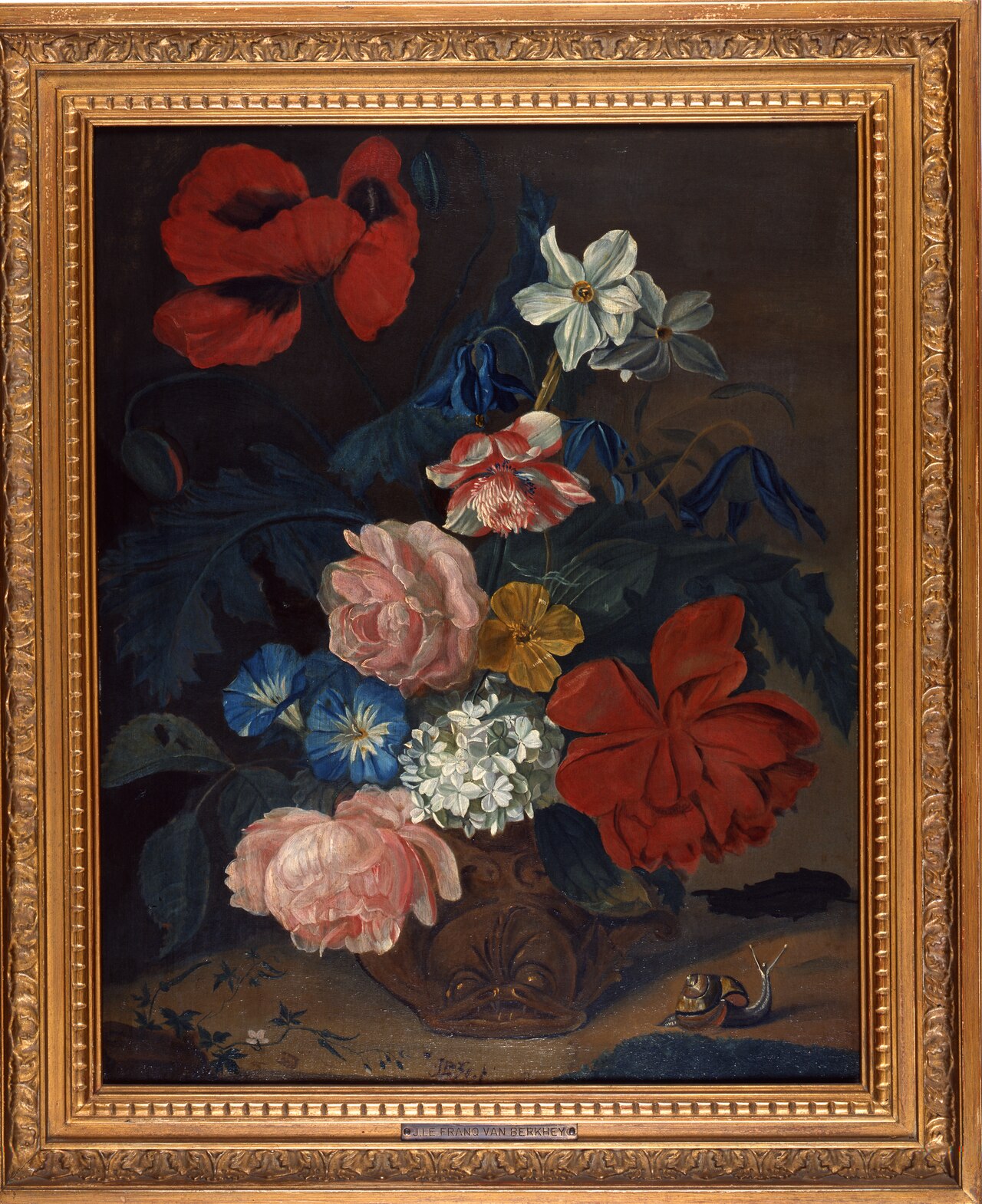
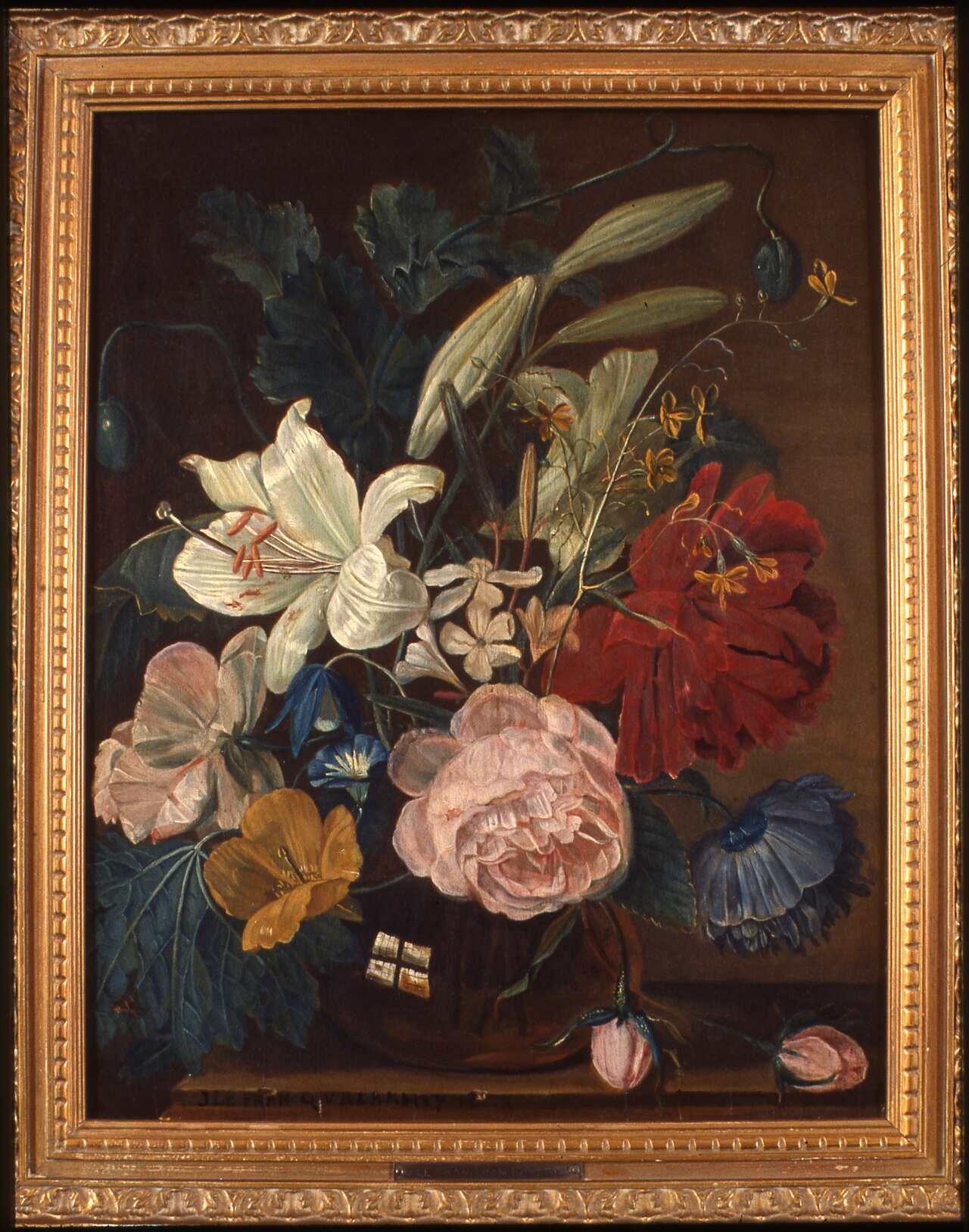
1. Fine modelling of flesh tones – In his portraits, he employed layered glazes to achieve subtle gradations of light on skin, lending a lifelike presence to his subjects. 2. Meticulous botanical rendering – His flower pieces demonstrate an almost scientific observation of plant forms, suggesting his medical background informed a precise, almost taxonomic approach to flora. 3. Controlled palette – He favoured a restrained colour scheme, often limiting his compositions to a harmonious range of earth tones punctuated by the occasional vivid bloom.
These methods combine to create works that are both aesthetically pleasing and intellectually engaging, reflecting his dual identity as an artist and a scholar.
Major works
### Portrait of Jan Cornets de Groot (1796)
One of Berkhey’s most documented pieces is the *Portrait of Jan Cornets de Groot* (1796). The sitter, Jan Cornets de Groot (1745‑1798), was a prominent Leiden merchant. The portrait captures the subject in a three‑quarter view, dressed in contemporary attire, with a subtle play of light that highlights his facial expression and the texture of his clothing. The work exemplifies Berkhey’s capacity to convey status and personality without resorting to overt symbolism.
### Flower piece
Berkhey’s floral still lifes, often simply titled *Flower piece*, showcase his skill in rendering delicate petals, droplets of water, and the interplay of light on transparent surfaces. Though the exact date of these works is unknown, they reflect the continued Dutch fascination with botanical subjects that began in the seventeenth century. The compositions are typically arranged in a modest vase, surrounded by a muted background that directs the viewer’s attention to the colourful blossoms.
### Flower piece (Icones‑UB‑MNL‑3)
The work catalogued as *Flower piece (Icones‑UB‑MNL‑3)* is part of a collection held by the University of Leiden’s botanical institute. Its inclusion in a scientific archive underscores the interdisciplinary nature of Berkhey’s practice: the painting serves both as an artwork and a visual record of plant species. The precision of the botanical details aligns with the standards of contemporary herbarium illustration, while the overall aesthetic remains unmistakably artistic.
Influence and legacy
Johannes le Francq van Berkhey occupies a modest but noteworthy niche in Dutch art history. While he never achieved the fame of his Golden Age predecessors, his work illustrates the persistence of high‑quality portraiture and still‑life painting into the eighteenth century. His dual career as a physician provided a unique perspective that enriched his visual practice, bridging the gap between scientific observation and artistic expression.
In scholarly circles, Berkhey is cited as an example of the "artist‑physician" archetype, a figure who contributed to the Enlightenment’s emphasis on empirical study while maintaining an aesthetic sensibility. His paintings, particularly the *Portrait of Jan Cornets de Groot*, are occasionally featured in exhibitions that explore the relationship between art and science in the Dutch Republic. Though his name is not widely known outside specialist literature, his surviving works continue to be valued for their technical proficiency and the insight they offer into a period of cultural transition.
Overall, Berkhey’s legacy endures through the quiet elegance of his canvases, the interdisciplinary spirit he embodied, and the way his oeuvre reflects the broader currents of Dutch artistic and intellectual life at the close of the eighteenth century.
Frequently asked questions
Who was Johannes le Francq van Berkhey?
He was a Dutch painter, physician and poet born in Leiden in 1729, best known for his portraiture and floral still‑life paintings.
What artistic style or movement is he associated with?
Berkhey’s work aligns with late‑Baroque Dutch portrait and still‑life traditions, but he is not tied to a specific named movement.
What are his most famous works?
His most documented pieces are the 1796 *Portrait of Jan Cornets de Groot* and two floral still lifes, one of which is catalogued as *Flower piece (Icones‑UB‑MNL‑3)*.
Why does he matter in art history?
He exemplifies the eighteenth‑century Dutch "artist‑physician" who blended scientific observation with artistic practice, illustrating the continued vitality of Dutch portraiture and still‑life painting after the Golden Age.
How can I recognise a painting by Johannes le Francq van Berkhey?
Look for finely modelled flesh tones in portraits, meticulous botanical detail in flower pieces, and a restrained colour palette that emphasizes subtle light effects.