Jennie Augusta Brownscombe
1850 – 1936
In short
Jennie Augusta Brownscombe (1850–1936) was an American painter, illustrator and etcher renowned for genre scenes and historic American subjects, who taught at the Art Students League of New York and whose work appeared widely on prints, calendars and greeting cards.
Notable works
,_1890s,_NGA_145000.jpg)

Early life Jennie Augusta Brownscombe was born on 28 July 1850 in the small town of Honesdale, Pennsylvania. She was the daughter of a modest‑means family, and her early education took place in local schools before she moved to New York City to pursue a formal artistic training. In the 1870s she enrolled at the Cooper Union School of Art, where she received a solid grounding in drawing and painting techniques. A scholarship enabled her to travel to Europe, and she spent several years studying in Paris, absorbing the academic rigour of the French ateliers while also observing the burgeoning Impressionist movement. Although she never publicly aligned herself with a single avant‑garde school, the exposure to European art broadened her technical repertoire and reinforced a commitment to narrative realism.
Career and style Returning to the United States in the early 1880s, Brownscombe became a founding member of the Art Students League of New York, an institution that championed independent study and practical instruction. She not only continued her own practice but also taught drawing and painting there, influencing a generation of young artists. Her professional output was remarkably diverse: she produced oil paintings, watercolours, etchings, commercial illustrations, and book designs. The dominant thread throughout her career was a focus on genre scenes that celebrated everyday life, domestic interiors, and the heroic moments of American colonial and revolutionary history. Her style can be described as realist with a lyrical softness, characterised by careful modelling of figures, a muted yet warm palette, and an attention to period detail that appealed to both fine‑art collectors and the burgeoning market for reproductions.
Signature techniques Brownscombe’s technique combined academic drawing with a subtle use of light that softened the edges of her subjects. In oil paintings she often built up layers of thin glaze to achieve depth of colour, a method she had refined during her Paris training. Her etchings display a deft hand for line, using fine hatching to suggest texture without overwhelming the composition. A hallmark of her commercial work was the ability to render narrative content clearly; she would frequently employ a central focal figure surrounded by contextual elements that guide the viewer’s eye across the canvas. In portrait‑type genre scenes, such as "Two Girls at a Window", she captured intimate moments with a delicate handling of fabric and hair, while still maintaining a crisp definition of the surrounding architecture.
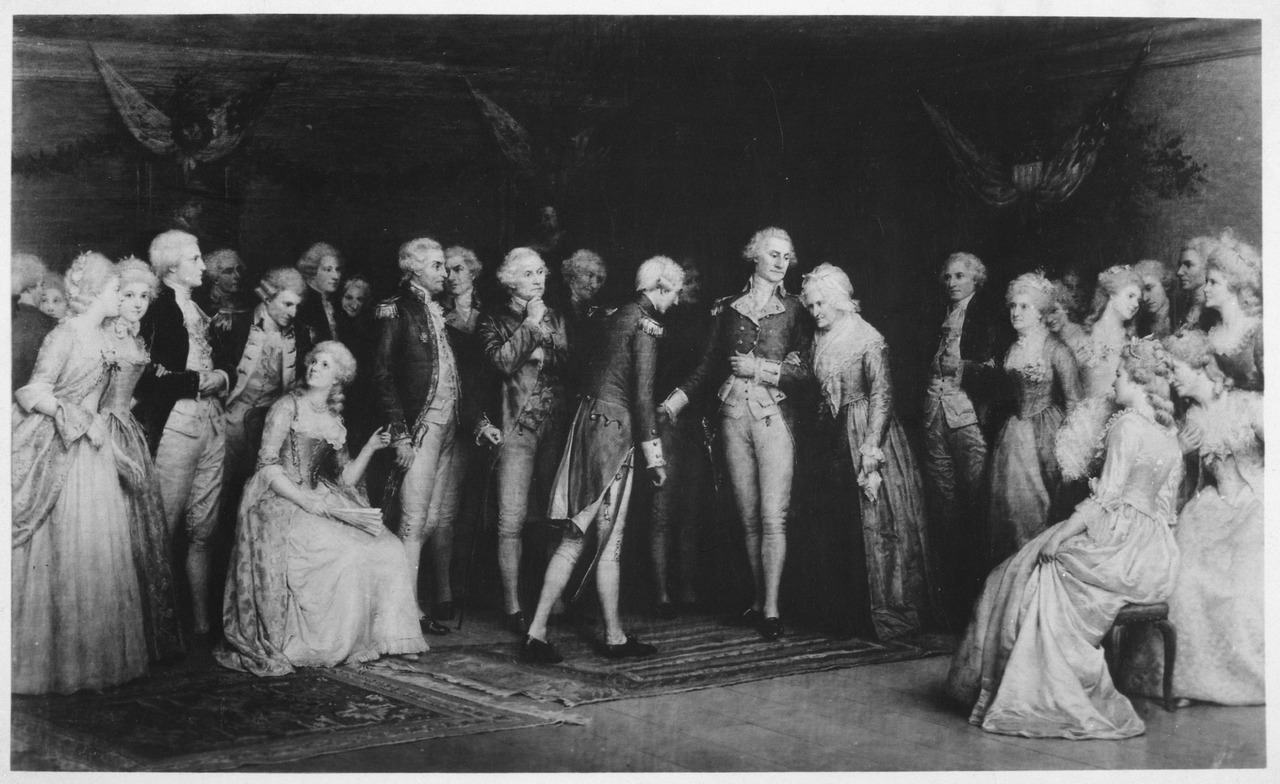
Major works Among Brownscombe’s most celebrated pieces is *The Peace Ball at Fredericksburg, Virginia held at the Rising Sun Tavern after the surrender at Yorktown. November 1781* (1896). This large‑scale history painting depicts a celebratory gathering of officers and civilians following the decisive surrender at Yorktown, an event that marked the end of the American Revolutionary War. Brownscombe’s composition is notable for its careful staging of period dress, the interplay of candlelight and natural light, and a sense of conviviality that humanises a pivotal historical moment.
Another frequently reproduced work is *Untitled (Two Girls at a Window)* (1890). In this intimate genre scene, two young women are shown peering through a sash window, their silhouettes framed by the architectural mouldings of a modest interior. The painting captures a fleeting, private moment, and its popularity stemmed from the relatable subject matter and the warm, nostalgic atmosphere that resonated with a late‑Victorian audience.
*A Walk through the Country* (1882) offers a contrasting outdoor vista, portraying a leisurely stroll through a bucolic landscape. The figures, rendered in soft, naturalistic tones, are set against a gently rolling countryside that showcases Brownscombe’s ability to balance figure and environment. This work reflects the artist’s interest in the idyllic aspects of rural America, a theme that recurs in many of her later illustrations for magazines and calendars.
While these three works are highlighted for their provenance, Brownscombe’s oeuvre also includes the well‑known *The First Thanksgiving* (date unknown), a composition that has been reproduced on countless educational prints and greeting cards. The painting depicts the Pilgrims and Native Americans sharing a meal, rendered with historical accuracy in costume and setting, and it exemplifies her skill in creating accessible visual narratives of American heritage.
Influence and legacy Jennie Augusta Brownscombe enjoyed considerable commercial success during her lifetime. By the turn of the twentieth century she had sold the reproduction rights to more than one hundred paintings, ensuring that her images appeared on calendars, postcards, and popular magazines. In 1899 the New York World described her as “one of America’s best artists”, a testament to the high regard she commanded among contemporary critics and the buying public. Her teaching at the Art Students League helped disseminate her disciplined approach to drawing and her emphasis on narrative content, influencing students who later pursued careers in illustration and fine art.
Brownscombe’s work occupies a distinctive niche in American art history: she bridged the fine‑art tradition of academic painting with the mass‑market demands of the burgeoning print industry. Her paintings continue to be held in public collections, including the Pennsylvania Academy of the Fine Arts and the Smithsonian American Art Museum, and they are frequently cited in studies of women artists who navigated the commercial and institutional challenges of the late nineteenth century. Modern scholarship recognises her as a key figure in the development of American historic genre painting, and her images remain a visual reference for educators teaching early American history.
Overall, Jennie Augusta Brownscombe’s combination of technical proficiency, narrative clarity, and commercial acumen ensured that her art reached a wide audience, and her legacy endures both in museum holdings and in the continued circulation of her iconic reproductions.
Frequently asked questions
Who was Jennie Augusta Brownscombe?
Jennie Augusta Brownscombe (1850–1936) was an American painter, illustrator and etcher best known for genre scenes and historic American subjects, and a long‑time teacher at the Art Students League of New York.
What style or movement is she associated with?
She worked in a realist, narrative style that blended academic training with a lyrical softness, producing both fine‑art paintings and commercially popular illustrations.
What are her most famous works?
Key works include *The Peace Ball at Fredericksburg, Virginia held at the Rising Sun Tavern after the surrender at Yorktown. November 1781* (1896), *Untitled (Two Girls at a Window)* (1890), and *A Walk through the Country* (1882), as well as the widely reproduced *The First Thanksgiving*.
Why does she matter in art history?
Brownscombe exemplifies the successful integration of academic painting with mass‑market reproduction, helping to shape American historic genre painting and influencing generations of illustrators through her teaching.
How can I recognise a Brownscombe painting?
Look for carefully rendered figures in period costume, a warm, muted palette, soft lighting that creates a gentle atmosphere, and a clear narrative focus that often centres on domestic or historic American scenes.