Jean-Pierre-Antoine Tassaert
1727 – 1788
In short
Jean‑Pierre‑Antoine Tassaert (1727–1788) was a Flemish‑born sculptor who trained in France before establishing himself as a leading portrait sculptor in Berlin, where he produced a number of notable public statues.
Notable works
_-_107.JPG)
_-_108.JPG)


Early life Jean‑Pierre‑Antoine Tassaert was born in 1727 in Antwerp, a city that at the time lay within the Habsburg Netherlands. He came from a family with artistic connections, which provided an early exposure to the visual arts. His formative years were spent studying the techniques of baroque sculpture that dominated Flemish ateliers, and he quickly demonstrated a talent for rendering the human figure with both vigor and subtlety.
Career and style In his early twenties, Tassaell moved to France, where he absorbed the French academic tradition. The French capital offered a vibrant market for sculptors, and Tassaert secured commissions for portrait busts and small-scale allegorical groups. His style blended the dramatic movement characteristic of the baroque with the emerging neoclassical emphasis on clarity and restraint. By the mid‑1750s he had established a reputation for capturing likenesses in marble and bronze, a reputation that attracted the attention of patrons in the German states.
Around the early 1760s, Tassaert accepted an invitation to work in Berlin, the capital of Prussia, which was undergoing a cultural renaissance under Frederick the Great. In Berlin he became a court sculptor, a position that placed him at the centre of the city’s artistic life. His work for the Prussian court focused largely on portraiture, commemorating military leaders and statesmen. While the precise artistic movement with which he is associated remains ambiguous, his oeuvre reflects a synthesis of Flemish baroque vigor, French academic polish, and the nascent neoclassical taste that was spreading across Europe.
Signature techniques Tassaert’s sculptures are distinguished by several recurring technical approaches:
1. Dynamic drapery – He often rendered clothing with flowing, almost sculptural folds that suggest movement while simultaneously revealing the underlying anatomy. 2. Expressive facial modelling – Even in formal portrait busts, Tassaert captured subtle psychological nuance, using fine carving to convey the sitter’s character. 3. Fine surface treatment – His marble works display a high degree of polish, contrasting with the intentionally rougher textures used for background elements or base structures. 4. Integration of symbolic elements – In allegorical pieces, he incorporated attributes (such as helmets, scrolls, or mythological objects) that clarified the narrative without overwhelming the central figure.
These techniques allowed him to bridge the decorative exuberance of the baroque with the emerging preference for classical restraint, making his work appealing to a broad range of patrons.
Major works Tassaert’s most widely recognised public monuments include:
- Statue of Friedrich Wilhelm von Seydlitz (1781) – Erected in Berlin, this bronze statue commemorates the celebrated Prussian cavalry commander. The work showcases Tassaert’s skill in rendering equestrian subjects, with a lifelike horse and a confident, forward‑looking posture for Seydlix.
- Statue of James Francis Edward Keith (1862) – Although the date post‑dates Tassaert’s death, the monument is understood to be a later casting or reproduction of an original design by Tassaert. The original model, created during his Berlin period, portrayed the Scottish‑born Prussian field marshal in a classical heroic pose.
- Pyrrha ou la Population (1773) – This allegorical marble group depicts the mythological figure Pyrrha, often interpreted as an embodiment of civic virtue. The composition balances idealised anatomy with a tender, almost narrative quality, reflecting Tassaert’s ability to fuse myth with contemporary moral themes.
- Bredow Memorial (1980) – Similar to the Keith statue, this memorial is a modern re‑creation of an earlier design by Tassaert, intended to honour General Johann Joachim Bredow. The re‑casting demonstrates the lasting appreciation for Tassaert’s portraiture well into the twentieth century.
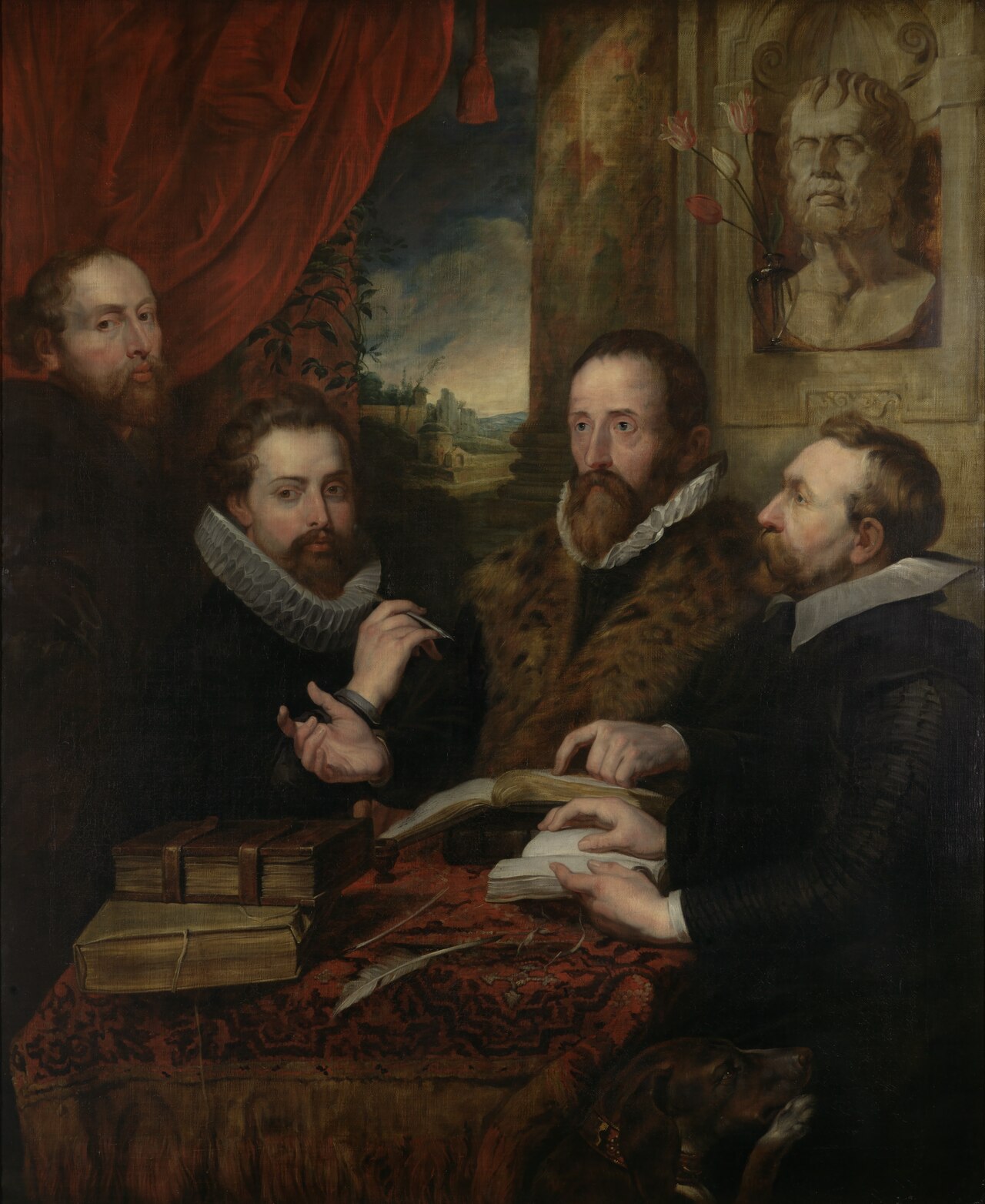
- Four Philosophers – A smaller, possibly private commission, this grouping presents four figures representing classical philosophical traditions. The work highlights Tassaert’s interest in intellectual subjects and his capacity to render multiple figures in a harmonious arrangement.
These works collectively illustrate his mastery of both public monumental sculpture and more intimate, allegorical compositions.
Influence and legacy Jean‑Pierre‑Antoine Tassaert played a pivotal role in transmitting French academic sculptural practices to the German‑speaking world. His presence in Berlin helped to raise the technical standards of local artisans and introduced a refined portrait style that resonated with the Prussian elite. Several of his students went on to become prominent sculptors in their own right, perpetuating his blend of baroque vigor and neoclassical clarity.
Although his name is not as widely recognised today as some of his contemporaries, the continued interest in his works—evident in later re‑castings and scholarly reassessments—attests to the durability of his artistic vision. Modern exhibitions on eighteenth‑century European sculpture frequently include Tassaert as an example of cross‑cultural exchange, highlighting his contribution to the evolution of portrait sculpture in Central Europe.
In sum, Tassaert’s career bridges the artistic traditions of his Flemish origins, his French training, and his Prussian patronage, making him a noteworthy figure in the broader narrative of European sculpture during the Enlightenment.
Frequently asked questions
Who was Jean‑Pierre‑Antoine Tassaert?
He was a Flemish‑born sculptor (1727–1788) who trained in France and became a leading portrait sculptor in Berlin, producing notable public statues for the Prussian court.
What artistic style or movement is Tassaert associated with?
His work does not fit neatly into a single movement; it blends baroque dynamism, French academic polish, and emerging neoclassical restraint.
What are his most famous works?
Key pieces include the Statue of Friedrich Wilhelm von Seydlitz (1781), the allegorical group Pyrrha ou la Population (1773), and the Four Philosophers, as well as later re‑castings of his designs for James Francis Edward Keith and the Bredow Memorial.
Why does Tassaert matter in art history?
He transmitted French sculptural techniques to Berlin, raised the standards of portrait sculpture in Prussia, and influenced a generation of German sculptors.
How can I recognise a Tassaert sculpture?
Look for finely polished marble surfaces, dynamic drapery, expressive yet restrained facial modelling, and the inclusion of symbolic attributes that clarify the subject’s identity.