Jean Petitot
1607 – 1691
In short
Jean Petitot (1607–1691) was a Genevan enamel painter who achieved international reputation serving the French and English courts. He is best known for his refined portrait miniatures in enamel, a medium that combined painterly detail with the durability of vitreous surface.
Notable works
,_koning_van_Frankrijk_Rijksmuseum_SK-A-4354.jpeg)


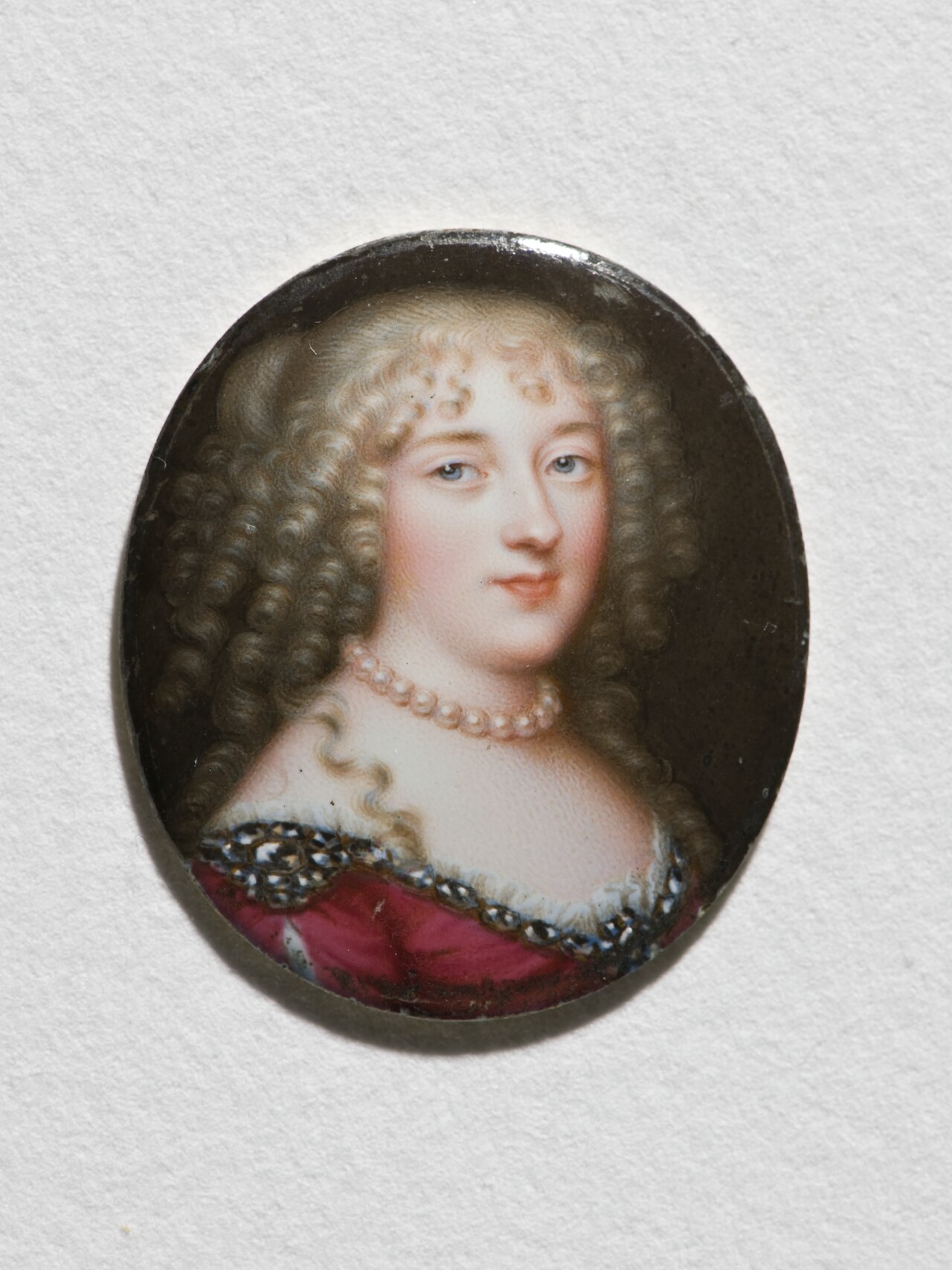

Early life Jean Petitet was born in 1607 in the Republic of Geneva, a city‑state renowned for its thriving crafts and intellectual life. Little is recorded about his family background, but Geneva’s guild system provided a structured apprenticeship for young artisans. Petitot likely began his training in the local enamel workshops, where the city had long specialised in the production of painted enamel objects for both domestic and export markets. By the time he reached his twenties, he had mastered the demanding technical processes of enamel painting, a skill that would define his later career.
Career and style Petitot’s reputation soon extended beyond Geneva, and he attracted patronage from the courts of France and England. In the mid‑17th century he relocated to Paris, where his work was welcomed by a court that prized miniature portraits as diplomatic gifts and personal mementos. His style reflects the Baroque taste for elegance and subtlety, yet it retains a restrained classicism that aligns with the Geneva tradition of precise drawing. Petitot’s portraits are characterised by their delicate modelling of flesh, refined handling of light, and an understated colour palette that enhances the luminous quality of the enamel surface.
Signature techniques Enamel painting demands a sequence of firing, grinding, and polishing stages. Petitot distinguished himself through a meticulous layering method: he applied successive translucent glazes, each fired at a carefully controlled temperature, to achieve depth and a velvety skin tone. He also employed a fine brush made from sable hair, allowing him to render intricate details such as hair curls and jewellery settings. His ability to control the shrinkage of enamel during firing reduced cracks, a common problem for many contemporaries. The result is a smooth, glass‑like finish that preserves the painterly nuance of his miniature portraits.
Major works Petitot’s oeuvre includes several high‑profile commissions that illustrate his mastery of the medium. The *Portrait of Lodewijk XIV de Bourbon* (1670) captures the French monarch at the height of his power, with a subtle play of light on the king’s robe and a meticulously rendered insignia of the Order of the Holy Spirit. In *Portrait of a Woman* (1700), Petitet demonstrates his sensitivity to feminine features, employing a softer palette and delicate shading to convey both status and intimacy.
The *Anna of Austria, Queen of France* (1700) presents the Habsburg princess‑queen in regal attire, her veil rendered in translucent enamel that hints at the texture of silk. *Francoise Athénaïs de Rochechouart, marquise de Montespan* (1650) showcases the famous mistress of Louis XIV; Petitot captures her confident expression and elaborate coiffure, underscoring his ability to render complex hair structures in enamel. Finally, the *Anna Maria, Princess of Austria, Queen of France* (1667) portrays the consort of Louis XIII, where Petitot balances the solemnity of royal portraiture with the intimate scale of a miniature, allowing the viewer to appreciate the nuanced expression and the fine detailing of her jewellery.
These works, though varied in subject, share a consistent approach: a focus on the psychological presence of the sitter, combined with the technical brilliance that makes enamel a durable yet luminous medium.
Influence and legacy Jean Petitot’s success helped elevate enamel painting from a decorative craft to a respected artistic discipline. His techniques influenced a generation of enamelists in Geneva and beyond, many of whom adopted his layered glazing method to achieve similar depth. The durability of enamel ensured that his portraits survived the upheavals of the 18th and 19th centuries, providing later historians with valuable visual records of European aristocracy. In contemporary collections, Petitot’s miniatures are prized for their rarity and the insight they offer into courtly portraiture. His legacy endures in the continued appreciation of enamel as a fine art medium, and his works remain a benchmark for scholars assessing the intersection of craftsmanship and high art in the early modern period.
Frequently asked questions
Who was Jean Petitot?
Jean Petitot was a Genevan enamel painter (1607–1691) who worked for the French and English courts, producing refined miniature portraits.
What artistic style or movement is he associated with?
He worked in a Baroque‑influenced style that combined the elegance of court portraiture with the precise drawing tradition of Geneva.
What are his most famous works?
His best‑known pieces include the *Portrait of Lodewijk XIV de Bourbon* (1670), *Portrait of a Woman* (1700), *Anna of Austria, Queen of France* (1700), *Francoise Athénaïs de Rochechouart, marquise de Montespan* (1650) and *Anna Maria, Princess of Austria* (1667).
Why is Jean Petitot important in art history?
Petitot elevated enamel painting to a fine‑art status, influencing later enamelists and providing enduring visual records of 17th‑century European royalty.
How can I recognise a Jean Petitot enamel portrait?
Look for a smooth, glass‑like surface, subtle colour layering, finely rendered facial features, and meticulous detailing of hair and jewellery that together create a luminous, intimate miniature.