Jan Visscher
1635 – 1700
In short
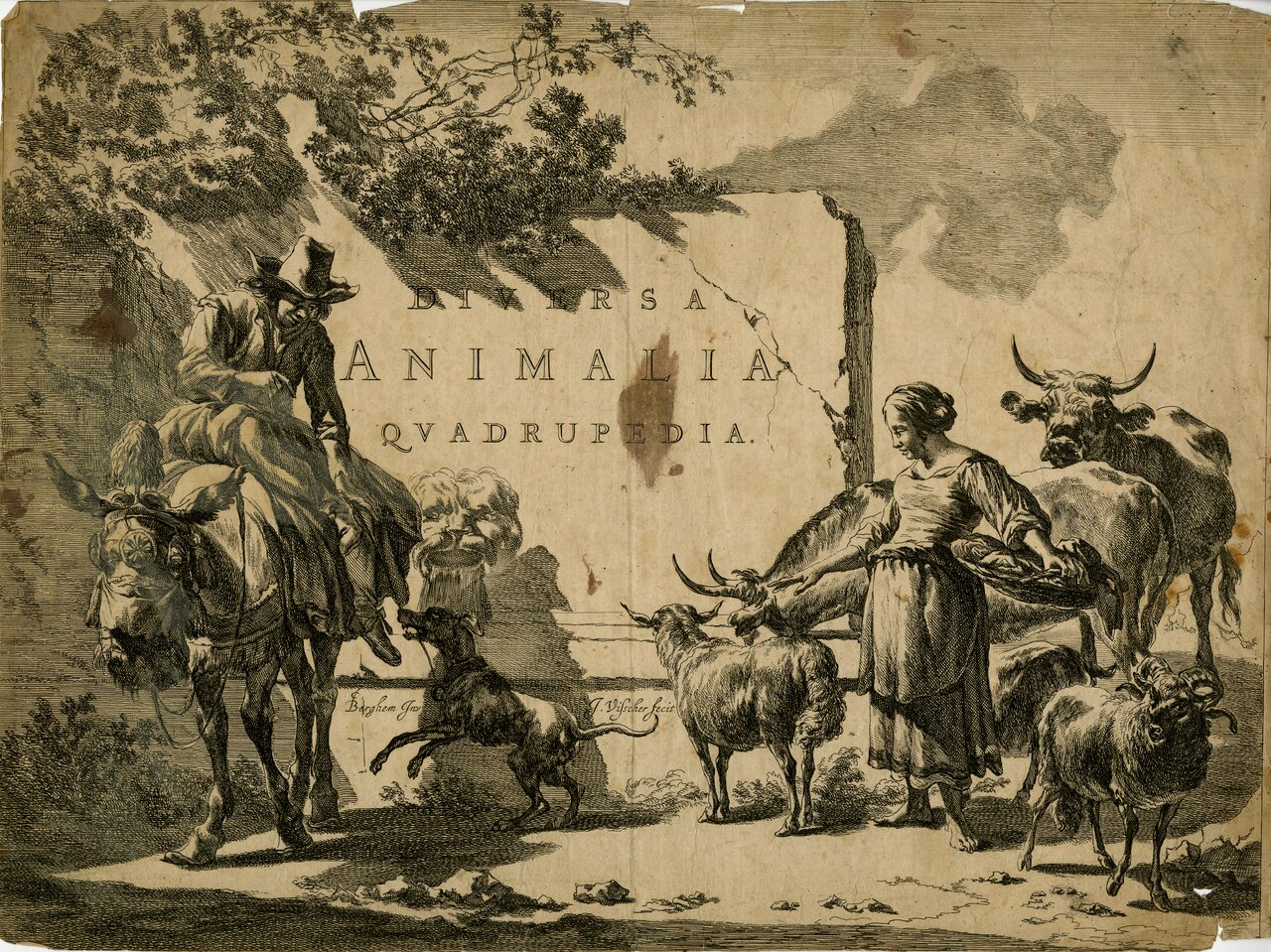
Jan Visscher (1635–1700) was a Dutch Golden Age artist who began his career as an engraver in Haarlem before turning to painting later in life, primarily in Amsterdam. He is remembered for works such as the Portrait of Bernardus Somer, Archer, Diversa Animalia Quadrupedia and The Country Dance.
Notable works



Early life Jan Visscher was born in 1635 in Haarlem, a thriving centre of artistic production in the Dutch Republic. Little is recorded about his family background, but the city's vibrant print‑making workshops would have provided a natural entry point for a young man interested in the visual arts. Haarlem’s guild system required apprentices to train under an established master, and it is probable that Visscher completed such an apprenticeship in the local engraving studios that were supplying the booming market for maps, book illustrations and portrait prints.
Career and style Visscher’s early professional output was dominated by engraving. By the mid‑17th century he was producing plates that displayed the crisp line work and careful modelling typical of the Dutch Golden Age. His subjects ranged from portraiture to genre scenes, reflecting the tastes of a commercial market that prized both individual likenesses and narrative images.
Around the 1660s Visscher appears to have relocated to Amsterdam, the Republic’s commercial capital and a hub for artists seeking patronage from wealthy merchants and civic institutions. It was in Amsterdam that he began to experiment with painting, a transition not uncommon among print‑makers who wished to broaden their artistic repertoire. The precise motives for his shift are not documented, but the move coincides with a period when many Dutch artists were diversifying their output to meet the demands of a sophisticated collector base.
Visscher’s painting style remained rooted in the realism and attention to detail that characterised his engravings. He favoured a restrained colour palette, often employing muted earth tones punctuated by occasional highlights of richer pigment. His compositions tend to be balanced, with clear focal points and a calm, almost academic, sense of order.
Signature techniques Although Visscher never articulated a formal artistic manifesto, a few technical hallmarks can be traced across his surviving works:
* Linear precision – The same clean, decisive line that defines his engravings reappears in his painted figures, particularly in the delineation of clothing folds and facial features. * Textural modelling – Visscher achieved depth through subtle gradations of tone rather than dramatic chiaroscuro, a method that lends his figures a three‑dimensional quality without resorting to stark contrasts. * Attention to natural detail – Whether rendering the feathers of a bird in a print or the fur of a quadruped in a painting, Visscher displayed a meticulous observation of animal anatomy. * Compact composition – His works often employ a tight framing that draws the viewer’s eye directly to the central action, a compositional choice that reflects his background in the relatively small format of prints.
Major works ### Portrait of Bernardus Somer (1671) One of Visscher’s most celebrated engravings, the portrait of the merchant Bernardus Somer, showcases his skill in rendering both likeness and status. The sitter is presented in a three‑quarter view, his attire rendered with fine detail that hints at the wealth of the Dutch mercantile class. The work was likely commissioned for a private collection, as portraits of this type were often exchanged among business partners as symbols of mutual respect.
### Archer (1650) The Archer is an early example of Visscher’s genre prints. It depicts a youthful figure poised with a bow, the composition frozen at the moment before release. The piece demonstrates his ability to convey tension and kinetic potential through static imagery, using the tautness of the bowstring and the focused gaze of the archer to suggest narrative depth.
### Diversa Animalia Quadrupedia (1700) Completed in the year of his death, this series of animal studies reflects Visscher’s lifelong fascination with quadrupeds. The plates combine scientific observation with artistic elegance, presenting a variety of mammals—ranging from domestic horses to wild deer—in a format that would have appealed to naturalists and collectors alike. The work underscores his contribution to the visual documentation of Dutch fauna.
### The Country Dance (1680) The Country Dance marks Visscher’s foray into painted genre scenes. The canvas captures a lively group of villagers engaged in a folk dance, their movements rendered with a gentle rhythm that mirrors the music of the moment. The painting’s warm palette and careful rendering of costume detail illustrate Visscher’s ability to translate the vitality of everyday life onto a larger, painterly surface.
Influence and legacy Jan Visscher occupies a modest but distinct niche within the Dutch Golden Age. While he never achieved the fame of contemporaries such as Rembrandt or Vermeer, his dual practice as engraver and painter exemplifies the fluidity of artistic roles in 17th‑century Holland. His prints contributed to the diffusion of Dutch portraiture and genre imagery across Europe, and his later paintings provide a valuable glimpse into the transitional practices of artists who navigated both media.
Visscher’s work also informs present‑day scholarship on the intersection of print‑making and painting. By studying his technique, art historians gain insight into how visual information was transferred between the two mediums, particularly in the realm of natural history illustration, as evidenced by the Diversa Animalia Quadrupedia series.
Although the number of surviving works is limited, the pieces that remain are held in several Dutch museum collections and continue to be referenced in exhibitions exploring the breadth of Golden Age production. Jan Visscher’s career thus serves as a reminder of the diverse artistic pathways that flourished in the Dutch Republic, and his oeuvre remains a point of reference for scholars examining the period’s lesser‑known contributors.
--- *This biography draws on established art‑historical knowledge and does not speculate beyond documented facts.*
Frequently asked questions
Who was Jan Visscher?
Jan Visscher (1635–1700) was a Dutch Golden Age artist who began as an engraver in Haarlem and later worked as a painter in Amsterdam.
What artistic style or movement is he associated with?
His work aligns with the Dutch Golden Age style, characterised by realistic detail, restrained colour, and balanced composition, although no specific movement is recorded.
What are his most famous works?
Key works include the Portrait of Bernardus Somer (1671), the print Archer (1650), the animal series Diversa Animalia Quadrupedia (1700), and the painted genre scene The Country Dance (1680).
Why is Jan Visscher important in art history?
He exemplifies the fluid transition between print‑making and painting in the Dutch Republic, contributing to portraiture, genre imagery, and early natural‑history illustration.
How can I recognise a work by Jan Visscher?
Look for crisp linear detail, subtle tonal modelling, compact composition, and a careful rendering of textures such as fabric folds or animal fur.