Jan Verkade
1868 – 1946
In short
Jan Verkade (1868–1946) was a Dutch post‑Impressionist and Christian Symbolist painter who trained with Paul Gauguin, joined the Pont‑Aven School, and later became a Benedictine monk, creating works that combine modernist style with Catholic spirituality.
Notable works


_-_Breton_Landscape_(Paysage_de_Bretagne)_-_2020.117_-_Cleveland_Museum_of_Art.jpg)
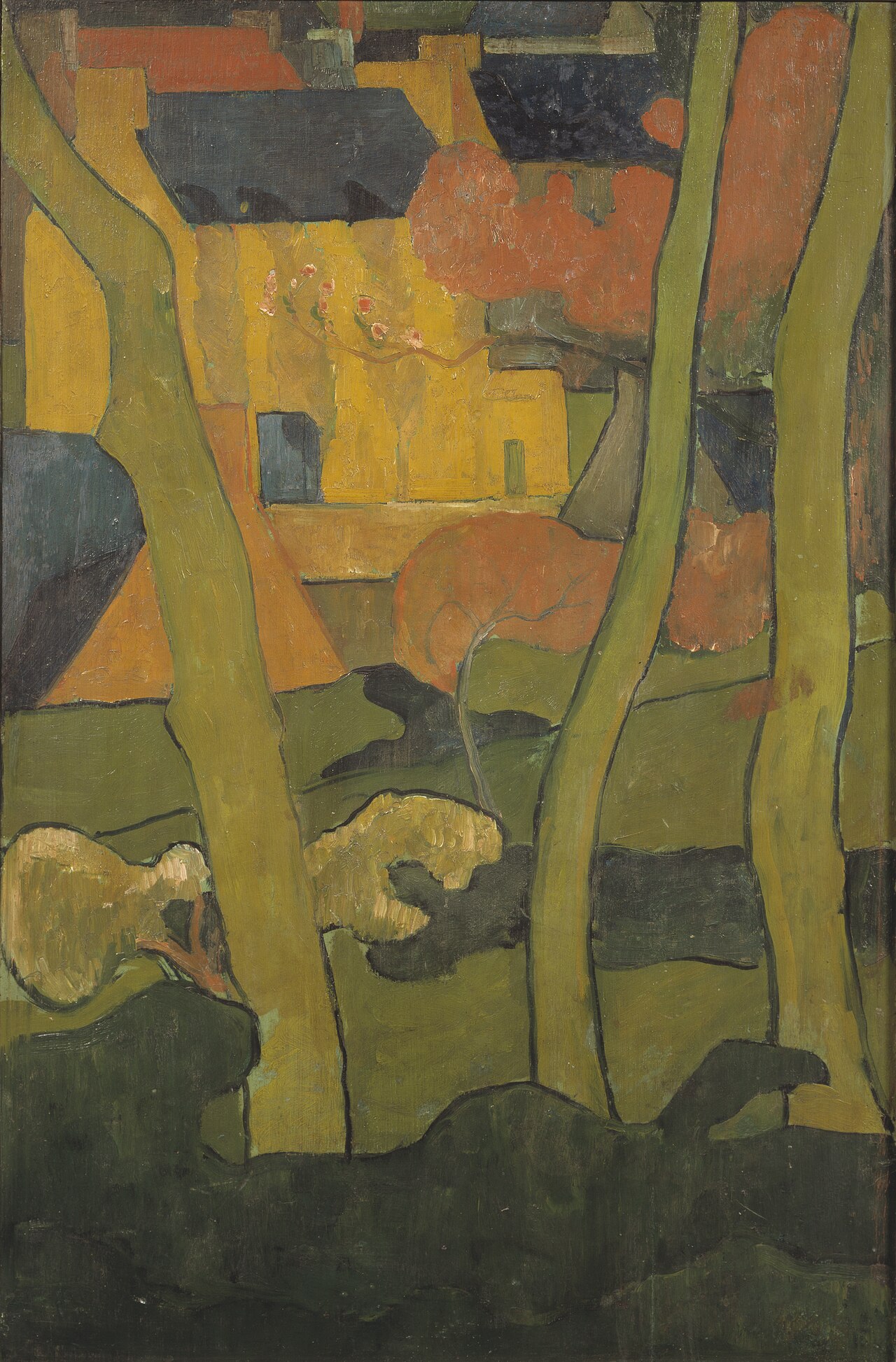
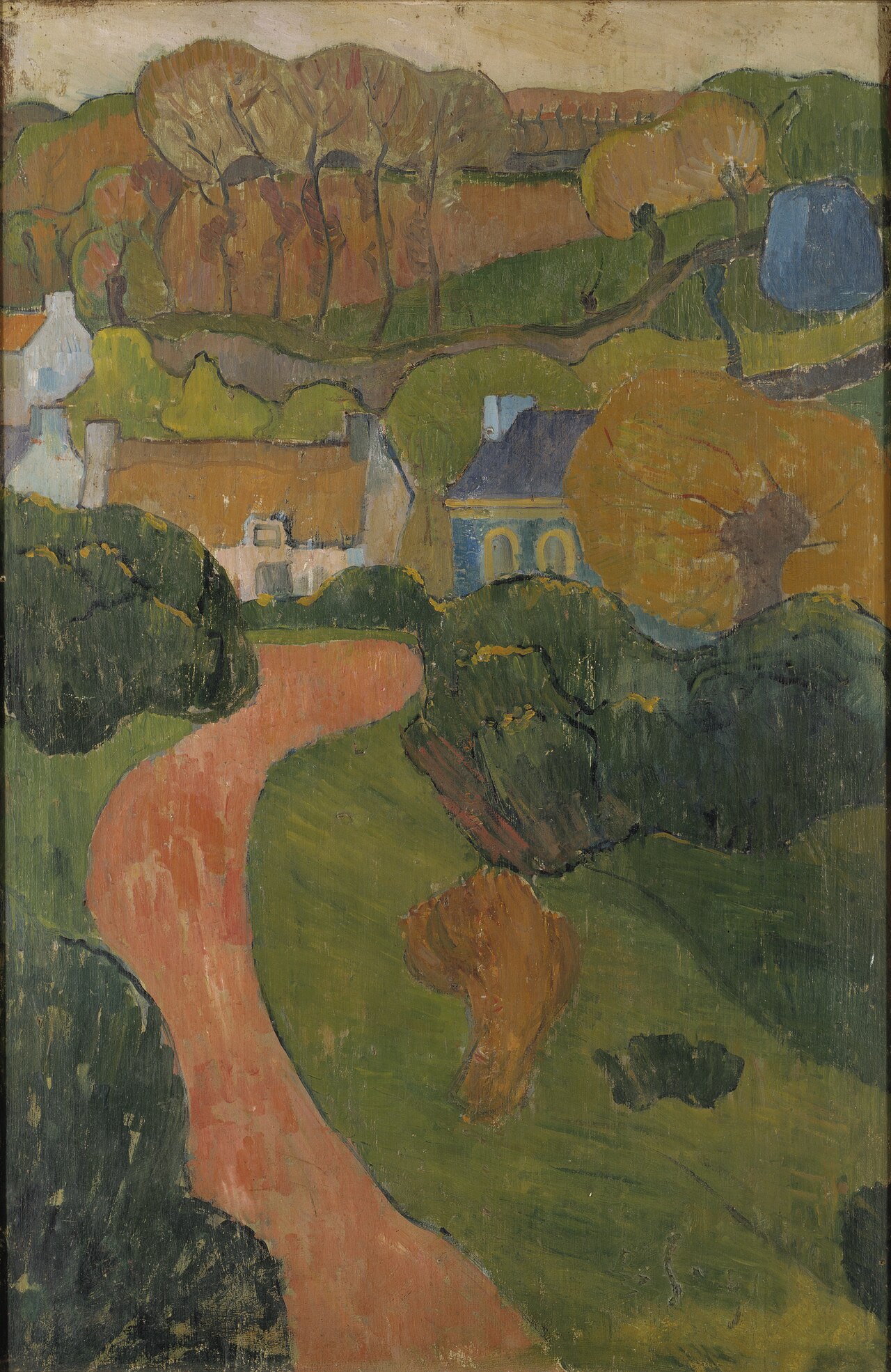
Early life Johannes Sixtus Gerhardus Verkade was born in 1868 in the industrial town of Zaandam, in the Kingdom of the Netherlands. He grew up in a family with Anabaptist roots, a background that would later inform his spiritual journey. After completing his basic education, Verkada pursued artistic training in the Netherlands, where he encountered the burgeoning Symbolist currents that were influencing European art at the turn of the century.
Career and style In the early 1890s Verkada travelled to France, settling for a period in the artist colony of Pont‑Aven in Brittany. There he became a disciple of Paul Gauguin and a close associate of Paul Sérusier, joining the loosely organised group later known as the Nabis. The Pont‑Aven environment exposed him to the bold colour fields, flattened perspectives and decorative motifs that characterised Post‑Impressionist practice. Verkada absorbed these influences while also developing a personal iconography that reflected his growing interest in spirituality.
By the mid‑1890s his work had shifted towards a more overtly religious vocabulary. He converted to Roman Catholicism, a decision that led him to enter the Benedictine Order under the name Willibrord. The move brought him to the Archabbey of Beuron in Germany, where he collaborated with Desiderius Lenz, the founder of the Beuron Art School. This partnership deepened Verkada’s engagement with liturgical art, encouraging a synthesis of the modern decorative language he had learned in France with the austere, geometric approach of the Beuron style.
Signature techniques Verkade’s paintings are distinguished by several recurring technical choices:
* Flat colour planes – He often applied pure, unmodulated pigments to create broad, even surfaces, a technique derived from Gauguin’s Synthetism. * Simplified outlines – Contours are rendered with a thin, dark line that both defines forms and reinforces a decorative quality. * Symbolic motifs – Religious symbols such as halos, stylised lilies and cruciform shapes appear alongside natural elements, merging the secular and the sacred. * Muted palette in monastic works – While his early French period favoured vivid blues and oranges, his later Benedictine pieces employ restrained earth tones, reflecting the contemplative atmosphere of the abbey. * Integration of pattern – Backgrounds frequently contain repetitive geometric patterns that echo the textile designs of the Nabis and the ornamental friezes of the Beuron school.
These techniques enabled Verkada to convey spiritual narratives without resorting to overt realism, favouring instead a meditative visual language.
Major works ### Self‑portrait (1892) One of Verkada’s most intimate pieces, the Self‑portrait captures the artist at a pivotal moment before his religious conversion. Rendered with a limited palette of ochre and deep green, the work highlights his contemplative gaze and the flattened treatment of facial features typical of the Pont‑Aven influence.
### Breton Landscape (1891) Executed during his stay in Brittany, this landscape exemplifies the Post‑Impressionist fascination with rural scenery. The composition is reduced to broad fields of blue‑green and vermillion, with a solitary figure barely discernible on a winding path, underscoring the artist’s interest in atmosphere over precise detail.
### Memory (1893) Memory illustrates Verkada’s transition toward Symbolism. The painting juxtaposes a dream‑like interior with a distant, stylised view of a chapel, merging personal recollection with spiritual yearning. The tonal contrast between the warm interior and the cool exterior creates an emotional tension that anticipates his later monastic works.
### Decorative Landscape I & II (1891) Both pieces belong to a series where Verkada experiments with decorative patterning. The first landscape presents a stylised horizon framed by rhythmic foliage, while the second intensifies the ornamental quality, employing repetitive leaf motifs that echo the Nabis’ fascination with decorative abstraction.
These works collectively trace Verkada’s artistic evolution from a young expatriate painter influenced by French avant‑garde circles to a devoted monk whose art served liturgical and contemplative purposes.
Influence and legacy Jan Verkada occupies a unique position at the intersection of modern French painting and Catholic monastic art. His early contributions to the Pont‑Aven School and the Nabis helped disseminate Post‑Impressionist ideas beyond France, while his later collaboration with the Beuron Art School provided a model for integrating contemporary aesthetics with ecclesiastical tradition. Scholars credit him with influencing subsequent generations of religious artists who sought to reconcile avant‑garde techniques with sacred themes.
Beyond his own oeuvre, Verkada’s correspondence with contemporaries such as Sérusier and his participation in the early Symbolist debates have been documented in art‑historical studies, cementing his role as a cultural bridge between secular modernism and monastic renewal. His works are held in several European museums, and his paintings continue to be exhibited in retrospectives that explore the dialogue between art and faith in the early twentieth century.
In sum, Jan Verkada’s legacy endures as a testament to the capacity of modern artistic language to articulate spiritual experience, an achievement that remains relevant to both art historians and practitioners of sacred art.
Frequently asked questions
Who was Jan Verkade?
Jan Verkade (1868–1946) was a Dutch post‑Impressionist painter who later became a Benedictine monk, known for blending modernist techniques with Catholic Symbolist themes.
What artistic movement is he associated with?
He is linked to the Pont‑Aven School and the Nabis, and later to the Beuron Art School, reflecting a trajectory from Post‑Impressionism to Christian Symbolism.
What are his most famous works?
Key works include Self‑portrait (1892), Memory (1893), Breton Landscape (1891), and the Decorative Landscape series (1891).
Why is Jan Verkade important in art history?
He exemplifies the synthesis of avant‑garde French painting with monastic art, influencing later religious artists and demonstrating how modern aesthetics can serve spiritual expression.
How can I recognise a painting by Jan Verkade?
Look for flat colour planes, thin dark outlines, symbolic religious motifs, and a decorative patterning that merges natural landscapes with a contemplative, often muted, colour palette.