Jan van Orley
1655 – 1735
In short
Jan van Orley (1655–1735) was a Flemish painter, draughtsman, printmaker and, most notably, a designer of tapestries in Brussels. He was a leading figure in the late‑17th and early‑18th‑century Flemish tapestry tradition, producing works such as the Virgin with Child (1707) and a series of mythological glorifications in 1717.
Notable works
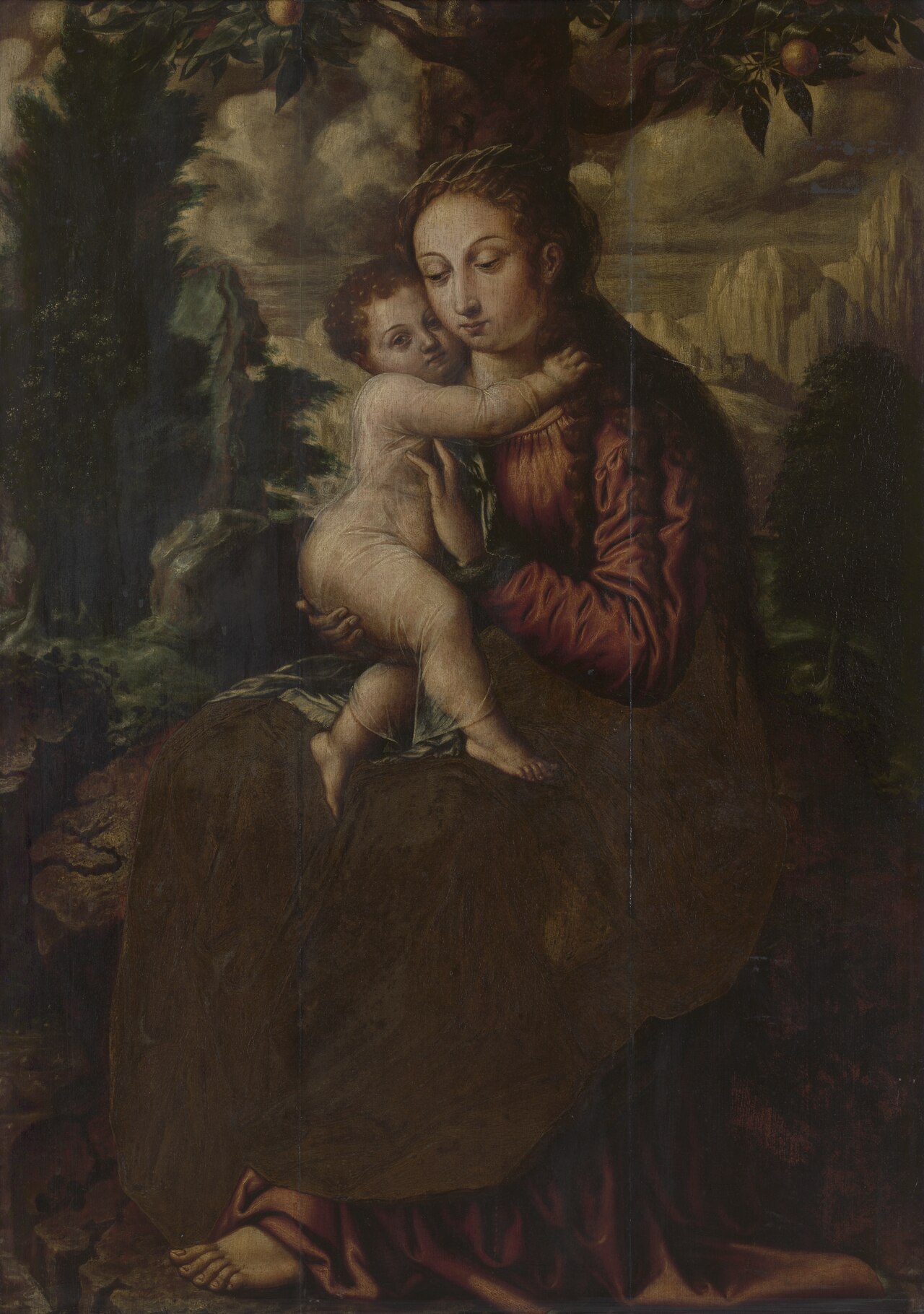


Early life Jan van Orley was born in 1655 in Brussels, the capital of the Habsburg Netherlands. He came from a family with artistic connections; the van Orley name had already been associated with painting and design in the region. Little is recorded about his formal training, but it is probable that he apprenticed with local masters who specialised in both panel painting and the decorative arts, a common pathway for artists who later worked in tapestry design. Growing up in Brussels, a city renowned for its tapestry workshops, gave him early exposure to the medium that would dominate his career.
Career and style By the late 1600s Jan van Orley had established himself as a versatile artist, working as a painter, draughtsman, and printmaker. His career, however, is most closely linked to the flourishing tapestry industry of Brussels. The city’s workshops, such as those of the renowned Gobelins and local manufactories, relied on designers to provide detailed cartoons – full‑scale drawings that served as blueprints for woven tapestries. Van Orley supplied many of these cartoons, translating complex compositions into a format suitable for the loom.
Although no single "movement" is attached to his name, his style reflects the late Baroque aesthetic prevalent in the Spanish‑ruled Netherlands. This period favoured dynamic compositions, rich colour palettes, and a dramatic interplay of light and shadow. Van Orley’s designs often combined classical mythology with religious subjects, a duality that appealed to both secular patrons and ecclesiastical commissioners. His work shows an adept handling of allegorical themes, with figures rendered in a graceful, yet vigorous manner, echoing the broader European taste for grandeur and narrative depth.
Signature techniques Van Orley’s signature techniques are most evident in his tapestry cartoons. He employed a meticulous line work that balanced clarity with expressive movement, allowing weavers to reproduce subtle gestures and intricate drapery. His use of chiaroscuro in drawings helped to suggest volume and depth, which translated into the woven surface as nuanced shading. He also favoured a compositional rhythm where the central figure is framed by secondary characters and architectural elements, creating a sense of balance that guided the eye across the tapestry.
Another hallmark of his approach was the integration of ornamental borders. These borders often incorporated foliage, scrollwork, and symbolic motifs that reinforced the central theme. By doing so, Van Orley ensured that the tapestry could stand alone as a decorative panel while still conveying a coherent narrative. His skill in adapting painterly techniques to the constraints of textile production set him apart from contemporaries who worked solely in oil or fresco.
Major works Among Van Orley’s extant works, the *Virgin with Child* (1707) remains a notable example of his religious output. The composition presents the Virgin seated on a throne, cradling the infant Christ, surrounded by a delicate halo of light. The figures are rendered with gentle softness, and the surrounding angels and decorative motifs reflect a harmonious blend of devotional intimacy and Baroque opulence.
The year 1717 saw the creation of a series of mythological glorifications: *Glorification of Mars*, *Glorification of the Gods*, *Glorification of Apollo*, and *Glorification of Venus*. These works demonstrate Van Orley’s capacity to handle a range of subjects within a unified stylistic framework. In the *Glorification of Mars*, the god of war is depicted in a triumphant pose, his armour rendered with precise metallic sheen, while the surrounding figures convey motion through swirling drapery. *Glorification of the Gods* presents a pantheon scene, with each deity identified by iconographic attributes, arranged in a compositional hierarchy that balances divine authority with narrative clarity.
*Glorification of Apollo* showcases the sun‑god in a radiant setting, his lyre and sun‑chariot rendered with luminous detail. The use of light in this cartoon anticipates the final tapestry’s shimmering effect, where the interplay of gold threads would enhance the celestial theme. Finally, the *Glorification of Venus* captures the goddess of love amidst a lush garden, her form softened by a delicate veil, and surrounded by cherubs and floral motifs that underscore the sensuality of the subject.
These works were likely commissioned by affluent patrons—both private collectors and civic institutions—who sought to adorn their halls with pieces that conveyed cultural refinement and classical learning. The 1717 series, in particular, reflects a trend among Brussels’ elite to display mythological subjects that symbolised virtues such as courage, beauty, and artistic patronage.
Influence and legacy Jan van Orley’s influence on Flemish tapestry design endured well beyond his death in 1735. His cartoons served as templates for workshops that continued to produce tapestries for European courts throughout the 18th century. By blending the dramatic flair of the Baroque with a disciplined compositional structure, he helped to sustain the reputation of Brussels as a centre of high‑quality tapestry production.
Later artists and designers drew upon his approach to integrating narrative and ornamentation, a practice that can be traced in the works of subsequent tapestry designers in the Austrian Netherlands. Moreover, his prints and drawings, which circulated among collectors, contributed to a broader visual vocabulary that informed decorative arts across the continent. While the specific term "van Orley style" is not widely used, scholars recognise his contribution to the evolution of tapestry design as a bridge between the exuberance of the 17th‑century Baroque and the more restrained classicism that emerged later in the century.
In contemporary scholarship, Jan van Orley is acknowledged as a pivotal figure whose oeuvre exemplifies the collaborative nature of tapestry production—where the designer’s vision, the weaver’s skill, and the patron’s taste intersected. His surviving works, especially the 1707 and 1717 pieces, continue to be exhibited in museums and studied for their technical mastery and cultural significance, ensuring his place in the canon of Flemish decorative arts.
Frequently asked questions
Who was Jan van Orley?
Jan van Orley (1655–1735) was a Flemish painter, draughtsman, printmaker and a leading designer of tapestries in Brussels during the late 17th and early 18th centuries.
What artistic style or movement is he associated with?
He worked within the late Baroque tradition, combining dynamic composition and rich ornamentation, especially in the context of Flemish tapestry design.
What are his most famous works?
His notable works include the *Virgin with Child* (1707) and a series of mythological glorifications from 1717: *Glorification of Mars*, *Glorification of the Gods*, *Glorification of Apollo* and *Glorification of Venus*.
Why is Jan van Orley important in art history?
He was a key figure in sustaining Brussels’ reputation as a centre of high‑quality tapestry production, influencing later designers and maintaining the Baroque aesthetic in decorative arts.
How can I recognise a Jan van Orley tapestry design?
Look for meticulous line work, balanced compositions with central figures framed by ornamental borders, and a dynamic yet harmonious use of colour and light typical of late Baroque tapestry cartoons.