Jan Philip van Thielen
1618 – 1667
In short
Jan Philip van Thielen (1618–1667) was a Flemish Baroque painter renowned for his highly detailed flower pieces and garland paintings. He worked mainly in Mechelen and collaborated with leading figure painters, earning patronage from aristocrats such as the Marquis of Leganés and Archduke Leopold Wilhelm.
Notable works


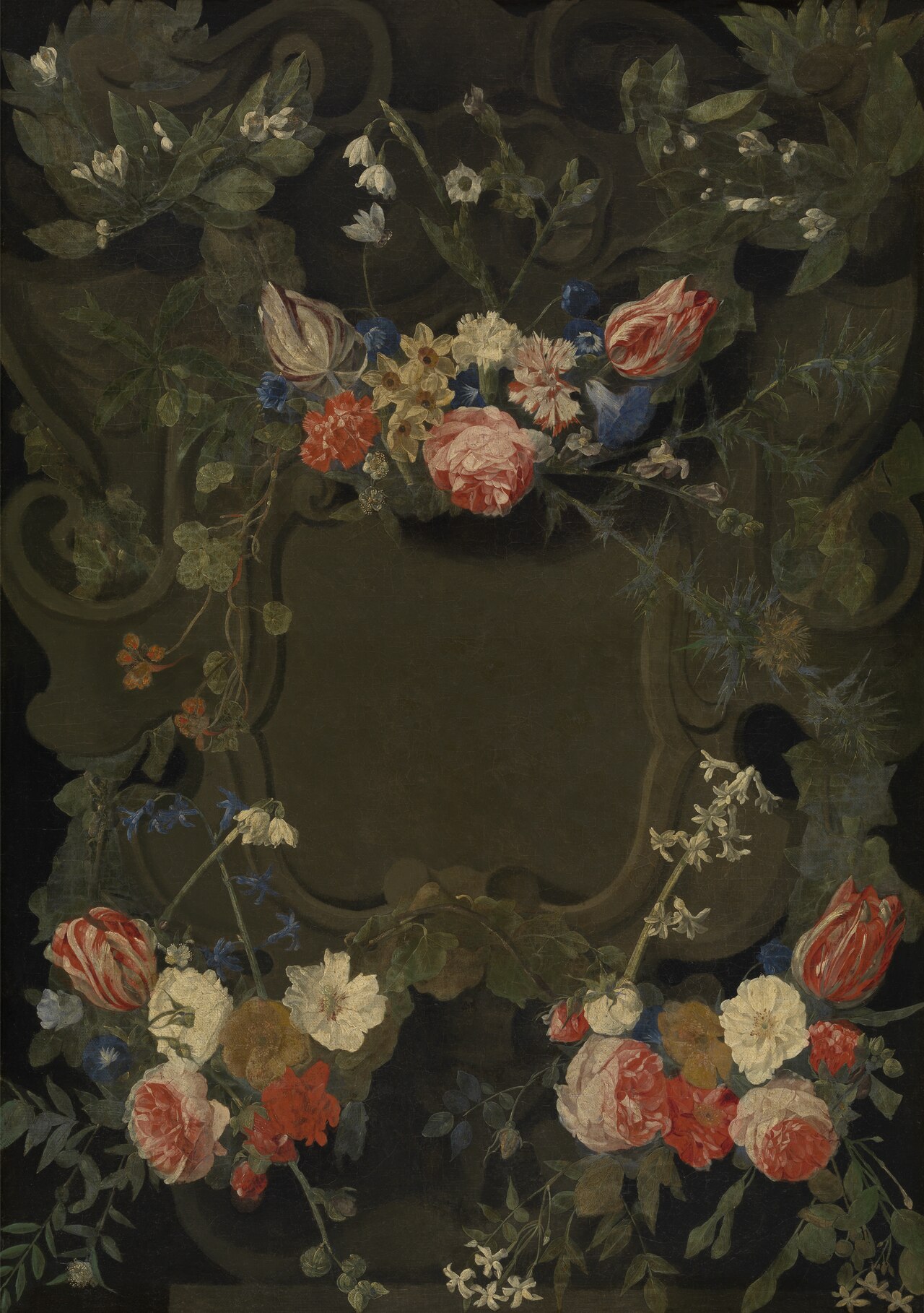


Early life
Jan Philip van Thielen was born in 1618 in the city of Mechelen, in the Habsburg Netherlands. Details of his family background are scarce, but the artistic environment of Mechelen—renowned for its guilds and workshops—provided a fertile ground for his early training. It is likely that van Thielen began an apprenticeship with a local master, as was customary for aspiring painters of the period, where he would have learned the fundamentals of drawing, colour mixing, and the meticulous observation of nature that later defined his work.
Career and style
By the early 1640s van Thielen had established himself as a specialist in flower still‑life and garland painting, a sub‑genre of the Baroque that combined lush botanical arrangements with devotional or mythological subjects. His career flourished in a market that prized the visual richness of the Spanish Netherlands, and he quickly became the most sought‑after floral painter in Flanders. Van Thielen frequently collaborated with leading figure painters such as Peter Paul Rubens, Anthony van Dyck, and later with the Dutch artist Jan Davidsz. de Heem, providing the ornamental floral frames that surrounded their central figures. This collaborative practice was typical of the period, allowing each artist to focus on his particular expertise.
The style of van Thielen is unmistakably Baroque: his compositions are dynamic, the garlands curve in sweeping arcs, and the flowers are rendered with a dramatic contrast of light and shadow. He favoured a vivid palette—deep reds, luminous yellows, and rich greens—combined with a delicate handling of petal texture that gives his bouquets a near‑photographic realism. While his works often celebrate the fleeting beauty of blossoms, they also convey a sense of order and harmony, reflecting the contemporary belief in the moral and symbolic power of nature.
Signature techniques
Van Thielen’s technical repertoire is characterised by several recurring methods. First, he employed a layered glazing technique, building thin, translucent layers of oil paint to achieve depth and a luminous quality in the petals. Second, his brushwork varies from fine, almost stippled strokes for the delicate filaments of stamens to broader, more confident strokes for larger petals, creating a tactile contrast within a single bouquet. Third, he paid meticulous attention to botanical accuracy, often consulting herbals and live specimens to render each flower species with scientific precision. Finally, his compositions frequently integrate a central focal point—usually a portrait, crucifix, or still‑life object—encircled by a garland that both frames and accentuates the subject, a hallmark of the garland‑painting tradition.
Major works
- Festoon of flowers encircling a bust of Flora (1665) – This late work showcases van Thielen’s mastery of both decorative and allegorical elements. A sculptural bust of the Roman goddess Flora sits at the centre, surrounded by an exuberant festoon of roses, tulips, and exotic blooms. The composition balances the solidity of the marble bust with the airy, almost translucent quality of the flowers, demonstrating his skill in integrating figural and botanical motifs.
- Roses and a Tulip in a Glass Vase (1650) – A quintessential example of his still‑life practice, this painting presents a simple yet striking arrangement of roses and a single tulip placed in a clear glass vase. The reflective surface of the vase allows van Thielen to display his talent for rendering light, while the contrasting colours of the roses and tulip create a harmonious visual rhythm.
- Flower garland (1650) – In this work the artist concentrates solely on the garland itself, offering a lush, circular cascade of blossoms that would often have framed a devotional image. The piece is noted for its rich colour saturation and the intricate detailing of each petal, stem, and leaf, underscoring his dedication to botanical exactness.
- Madonna in a flower garland (1667) – Completed the year of his death, this painting merges religious devotion with natural beauty. The Virgin Mary is depicted within a delicate halo of flowers, the garland serving both as a decorative border and a symbolic representation of purity. The work reflects the mature synthesis of his two principal interests: figure painting and floral ornamentation.
- Angel Framed with a Wreath of Flowers (1650) – Here van Thielen supplies the floral frame for an ethereal angelic figure, likely painted by a collaborating figure specialist. The wreath is composed of a variety of species, each rendered with precise anatomical detail, while the angel’s luminous presence is amplified by the surrounding blossoms.
These works, together with numerous collaborative pieces now housed in European collections, illustrate the breadth of van Thielen’s output and his consistent emphasis on the interplay between the natural and the divine.
Influence and legacy
Jan Philip van Thielen’s reputation during his lifetime was anchored by the high‑profile patronage of figures such as Diego Felipez de Guzmán, 1st Marquis of Leganés, and Archduke Leopold Wilhelm of Austria, the latter an avid collector of Flemish art. His success helped to elevate the status of flower painting within the broader hierarchy of genre, proving that still‑life could command both aesthetic admiration and scholarly interest.
The precision of his botanical rendering set a standard for later Flemish and Dutch still‑life painters, influencing artists such as Jan van Kessel the Elder and the younger Jan van Huysum. Moreover, his collaborative model—providing floral frames for figure painters—became a template for workshop practices throughout the 17th century.
In modern scholarship, van Thielen is recognised as a pivotal figure in the development of the garland‑painting tradition, a genre that bridges decorative art and religious iconography. His works continue to be studied for their technical brilliance, their contribution to the visual language of Baroque symbolism, and their role in the cultural exchange between the Spanish and Austrian courts. Today, his paintings are prized in museum collections and private holdings, serving as testament to the enduring appeal of his vibrant, meticulously crafted floral visions.
---
FAQ
[ { "q": "Who was Jan Philip van Thielen?", "a": "Jan Philip van Thielen (1618–1667) was a Flemish Baroque painter celebrated for his highly detailed flower still‑lifes and garland paintings, often collaborating with leading figure painters of his time." }, { "q": "What artistic movement did he belong to?", "a": "He worked within the Baroque movement, characterised by dramatic composition, vivid colour, and a strong interplay of light and shadow." }, { "q": "What are his most famous works?", "a": "His best‑known pieces include *Festoon of flowers encircling a bust of Flora* (1665), *Roses and a Tulip in a Glass Vase* (1650), *Madonna in a flower garland* (1667), and the collaborative *Angel Framed with a Wreath of Flowers* (1650)." }, { "q": "Why is Jan Philip van Thielen important in art history?", "a": "He elevated flower painting to a prestigious genre, supplied elegant garlands for major figure painters, and influenced subsequent generations of still‑life artists across the Low Countries." }, { "q": "How can I recognise a van Thielen painting?", "a": "Look for a richly coloured, botanically precise bouquet that frames a central figure or object, with layered glazing, fine brushwork on petals, and a balanced Baroque composition." } ]