Jan Matsys
1509 – 1575
In short
Jan Matsys (1509–1575) was a Flemish Renaissance painter from Antwerp, active in the Habsburg Netherlands. He is noted for history paintings, genre scenes, landscapes and especially for sensual depictions of the female nude, echoing the Fontainebleau style.
Notable works


Early life Jan Matsys was born in 1509 in Antwerp, a thriving commercial centre of the Habsburg Netherlands. He grew up in a family that was closely linked to the artistic community; his father, Cornelis Matsys, was a prominent painter and a member of the local guild. This environment provided Jan with early exposure to the techniques of oil painting and the workshop practices that dominated the region. His formative years were spent apprenticing under his father and later under the workshop of a leading Antwerp master, where he absorbed the detailed realism and rich colour palette that characterised early Netherlandish painting.
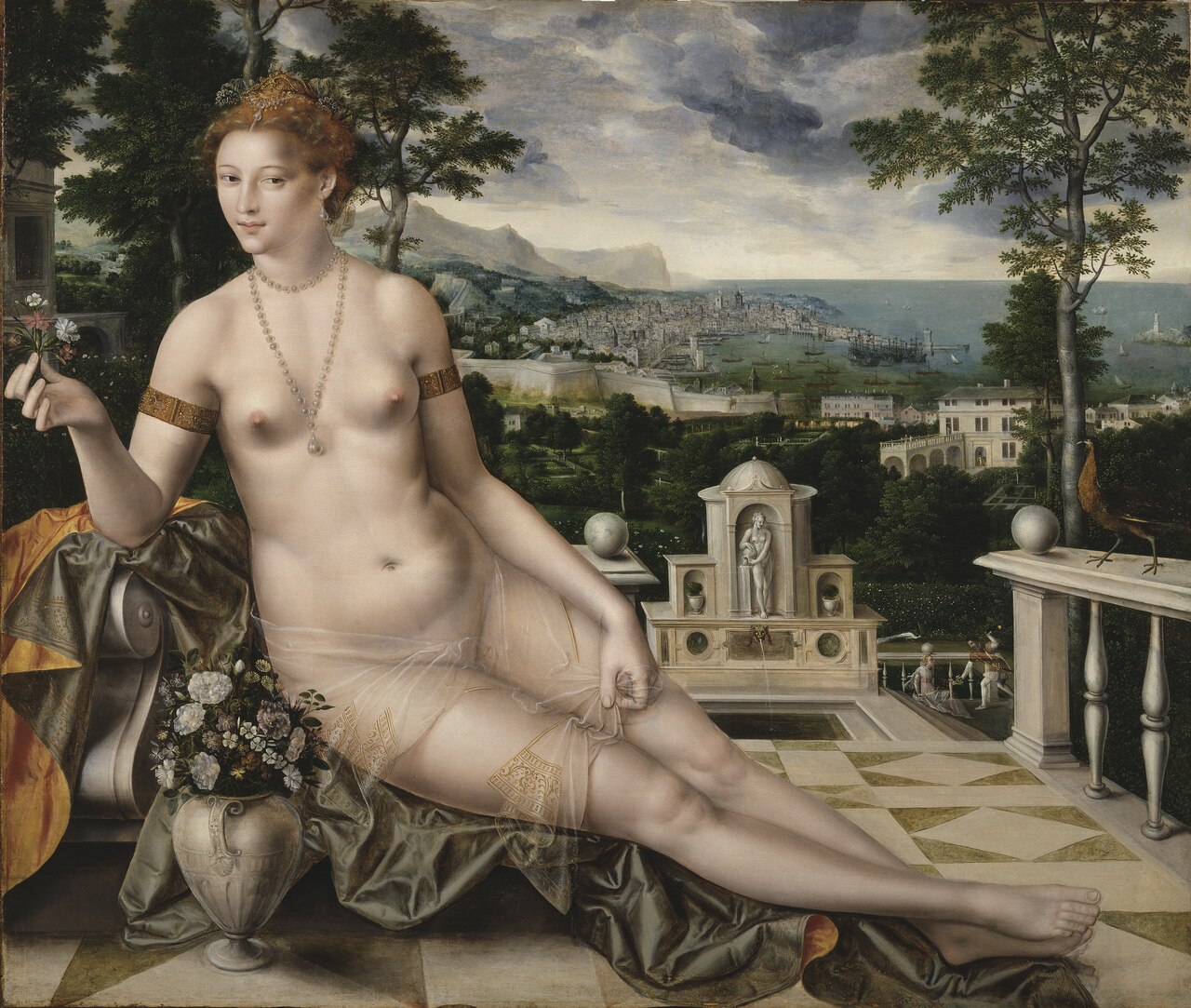
Career and style By the early 1530s Matsys had established himself as an independent artist, receiving commissions for both private patrons and civic institutions. His oeuvre spans religious altarpieces, secular genre scenes and a series of mythological works that display a heightened interest in the human form. While his early output aligns with the conservative religious iconography of the Netherlandish tradition, Matsys gradually incorporated a more sensual, courtly aesthetic. This shift mirrors the influence of the French School of Fontainebleau, whose artists were renowned for elongated figures, decorative ornamentation and a softer handling of light. Matsys’ style therefore occupies a transitional space: it retains the meticulous detail of Northern Renaissance art while embracing the elegance and eroticism associated with the French court.
Signature techniques Matsys is distinguished by several technical hallmarks. First, his use of layered glazes creates a luminous depth that makes flesh tones appear almost tactile. He often applied a thin, translucent underpainting before building up richer colours, a method that enhances the subtle modelling of the body. Second, his compositions regularly employ a shallow, theatrical space where figures are set against a muted backdrop, allowing the viewer’s focus to remain on the narrative or the sensual qualities of the subject. Third, Matsys favoured a restrained palette of warm earth tones punctuated by vibrant reds or blues, particularly in drapery, which adds visual contrast without overwhelming the overall harmony. Finally, his brushwork varies from fine, almost invisible strokes in the background to more expressive, gestural handling on the skin and fabric, a contrast that underscores the tension between realism and idealisation.
Major works Among Matsys’ most celebrated pieces are his mythological and allegorical paintings. *Venus Cythereia* (1561) presents the goddess in a relaxed pose, her skin rendered with the characteristic glazing technique that gives a soft glow. The composition balances classical architecture with a natural landscape, reflecting the artist’s synthesis of Northern realism and French classicism. *Flora* (1559) depicts the Roman goddess of spring amid a garden of blooming flowers; the work is noted for its delicate treatment of foliage and the subtle interplay of light on the figure’s translucent veil.
The genre painting *Charity* (1549) illustrates a mother nursing her child while surrounded by three figures, embodying the virtue of generosity. Matsys captures the emotional intimacy of the scene through gentle gestures and a warm colour scheme. *At the tax collector's office* (1539) offers a glimpse into everyday life, portraying a clerk amidst a cluttered desk, a composition that combines meticulous detail with a narrative focus on civic duty. This work exemplifies Matsys’ ability to render ordinary subjects with the same level of craftsmanship as his mythological subjects.
The *Altarpiece of the Virgin with the child and an angel* (dated 1600) is traditionally attributed to Matsys, though the later date suggests it may have been completed by his workshop or followers after his death. The piece retains the hallmarks of his style—soft modelling of the figures, a harmonious colour palette and an elegant arrangement of the divine trio—while hinting at the continued influence of his aesthetic on subsequent generations of Antwerp painters.
Influence and legacy Jan Matsys occupies a pivotal position in the transition from the early Netherlandish tradition to the more courtly, sensual aesthetics of the later 16th century. His willingness to integrate French decorative elements into a Northern framework paved the way for artists such as Hendrick van Balen and the early works of Peter Paul Rubens, who would later dominate the Baroque style in Antwerp. Matsys’ treatment of the female nude—combining anatomical precision with an idealised sensuality—contributed to a broader acceptance of mythological themes within Flemish painting. Moreover, his genre scenes offered a model for the realistic depiction of everyday life that would become a hallmark of Dutch Golden Age art. Today, Matsys is recognised not only for his technical skill but also for his role in broadening the thematic scope of Netherlandish painting, making him a key figure in the artistic dialogue between Northern Europe and the French court.
Overall, Jan Matsys’ body of work reflects a synthesis of regional tradition and international influence, securing his place as an important conduit between the early Netherlandish masters and the emerging Baroque sensibility of the late 16th and early 17th centuries.
Frequently asked questions
Who was Jan Matsys?
Jan Matsys was a Flemish Renaissance painter (1509–1575) from Antwerp, known for history paintings, genre scenes, landscapes and sensual depictions of the female nude.
What artistic movement or style is he associated with?
He worked within the early Netherlandish painting tradition while incorporating elements of the French Fontainebleau school, creating a hybrid style that blends Northern realism with courtly elegance.
What are his most famous works?
Key works include *Venus Cythereia* (1561), *Flora* (1559), *Charity* (1549), *At the tax collector's office* (1539) and the *Altarpiece of the Virgin with the child and an angel* (attributed, 1600).
Why does Jan Matsys matter in art history?
Matsys helped bridge early Netherlandish painting with later Baroque influences, introducing sensual mythological subjects and influencing artists such as Rubens and the Dutch Golden Age painters.
How can I recognise a Jan Matsys painting?
Look for finely layered glazes that give flesh a luminous quality, a balanced composition with shallow space, a warm earthy palette accented by rich reds or blues, and a blend of realistic detail with elegant, decorative elements.