Jan Karel Donatus van Beecq
1638 – 1722
In short
Jan Karel Donatus van Beecq (1638–1722) was a Dutch marine painter from Amsterdam who worked in England and France, becoming a member of the French Academy in 1681. He is remembered for his detailed depictions of naval scenes and ships, many of which illustrate the maritime conflicts of the late 17th century.
Notable works


_-_Shipping_in_an_Estuary_-_BHC0975_-_Royal_Museums_Greenwich.jpg)
_-_A_Naval_Engagement_-_49.570_-_Hill_of_Tarvit.jpg)
Early life Jan Karel Donatus van Beecq was born in Amsterdam in 1638, at a time when the Dutch Republic was a leading maritime power. The city’s bustling ports and shipyards provided a visual backdrop that would shape his artistic interests. Little is recorded about his family or formal training, but the prevalence of marine commerce and the thriving guild system in Amsterdam suggest that he likely apprenticed with a local painter familiar with seascapes.
Career and style Van Beecq’s professional life began in the Dutch Republic but soon extended beyond its borders. By the mid‑1670s he was active in England, a nation then engaged in a series of naval conflicts with France and the Dutch Republic. His works from this period capture English warships under varied weather conditions, indicating that he was responding to contemporary demand for visual records of naval power. In 1681 he joined the French Academy, an unusual move for a Dutch artist, reflecting both his adaptability and the cross‑national appeal of his marine subjects. Although his exact artistic affiliations remain unclear, his paintings combine the Dutch tradition of precise, naturalistic observation with a French taste for dramatic composition.
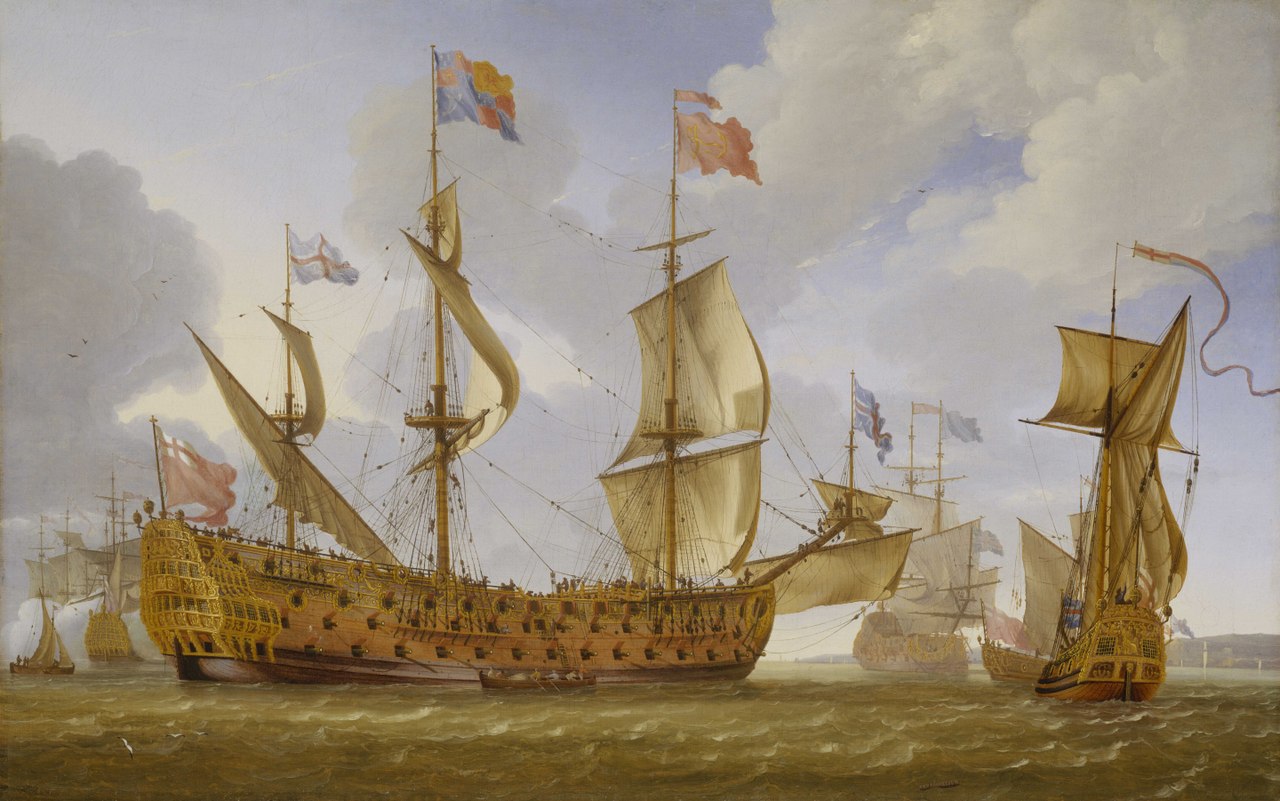
Signature techniques Van Beecq’s paintings are characterised by several recurring technical choices. He favoured a muted, cool palette for sky and sea, allowing the crisp whites of sails and the darker hulls of ships to dominate the visual field. His handling of light demonstrates a keen awareness of atmospheric effects; he often rendered the sun’s glare on water with subtle brushwork that conveys both movement and stillness. The artist’s meticulous attention to rigging, flags, and hull details reveals a deep familiarity with naval architecture. In many works he employed a slightly elevated viewpoint, giving viewers a broad overview of the scene while still preserving the intimacy of individual vessels.
Major works - **English Warships at Sea in a Fresh Breeze (1677)** – This painting shows a squadron of English ships cutting through a brisk wind. The sails are fully unfurled, and the artist captures the tension of canvas against mast with fine linear strokes. The sky is a clear blue, suggesting a calm day that contrasts with the energetic movement of the vessels. - **English Warships in a Roadstead in Calm Weather (1677)** – In this companion piece, the same fleet is depicted anchored in a sheltered harbor. The water is almost glass‑like, and the ships rest with their flags lowered. The tranquil atmosphere emphasizes the contrast between the two paintings, highlighting van Beecq’s ability to render both dynamic and static maritime scenes. - **Shipping in an Estuary (1701)** – Created later in his career, this work expands the focus to commercial traffic. Small trading vessels navigate a wide estuary, their reflections shimmering on the surface. The composition suggests a broader view of maritime activity beyond military engagement, underscoring the artist’s versatility. - **The ‘Royal Prince’ Before the Wind (1679)** – This canvas captures a single, notable warship—presumably the *Royal Prince*—cutting through the sea with its sails billowing. The ship’s name is suggested by a distinctive flag, and the painting’s dramatic use of light and shadow highlights the vessel’s power. - **A Naval Engagement** – While the exact date is uncertain, this work portrays a clash between opposing fleets. Van Beecq uses a darker, more turbulent palette to convey the chaos of battle, with smoke and fire punctuating the horizon. The composition places the viewer at the edge of the action, offering a vivid sense of immediacy.
Influence and legacy Jan Karel Donatus van Beecq occupies a niche within 17th‑ and early‑18th‑century marine painting. His cross‑national career—spanning the Dutch Republic, England, and France—mirrored the trans‑European nature of naval warfare and commerce. By joining the French Academy, he helped introduce Dutch marine realism to French audiences, influencing contemporaries who sought to blend precise observation with dramatic narrative. Although he is not as widely known as some of his Dutch peers, his works are valued by collectors and scholars for their documentation of naval technology and their balanced treatment of light, atmosphere, and detail. Today his paintings are held in several European museum collections, where they continue to inform studies of maritime history and the visual culture of early modern Europe.
Frequently asked questions
Who was Jan Karel Donatus van Beecq?
He was a Dutch marine painter (1638–1722) from Amsterdam who worked in England and France, joining the French Academy in 1681.
What artistic style or movement is he associated with?
His style blends the Dutch tradition of precise, naturalistic observation with the French Baroque’s dramatic composition, though he is not tied to a single formal movement.
What are his most famous works?
Key paintings include *English Warships at Sea in a Fresh Breeze* (1677), *English Warships in a Roadstead in Calm Weather* (1677), *Shipping in an Estuary* (1701), *The ‘Royal Prince’ Before the Wind* (1679), and an unnamed *Naval Engagement*.
Why is van Beecq important in art history?
He documented naval technology and battle scenes with technical accuracy, bridging Dutch marine realism and French artistic tastes, and his works serve as visual records of late‑17th‑century maritime activity.
How can I recognise a van Beecq painting?
Look for meticulous rigging detail, a cool palette, precise rendering of sails and hulls, and a balanced viewpoint that captures both the drama of sea weather and the calm of anchored vessels.