Jacob van Utrecht
1479 – 1530
In short
Jacob van Utrecht (1479–1530) was a Dutch-born early Renaissance painter who worked mainly in Antwerp and Lübeck. He is known for his portraiture and religious altarpieces, including the Kreuzigungsretabel and several documented portraits.
Notable works

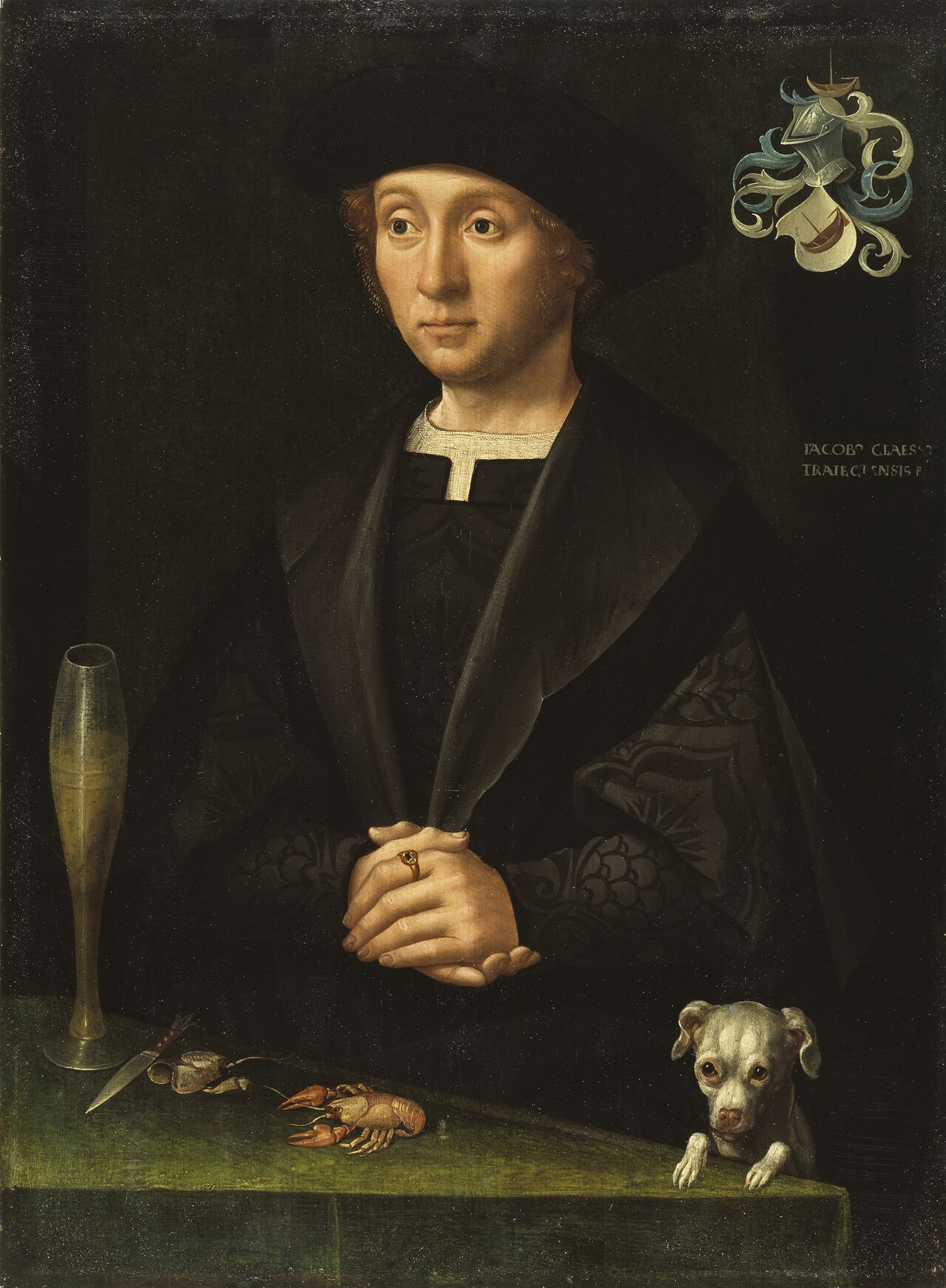


Early life Jacob Claesz van Utrecht was born in 1479 in the city of Utrecht, then part of the Kingdom of the Netherlands. Little is recorded about his family background, but the patronymic "Claesz" indicates that his father's name was Klaas. Utrecht in the late 15th century was a thriving centre of trade and culture, and it offered a fertile environment for a young artist to encounter the flourishing Netherlandish artistic tradition. By the turn of the century Jacob had begun an apprenticeship, most likely in the workshop of a local master, where he would have learned the fundamentals of drawing, panel preparation and oil painting techniques that characterised the Northern Renaissance.
Career and style Around the early 1500s Jacob van Utrecht moved to Antwerp, the commercial hub of the Low Countries. Antwerp attracted many painters seeking patronage from wealthy merchants and civic institutions, and it was here that van Utrecht began to develop a personal style that blended the meticulous detail of Netherlandish realism with the emerging humanist interest in individual character. His work displays a careful observation of textiles, jewellery and facial expression, while maintaining a clear compositional balance rooted in the earlier Flemish tradition. Though he is not linked to a specific artistic movement, his paintings are generally placed within the early Renaissance period of the Low Countries, a time when artists were gradually incorporating Italianate spatial ideas without abandoning the Northern emphasis on surface texture.
Signature techniques Van Utrecht’s paintings are distinguished by several recurring technical traits. He favoured oil on wood panels, employing a layered glazing method that allowed subtle tonal shifts and a luminous quality to skin tones. His underdrawings, visible under infrared examination, reveal a confident line work that outlines the primary forms before colour is applied. In portraiture, he often placed the sitter against a muted, often monochrome background, thereby directing focus to the face and hands. Light is rendered with a gentle, almost diffused quality, creating soft shadows that model the features without harsh contrast. In his religious works, he uses a richer palette and more elaborate drapery, yet the same attention to materiality persists, which helps to identify his hand across different subjects.
Major works The surviving oeuvre of Jacob van Utrecht is modest, but several works are securely attributed to him. The **Kreuzigungsretabel** (Crucifixion Altarpiece) is a large panel that demonstrates his ability to handle complex narrative scenes. The composition centres the crucified Christ, flanked by mournful figures, each rendered with individualized facial expressions that convey a deep emotional resonance. The treatment of light, falling from an implied heavenly source, underscores the devotional intent of the piece.
Among his portraits, the Portrait of a Member of the Alardes Family (1518) stands out for its refined depiction of a gentleman in a black doublet and a fur-lined collar. The sitter’s direct gaze and the subtle modelling of his cheekbones exemplify van Utrecht’s capacity to capture personality within the conventions of aristocratic portraiture.
The Portrait of a Johanniter Ridder (1500) offers an early example of his work in Lübeck. The knight, adorned with a white mantle of the Order of Saint John, is shown in half‑length, his hands resting on a sword hilt. The careful rendering of the metallic sheen of the armour and the texture of the mantle illustrate van Utrecht’s skill in depicting varied materials.
Another notable piece is the Portrait of een vrouw uit Lübeck (1512), a depiction of a woman from Lübeck whose identity remains unknown. She is presented in a modest dress with a delicate veil, her gaze directed slightly away from the viewer, a compositional choice that lends an air of introspection. The painting’s fine brushwork on the lace collar and the subtle play of light across her cheek provide insight into van Utrecht’s nuanced approach to female portraiture.
The Portrait of a young woman (date unknown) follows similar conventions, featuring a youthful sitter with a serene expression, a low‑key background and a focus on the softness of skin tones. Though the exact provenance is uncertain, stylistic analysis aligns the work with van Utrecht’s known palette and handling of light.
These works collectively reveal van Utrecht’s versatility: he could execute solemn religious scenes as well as intimate, psychologically nuanced portraits, adapting his technique to the expectations of his patrons while retaining a coherent visual identity.
Influence and legacy Jacob van Utrecht operated at a transitional moment in Northern European art, bridging the late Gothic sensibility and the early Renaissance focus on individualism. While he never achieved the fame of contemporaries such as Jan van Eyck or Albrecht Dürer, his paintings contributed to the diffusion of Renaissance ideas north of the Alps, particularly in the Baltic city of Lübeck, where his presence is documented through several portraits. His careful handling of texture and light influenced a generation of local painters who sought to emulate his realistic approach while preserving the Northern emphasis on detail.
Modern scholarship regards van Utrecht as a competent, if not revolutionary, figure whose work exemplifies the cross‑regional artistic exchange of the early 16th century. Conservation studies of his panels have provided valuable data on the materials and methods of early Netherlandish painters, informing broader understandings of workshop practices in the period. Though the exact circumstances of his death in 1530 remain unknown, his surviving paintings continue to be exhibited in European museums, where they are appreciated for their technical mastery and their glimpse into the cultural milieu of the Low Countries and the Baltic during a pivotal era of artistic development.
Frequently asked questions
Who was Jacob van Utrecht?
Jacob van Utrecht (1479–1530) was a Dutch-born early Renaissance painter who worked mainly in Antwerp and Lübeck, producing portraits and religious panels.
What artistic style or movement is he associated with?
He is generally placed within the early Netherlandish Renaissance, blending detailed Northern realism with emerging humanist influences.
What are his most famous works?
Key works include the Kreuzigungsretabel (Crucifixion Altarpiece), the Portrait of a Member of the Alardes Family (1518), the Portrait of a Johanniter Ridder (1500), and the Portrait of een vrouw uit Lübeck (1512).
Why does Jacob van Utrecht matter in art history?
He exemplifies the artistic exchange between the Low Countries and the Baltic region in the early 16th century, and his technique provides insight into the materials and methods of early Netherlandish painters.
How can I recognise a painting by Jacob van Utrecht?
Look for oil on panel works with soft, diffused lighting, meticulous texture in fabrics and metal, a restrained background, and a careful glazing that gives skin tones a luminous quality.