Jacob Toorenvliet
1640 – 1719
In short
Jacob Toorenvliet (1640–1719) was a Dutch Golden Age painter known for finely detailed genre scenes and portraits. Working mainly in Leiden, he produced works such as The Music Lesson (1675) and a portrait of the explorer Carel Quina, exemplifying the fijnschilder tradition.
Notable works

._Ridder_van_het_Heilige_Graf,_Amsterdams_reiziger_naar_Azi%C3%AB_Rijksmuseum_SK-A-2254.jpeg)


Early life Jacob Toorenvliet was born in 1640 in the university town of Leiden, a centre of artistic activity in the Dutch Republic. Little is recorded about his family background, but the city’s vibrant guild system suggests that he entered an apprenticeship in his early teens. Leiden’s art scene was dominated by the fijnschilder (fine‑painting) tradition, characterised by meticulous surface detail and a restrained colour palette, and Toovens likely trained under a master associated with that movement—possibly a pupil of Gerard Dou, the leading fijnschilder of the period. By the time he completed his apprenticeship, Toorenvliet had absorbed the technical rigour and compositional conventions that would define his later work.
Career and style Toorenvliet’s professional career unfolded during the latter half of the Dutch Golden Age, a period when genre painting—scenes of everyday life—enjoyed great popularity among the merchant class. He established a workshop in Leiden, where he produced a steady output of small‑scale oil paintings for the domestic market. His style reflects the fijnschilder emphasis on clarity of form, subtle tonal modelling, and a calm, almost didactic atmosphere. Unlike the more dramatic chiaroscuro of Rembrandt, Toorenvliet favoured a diffused light that illuminated interiors without stark contrasts, allowing fine textures of silk, lace and metal to be rendered with precision.
Thematically, his works often depict intimate domestic settings, musical gatherings, and solitary figures engaged in quiet contemplation. These subjects align with contemporary moralising trends, where everyday activities were imbued with allegorical meaning. While Toorenvliet never aligned himself with a formal artistic movement, his oeuvre sits comfortably within the broader Dutch genre tradition, sharing affinities with contemporaries such as Pieter de Hooch and Gabriel Metsu.
Signature techniques Toorenvliet’s paintings are distinguished by several recurring technical hallmarks:
1. Microscopic brushwork – He employed a fine, almost pointillist brush to achieve delicate rendering of fabrics, jewellery and reflective surfaces. This technique allowed him to suggest texture and material quality with a high degree of realism. 2. Layered glazing – Multiple translucent glazes were applied over a lean underpainting, giving his colours depth and a luminous quality that is especially evident in the skin tones of his portrait subjects. 3. Controlled composition – His canvases often centre on a single figure or a small group, set within a carefully balanced interior space. Architectural elements such as doorways, windows and tiled floors are used to lead the viewer’s eye through the picture. 4. Narrative detail – Small objects—a music book, a jug, a candle—are placed with symbolic intent, providing clues to the underlying story or moral lesson.
These methods combined to produce works that feel both intimate and instructive, appealing to collectors who prized technical virtuosity and subtle storytelling.
Major works ### The Music Lesson (1675) One of Toorenvliet’s most celebrated pieces, *The Music Lesson* (1675) depicts a young woman seated at a virginal while a male accompanist reads from a music manuscript. The composition is bathed in soft, natural light that streams through a window, highlighting the sheen of the instrument’s polished wood. The meticulous rendering of the woman’s silk dress and the intricate detailing of the sheet music exemplify Toorenvliet’s fijnschilder technique. The work has been interpreted as an allegory of harmony between the senses and the intellect, a common theme in Dutch genre painting.
### Portrait of Carel Quina (1669) In 1669 Toorenvliet painted a portrait of Carel Quina (1620‑89), a knight of the Holy Sepulchre and noted Amsterdam‑born explorer of Asia. The portrait presents Quina in a formal pose, dressed in a dark, fur‑trimmed coat with a sash indicating his knighthood. The background is a subdued interior, allowing the sitter’s face and insignia to dominate the visual field. Toorenvliet’s handling of the facial features—particularly the subtle modelling of the eyes and the texture of the beard—demonstrates his skill in capturing both likeness and status.
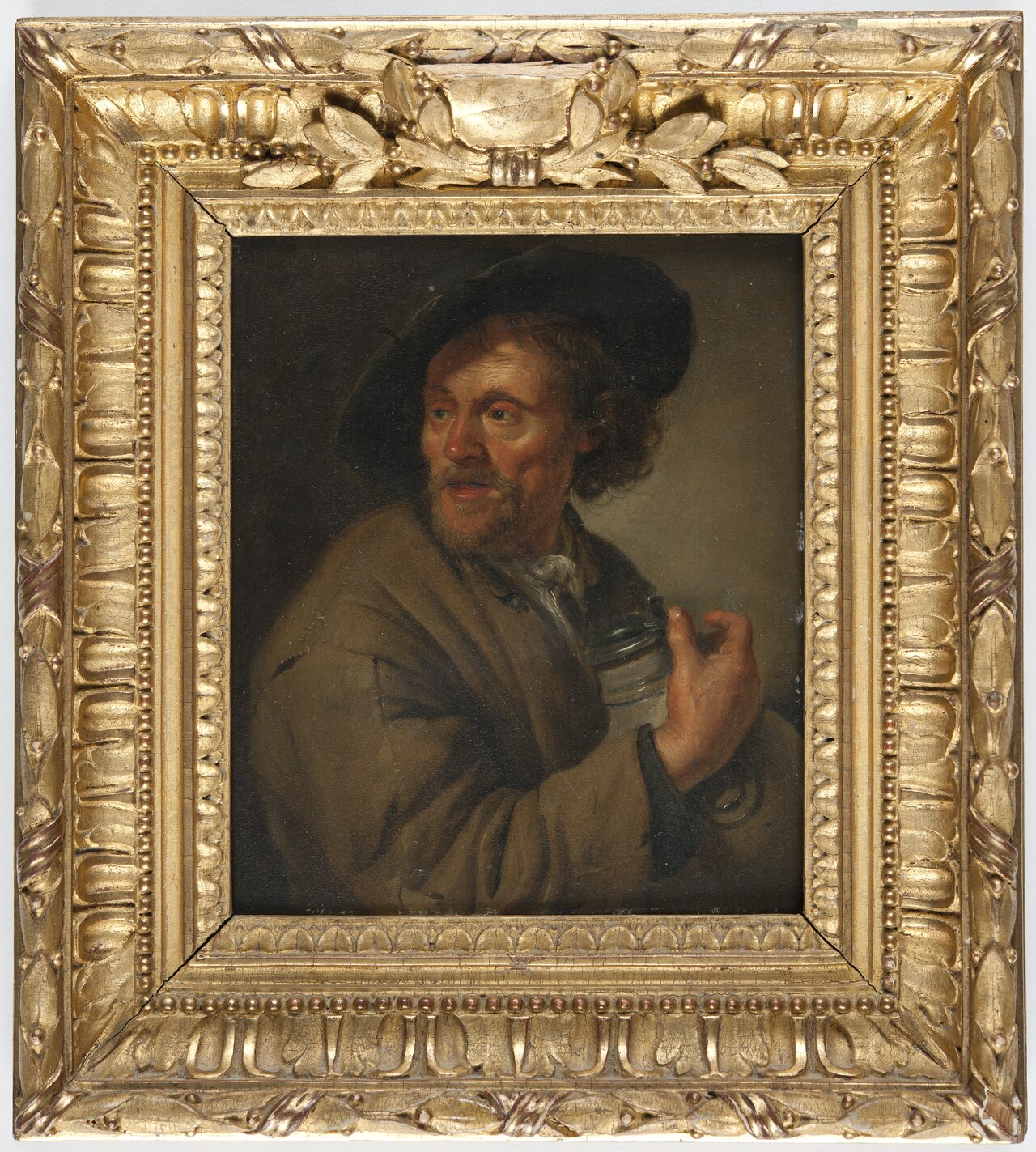
### Man Holding a Jug (1679) *Man Holding a Jug* (1679) is a genre piece that showcases a solitary figure, possibly a tavern patron, grasping a ceramic jug. The composition is simple yet effective: the man’s gaze is directed toward the viewer, creating a sense of immediacy. The jug itself is rendered with a reflective glaze that captures surrounding light, highlighting Toorenvliet’s expertise in depicting glass and metal.
### The Sleeping Woman (attributed 1601) A work titled *The Sleeping Woman* bears the date 1601, which predates Toorenvliet’s birth. Scholars generally regard the attribution as erroneous, possibly resulting from a misreading of a later date or confusion with an earlier artist of a similar name. Nonetheless, the painting’s delicate handling of drapery and the serene pose of the figure are consistent with Toorenvliet’s style, suggesting that it may be a later copy or an unsigned work by his workshop.
### St. Peter Healing the Sick (attributed 1601) Similarly, *St. Peter Healing the Sick* carries a 1601 date that conflicts with Toorenvliet’s lifespan. The piece depicts Saint Peter performing a charitable act in a modest interior, a subject that aligns with the moralising genre of the Dutch Golden Age. While the date is likely a cataloguing error, the composition’s careful attention to light and texture mirrors the artist’s known techniques, indicating a possible post‑humous attribution or a workshop replica.
Influence and legacy Jacob Toorenvliet never achieved the fame of Rembrandt or Vermeer, yet his work contributed to the diffusion of the fijnschilder aesthetic beyond the major artistic centres of Amsterdam and Delft. His paintings were collected by affluent merchants in Leiden and surrounding towns, and several examples entered the inventories of Dutch art dealers in the early eighteenth century. The precision of his brushwork influenced a generation of Leiden painters who sought to emulate his polished surfaces and quiet narratives.
In contemporary scholarship, Toorenvliet is recognised as a representative figure of the second‑generation Dutch genre painters, bridging the early fijnschilder masters with later artists who incorporated more naturalistic lighting. His portraits, especially the *Portrait of Carel Quina*, provide valuable visual documentation of the social elite and the emerging global connections of the Dutch Republic in the seventeenth century.
Today, Toorenvliet’s works are held in a few European museum collections, and they continue to appear in exhibitions exploring the domestic interior of the Dutch Golden Age. Their enduring appeal lies in the combination of technical mastery and the subtle, human stories they convey, offering modern viewers a window into the everyday elegance of seventeenth‑century Dutch life.
---
Frequently asked questions
Who was Jacob Toorenvliet?
Jacob Toorenvliet (1640–1719) was a Dutch Golden Age painter from Leiden, known for finely detailed genre scenes and portraits.
What artistic style or movement is he associated with?
He worked within the fijnschilder tradition of Dutch genre painting, characterised by meticulous surface detail and restrained lighting.
What are his most famous works?
His best‑known paintings include *The Music Lesson* (1675), the *Portrait of Carel Quina* (1669), and *Man Holding a Jug* (1679).
Why is Jacob Toorenvliet important in art history?
He helped spread the fine‑painting technique beyond major centres, contributed to the visual record of Dutch domestic life, and influenced later Leiden artists.
How can I recognise a Jacob Toorenvliet painting?
Look for small‑scale oil works with crisp brushwork, delicate rendering of fabrics and metal, a calm interior setting, and subtle narrative details such as musical instruments or everyday objects.