Hokkei
1780 – 1850
In short
Totoya Hokkei (1780–1850) was a Japanese ukiyo‑e artist from Tokyo, best known as a leading disciple of Katsushika Hokusai. He produced a vast range of woodblock prints, book illustrations and paintings, often signing his work as Aoigazono, Aoigaoka or Kyōsai.
Notable works
_-_Vanderbilt_Fine_Arts_Gallery_-_1992.256.jpg)

_-_Vanderbilt_Fine_Arts_Gallery_-_1995.022.jpg)
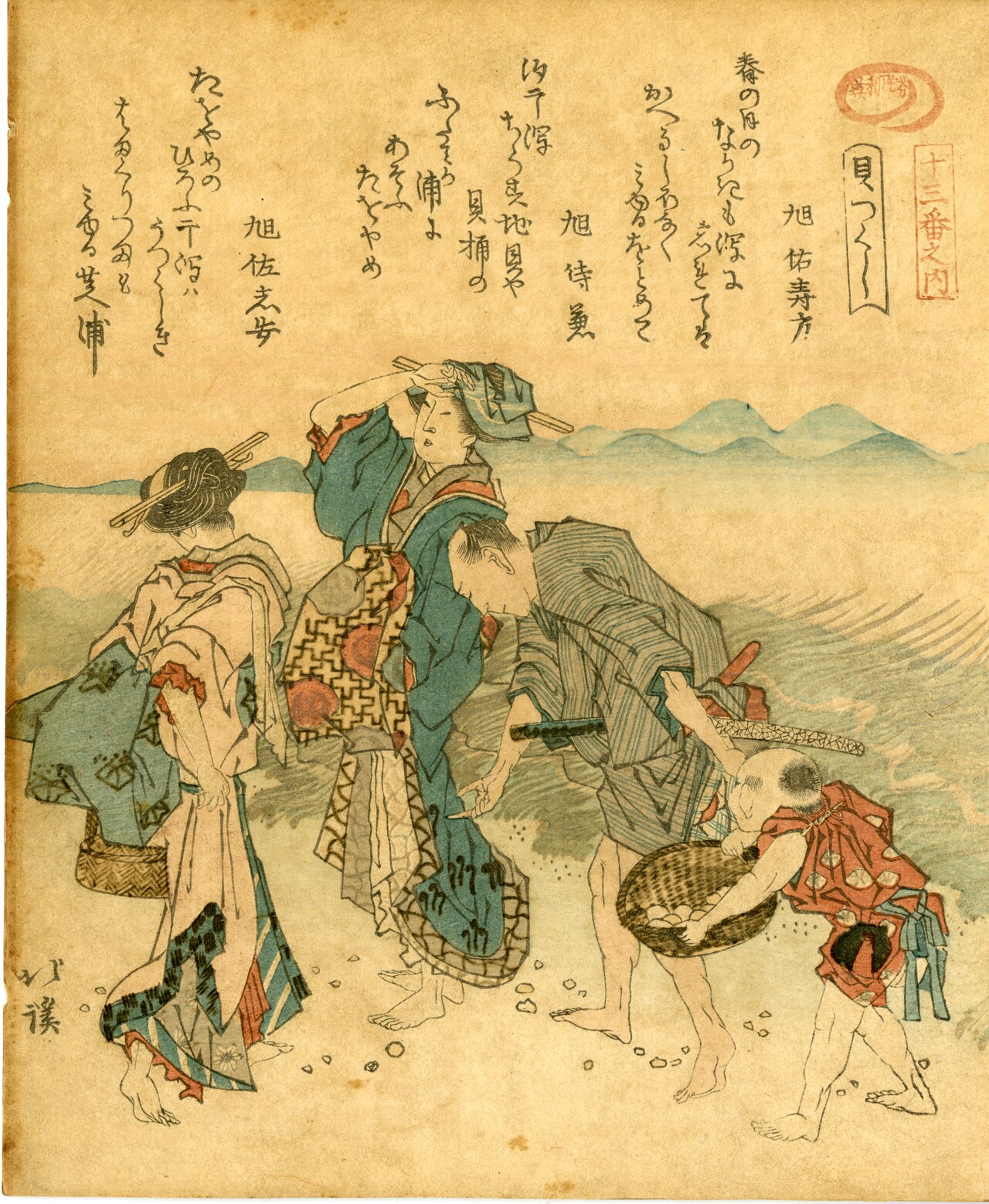

Early life Totoya Hokkei was born in 1780 in Edo (modern‑day Tokyo), the cultural heart of the Tokugawa shogunate. Little is recorded about his family background, but he entered the artistic world at a young age, likely through an apprenticeship in a printing workshop. By his late teens he had begun to study under the celebrated master Katsushika Hokusai, who was already establishing a reputation for innovative ukiyo‑e designs. This early mentorship exposed Hokkei to the technical rigours of woodblock carving and the vibrant visual language of the floating‑world genre.
Career and style Hokkei quickly emerged as a prolific creator within the ukiyo‑e tradition, producing prints that spanned a remarkable variety of subjects: landscapes, actors, beautiful women, flora and fauna, and humorous genre scenes. While his early work closely mirrored Hokusai’s dynamic composition and bold line, Hokkei soon developed a softer, more lyrical touch. He favoured delicate brushwork, subtle colour gradations and a playful sense of narrative that appealed to both elite patrons and the broader urban public. Over the course of his career he adopted several art‑names—including Aoigazono, Aoigaoka and Kyōsai—under which he published illustrations for poetry collections, popular books and private commissions.
Signature techniques Hokkei’s prints are distinguished by a few recurring technical hallmarks. First, his line work is both precise and fluid, allowing intricate details such as the scales of a fish or the feathers of a bird to be rendered with economy. Second, he employed a nuanced palette, often layering light washes of green, blue or pink to give his subjects a sense of depth without overwhelming the composition. Third, his use of surimono—high‑quality, privately commissioned prints—demonstrates a mastery of fine carving and experimental colour application. Finally, Hokkei frequently incorporated witty visual jokes, a trait that set his genre scenes apart from more formal ukiyo‑e productions.
Major works Among the works that survive today, several are known primarily through facsimile editions, which preserve the original composition and technique. *A Tray of Octopus, Blowfish, Crab, and Two Other Fish* showcases Hokkei’s skill in depicting marine life with both accuracy and stylised elegance; the arrangement of the creatures forms a balanced tableau that would have appealed to collectors of culinary and natural‑history prints. The surimono print *Earth* from the series *The Five Elements* (circa 1880, facsimile) illustrates his ability to blend allegory with decorative design, employing earthy tones and intricate patterns to embody the element’s symbolic weight. *Man and Woman Standing at the Entrance to a Shinto Shrine* captures a quiet moment of ritual, emphasizing the serene architecture and the subtle gestures of the figures. In *Two Women, a Man, and a Boy Gathering Seashells*, Hokkei renders a leisurely seaside scene with a light‑hearted narrative, highlighting his affection for everyday activities. Lastly, the whimsical *Kintarō arbitrating a fight between a tengu and a cock* (facsimile of an 1890 edition) reflects his penchant for mythic storytelling, portraying the legendary strongman Kintarō as a mediator in a fantastical dispute.
Influence and legacy Hokkei’s influence extended far beyond his own prolific output. As one of Hokusai’s most celebrated pupils, he helped disseminate his master’s bold compositional strategies to a wider audience, thereby shaping the visual vocabulary of late‑Edo ukiyo‑e. His illustrations for popular literature contributed to the rise of picture books and helped democratise art consumption among the growing urban middle class. Later Western collectors, fascinated by the exoticism of Japanese prints, recognised Hokkei’s works for their technical finesse and narrative charm, cementing his reputation in the global art market. In contemporary scholarship, Hokkei is valued not only for his artistic merit but also as a cultural conduit who bridged elite and popular aesthetics, ensuring the vitality of ukiyo‑e until the Meiji Restoration’s modernising pressures.
---
Key points: - Born and died in Tokyo (1780–1850). - Student of Hokusai, prolific ukiyo‑e printmaker. - Known for delicate line, subtle colour, and playful subjects. - Works often survive as facsimile reproductions. - Legacy includes influence on later Japanese printmakers and Western appreciation of ukiyo‑e.
Frequently asked questions
Who was Hokkei?
Totoya Hokkei (1780–1850) was a Japanese ukiyo‑e artist from Tokyo, renowned as a leading disciple of Katsushika Hokusai and a prolific creator of prints, book illustrations and paintings.
What style or movement is Hokkei associated with?
Hokkei worked within the ukiyo‑e tradition of the Edo period, producing woodblock prints that blended realistic detail with decorative elegance.
What are Hokkei’s most famous works?
Among his notable pieces are *A Tray of Octopus, Blowfish, Crab, and Two Other Fish*, the surimono *Earth* from *The Five Elements* series, *Man and Woman Standing at the Entrance to a Shinto Shrine*, *Two Women, a Man, and a Boy Gathering Seashells*, and the whimsical *Kintarō arbitrating a fight between a tengu and a cock*.
Why does Hokkei matter in art history?
He helped spread Hokusai’s innovative techniques, expanded the range of subjects in ukiyo‑e, and contributed to the popularisation of illustrated books, influencing both Japanese successors and Western collectors.
How can I recognise a Hokkei print?
Hokkei’s prints are marked by fine, flowing lines, subtle colour washes, playful narrative details, and often feature signatures or art‑names such as Aoigazono, Aoigaoka or Kyōsai.