Gunnar Berndtson
1854 – 1895
In short
Gunnar Berndtson (1854–1895) was a Finnish painter renowned for his meticulous realism and portraiture, active in Helsinki during the late 19th century. He produced technically refined works such as The Bride's Song and several notable portraits, leaving a modest but respected legacy in Finnish art.
Notable works

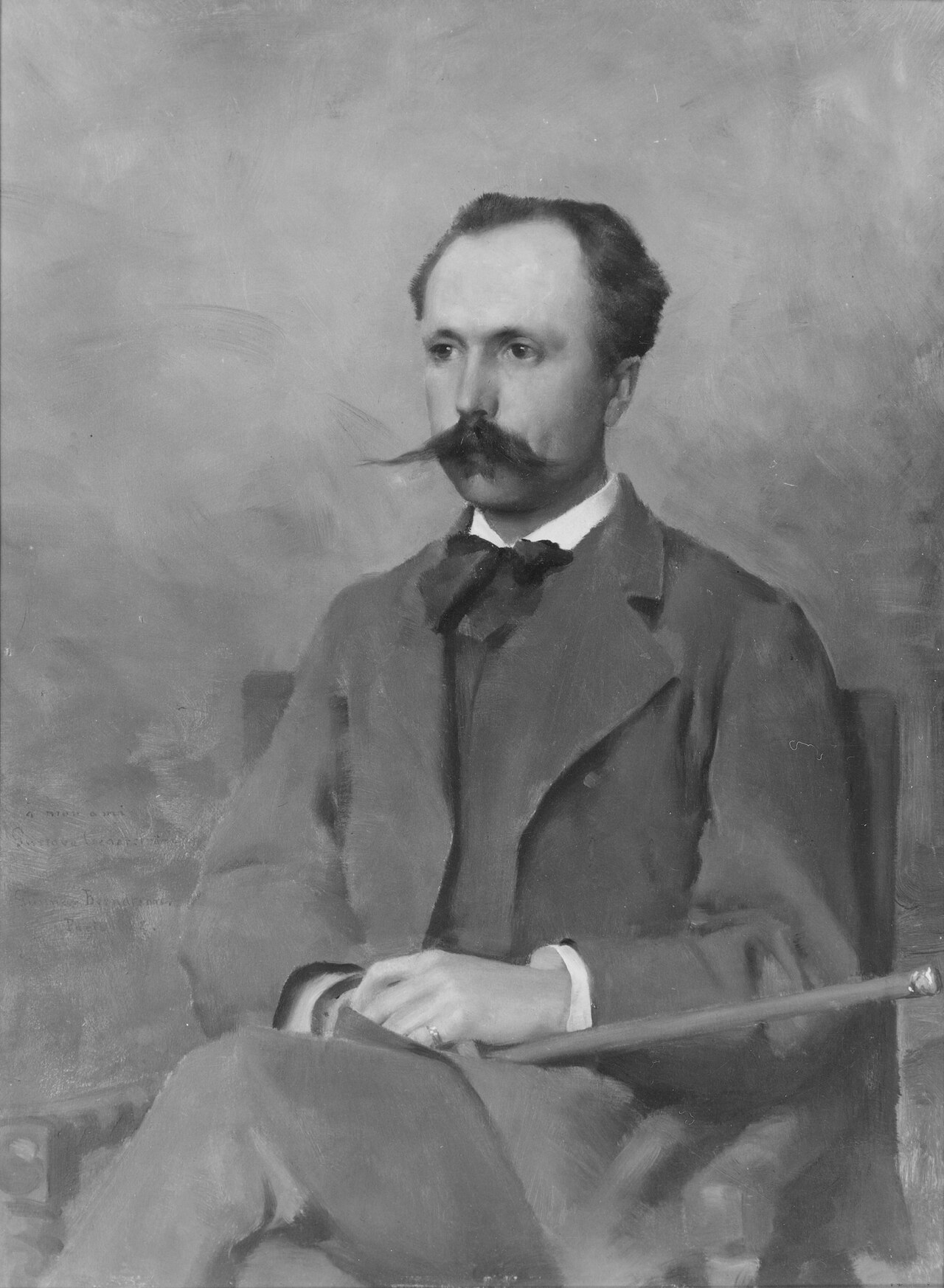


Early life Gunnar Fredrik Berndtson was born in 1854 in Helsinki, then the capital of the Grand Duchy of Finland within the Russian Empire. He grew up in a middle‑class family that valued education and the arts, which allowed him to pursue formal training at the Academy of Fine Arts in Helsinki. The Academy, founded in the early 19th century, offered a curriculum rooted in drawing from life and classical techniques, providing Berndtson with a solid foundation in academic painting. His early exposure to the burgeoning Finnish cultural scene, alongside the rise of a national identity, shaped his commitment to high‑quality representation.
Career and style After completing his studies in Helsinki, Berndtson joined a generation of Finnish artists who sought further instruction abroad. Like many of his contemporaries, he spent time in the German art centres of the 1870s and 1880s, where the Düsseldorf School’s emphasis on precise draftsmanship and naturalistic colour influenced his development. The German academies prized exact observation and a sober palette, traits that would become hallmarks of Berndtson’s mature style.
Returning to Helsinki in the early 1880s, Berndtson established a studio that catered to an elite clientele. He specialised in portraiture, a genre that allowed him to demonstrate his skill in rendering texture, fabric, and subtle facial expression. His works are characterised by a calm, restrained realism, avoiding the flamboyance of the later Symbolist movement while maintaining a lyrical sensibility. Although no formal movement claims him as a leading figure, his paintings sit comfortably within the broader European realist tradition of the late 19th century.
Signature techniques Berndtson’s technical approach combined meticulous preparatory studies with layered oil painting. He began each portrait with a carefully rendered charcoal or graphite sketch, often employing a limited tonal range to map light and shadow. Once satisfied with the drawing, he applied a thin underpainting (grisaille) to establish tonal values before building up colour in successive glazes. This method allowed him to achieve a luminous depth, particularly in skin tones and the sheen of fabrics.
His handling of texture is especially noteworthy. By varying brushwork—from fine, almost invisible strokes for smooth flesh to broader, more tactile strokes for lace, fur, or metallic surfaces—Berndtson could convey the tactile qualities of his subjects with convincing realism. He also paid close attention to the interplay of reflected light, often positioning his sitters near a window or using a subtle artificial light source to create gentle highlights that enhance three‑dimensionality.
Major works Berndtson’s oeuvre, though not extensive, includes several works that exemplify his skill.
- The Bride’s Song (1881) – This canvas captures a young bride in a moment of quiet anticipation. The composition centres the figure against a muted background, allowing the delicate detailing of her veil and jewellery to dominate. The painting’s soft lighting and nuanced colour palette reflect Berndtson’s mastery of atmospheric effect.
- Portrait of Gustaf Cederström (date unspecified) – A dignified representation of the Swedish military painter Gustaf Cederström, this work showcases Berndtson’s ability to render the sitter’s intellectual presence. The portrait’s restrained background and careful attention to the texture of Cederström’s clothing underline the artist’s focus on character rather than spectacle.
- Portrait of Baron Delort de Gléon (1883) – In this aristocratic portrait, Berndtson renders the baron’s elaborate costume with striking precision. The rendering of silk, gold embroidery, and the baron’s facial features demonstrates the painter’s command over both materiality and psychological insight.
- Almée, an Egyptian Dancer (1883) – Departing from his usual portrait commissions, this exotic genre piece depicts a dancer in an Orientalist setting. While the subject aligns with contemporary fascination for the ‘exotic’, Berndtson treats the figure with the same realistic fidelity as his portraits, emphasizing the dancer’s flowing costume and the subtle play of light on her skin.
- Portrait of August Schauman, journalist (1893) – One of his later works, this portrait of the Finnish journalist August Schauman conveys a thoughtful, slightly introspective mood. The subdued colour scheme and the careful rendering of the subject’s eyes illustrate Berndtson’s continued dedication to psychological depth.
These works collectively illustrate his consistent approach: a focus on realistic detail, a restrained palette, and a sensitivity to the inner life of his subjects.
Influence and legacy Gunnar Berndtson died relatively young in 1895, succumbing to an illness that cut short a promising career. Despite his brief lifespan, his paintings contributed to the professionalisation of portraiture in Finland. By adhering to rigorous academic standards while embracing a calm realism, he set a benchmark for subsequent Finnish portrait painters who sought to balance national identity with European artistic currents.
His works are held in several Finnish public collections, where they are cited as exemplars of late‑19th‑century realist portraiture. Art historians acknowledge his role in bridging the academic traditions of the early 1800s with the more nuanced psychological portraiture that emerged in the early 20th century. While he never became a household name beyond specialist circles, his dedication to craft and his ability to capture the subtle dignity of his sitters ensure his continued relevance in studies of Finnish art history.
Frequently asked questions
Who was Gunnar Berndtson?
Gunnar Berndtson (1854–1895) was a Finnish painter known for his meticulous realist portraits and genre scenes, active mainly in Helsinki during the late 19th century.
What style or movement is he associated with?
He is not linked to a specific movement but works within the European realist tradition, reflecting the academic realism taught in Finnish and German art academies of his time.
What are his most famous works?
Key works include *The Bride’s Song* (1881), the portraits of Gustaf Cederström, Baron Delort de Gléon (1883), August Schauman (1893), and the genre painting *Almée, an Egyptian Dancer* (1883).
Why is he significant in art history?
Berndtson’s precise technique and psychological insight helped raise the standard of Finnish portraiture, linking national art to broader European realist practices.
How can you recognise a Berndtson painting?
Look for finely rendered textures, a calm, restrained colour palette, layered glazing that creates luminous skin tones, and a focus on subtle expression rather than dramatic flair.