Govert Dircksz Camphuysen
1623 – 1672
In short
Govert Dircksz Camphuysen (1623–1672) was a Dutch animal painter of the 17th‑century Golden Age, known for detailed depictions of livestock and rural scenes. Influenced by Paulus Potter, his work includes notable pieces such as *Flirtation in a Cowshed* and *Dog and a Birch Log*.
Notable works


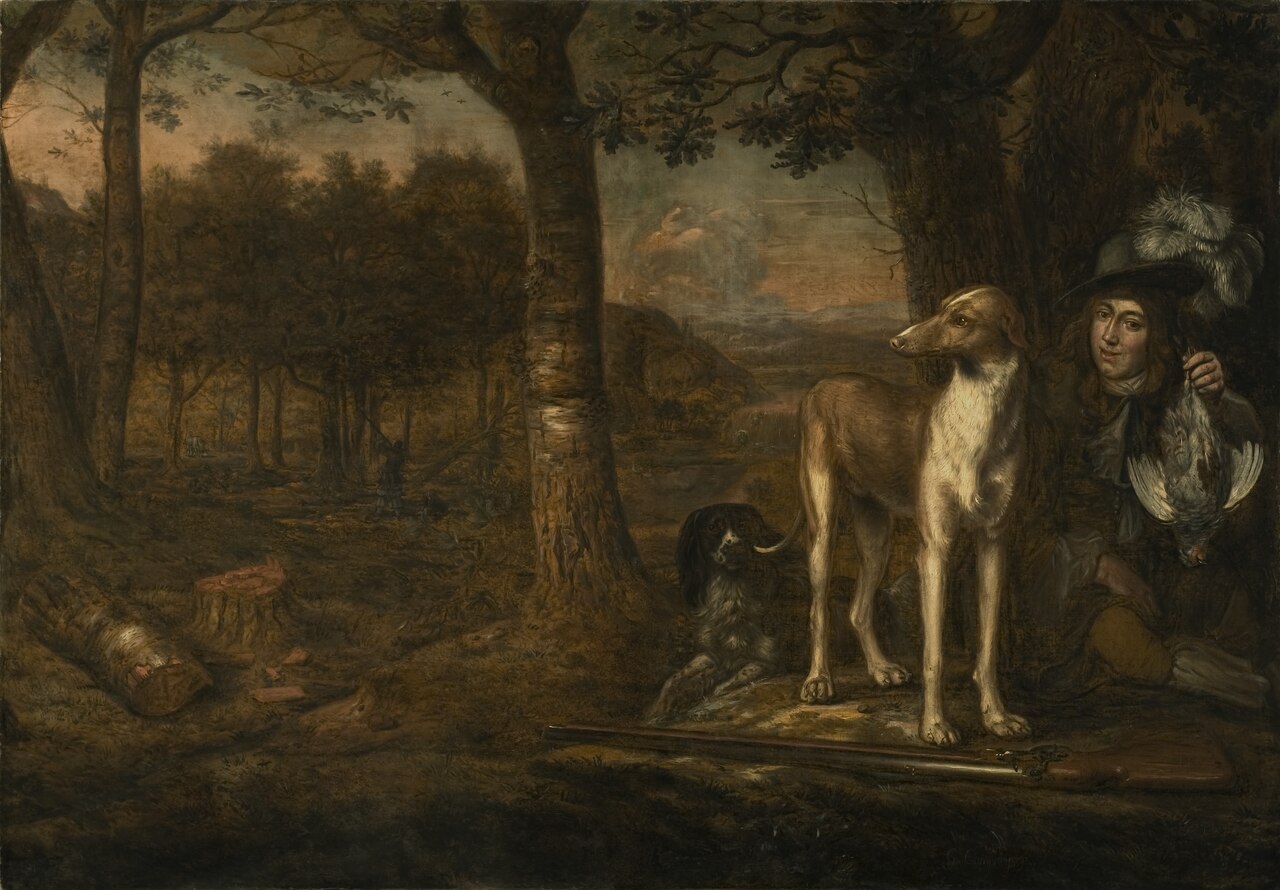
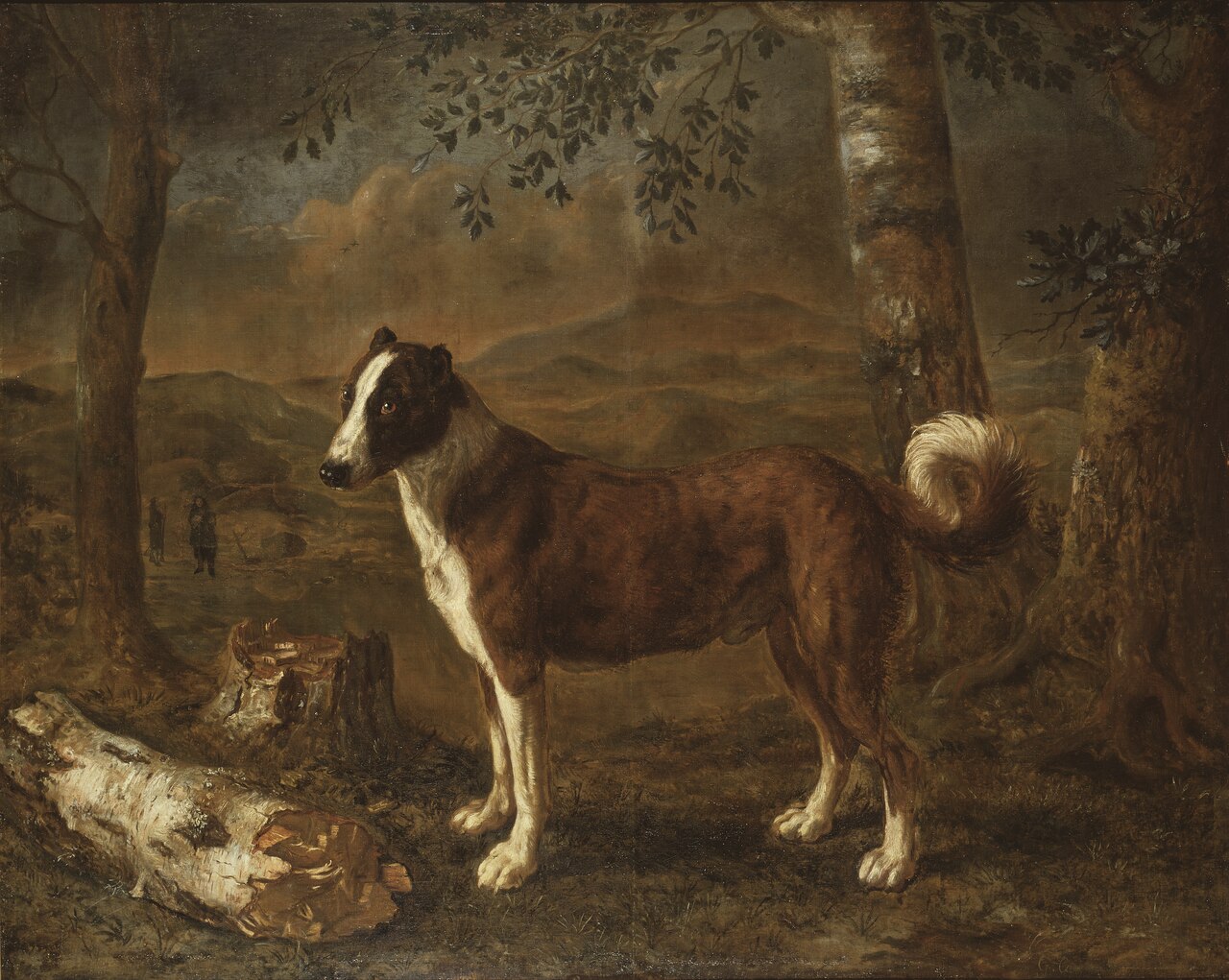
Early life Govert Dircksz Camphuysen was born in 1623 in the Frisian town of Dokkum, a modest settlement in the northern reaches of the Dutch Republic. Little is recorded about his family, but the region’s agrarian environment provided a visual vocabulary of farm animals and pastoral landscapes that would later dominate his art. As a teenager, Camphuysen likely received his first artistic training in a local workshop, where he would have learned the fundamentals of drawing, pigment preparation, and the handling of oil paint. The proximity of Dokkum to the thriving artistic centres of the Netherlands meant that aspiring painters often travelled to larger cities for apprenticeships; it is probable that Camphuysen moved to Amsterdam in his early twenties to further his studies.
Career and style By the mid‑1640s Camphuysen had established himself in Amsterdam, a bustling hub for artists, collectors, and merchants. He specialised in animal painting, a niche that enjoyed considerable demand among the Dutch middle class, who prized images of cattle, dogs, and other domestic animals as symbols of prosperity and moral virtue. Camphuysen’s style shows a clear affinity with the work of Paulus Potter, whose realistic treatment of animal anatomy and atmospheric light had set a high standard for the genre. Like Potter, Camphuysen rendered his subjects with a balance of precise observation and idealised composition, often placing a single animal or a small group within a carefully constructed landscape that highlighted texture, colour, and light.
Camphuysen’s palette favoured earthy ochres, muted greens, and warm browns, allowing the flesh tones of his subjects to stand out against a subdued background. His figures are rendered with a smooth, almost velvety brushstroke that conveys the softness of fur and the solidity of bone. The artist also demonstrated a keen interest in the interplay of shadow and illumination, using chiaroscuro to model form and to give his scenes a sense of three‑dimensional depth.
Signature techniques Camphuysen’s work is distinguished by several recurring technical approaches. First, he employed a layered glazing method, applying thin, translucent layers of pigment over a lean underpainting. This technique deepened the colour saturation and facilitated subtle colour shifts, especially in the rendering of animal skin and reflective surfaces. Second, his compositional arrangements often feature a strong diagonal axis, guiding the viewer’s eye across the canvas and creating a dynamic sense of movement within otherwise static subjects. Third, Camphuysen paid meticulous attention to anatomical accuracy; he studied live animals, sketches, and anatomical treatises to ensure that musculature, posture, and proportion were convincingly portrayed. Finally, the artist occasionally incorporated symbolic objects—such as a birch log or a hunting horn—to enrich the narrative content of his paintings.
Major works *Tre Kronor Castle, seen from the southwest* (1661) marks a departure from Camphuysen’s usual animal subjects, presenting a detailed cityscape of the Swedish royal palace. The work demonstrates his ability to handle architectural detail, using a cool palette to capture the stonework and surrounding landscape.
*Self portrait?* (1660) is a tentative self‑representation that reflects the conventions of Dutch portraiture. The painting shows a modestly dressed figure against a plain background, allowing the focus to remain on the sitter’s expression and the subtle modelling of the face.
*Flirtation in a cowshed* (1650) is perhaps his most celebrated piece. It depicts a young woman engaged in a playful encounter with a cow, set within a rustic interior. The composition balances narrative charm with a realistic portrayal of the animal’s texture, highlighting Camphuysen’s skill in integrating human and animal figures.
*After the Hunt* (1658) captures a moment of quiet after a chase, featuring a hunting dog lying beside a fallen game bird, with a distant landscape suggesting the aftermath of a hunt. The work’s muted tones and careful rendering of the dog’s fur exemplify the artist’s sensitivity to animal psychology.
*Dog and a Birch Log* (1651) presents a solitary dog perched on a birch log, its gaze directed outward. The painting’s simplicity, combined with the contrast between the dark bark and the dog’s luminous coat, makes it an excellent example of Camphuysen’s ability to create compelling still‑life compositions.
Influence and legacy Camphuysen occupies a modest yet respectable place within the Dutch Golden Age of painting. While never achieving the fame of his contemporary Paulus Potter, he contributed to the popularisation of animal subjects that reflected the Republic’s agrarian wealth. His works were collected by merchants and displayed in domestic interiors, influencing subsequent generations of animal painters who admired his naturalistic handling of fur and his balanced compositions. Modern scholarship recognises Camphuysen as an artist who bridged the gap between the highly idealised animal paintings of the early 17th century and the more intimate, narrative‑driven works that followed. Though his name is not as widely known today, his paintings remain valuable for their technical proficiency and for the insight they provide into everyday Dutch life in the mid‑1600s.
Frequently asked questions
Who was Govert Dircksz Camphuysen?
He was a Dutch animal painter active in the mid‑17th century, born in Dokkum in 1623 and dying in Amsterdam in 1672.
What artistic style or movement is he associated with?
Camphuysen worked within the Dutch Golden Age tradition of realistic animal painting and was heavily influenced by Paulus Potter.
Which of his works are the most famous?
His best‑known pieces include *Flirtation in a Cowshed* (1650), *Dog and a Birch Log* (1651), and *After the Hunt* (1658).
Why is Camphuysen important in art history?
He helped popularise detailed, naturalistic depictions of livestock and rural life, bridging early idealised animal art with later, more narrative‑focused works.
How can I recognise a Camphuysen painting?
Look for finely rendered animal fur, a muted earthy palette, careful use of light and shadow, and often a solitary animal set against a simple, rustic background.