Girolamo Genga
1476 – 1551
In short
Girolamo Genga (1476–1551) was an Italian painter and architect of the High Renaissance, active mainly in Urbino, whose work bridges the classical balance of the Renaissance with the emerging Mannerist style.
Notable works


_(attributed_to)_-_A_Jesse-Tree_-_NG3119_-_National_Gallery.jpg)
Early life Girolamo Genga was born in 1476 in the duchy of Urbino, a centre of artistic patronage under Duke Federico da Montefeltro. Growing up in a court that prized humanist learning, Genga received a comprehensive education that combined drawing, geometry and classical literature. His early training was undertaken in the workshops of local masters, where he absorbed the principles of proportion and perspective that defined the High Renaissance. The cultural atmosphere of Urbino, with its renowned library and vibrant artistic community, shaped his intellectual curiosity and laid the foundation for a career that would span both painting and architecture.
Career and style Genga’s professional life unfolded against the backdrop of a rapidly changing artistic landscape. In the first decade of the 16th century he worked as a painter for ecclesiastical commissions, employing the harmonious composition and naturalistic modelling that characterised the High Renaissance. By the 1520s his style began to show the elongated forms, heightened emotional expression and inventive spatial arrangements associated with early Mannerism. Parallel to his painting, Genga pursued architectural projects, designing chapels and civic buildings that blended classical orders with inventive structural solutions. This dual practice allowed him to explore the relationship between pictorial space and built environment, a concern that would become a hallmark of his mature work.
Signature techniques Genga’s paintings are distinguished by a refined use of chiaroscuro that creates a subtle modelling of flesh while preserving the luminous quality of the background. He favoured a restrained palette of earth tones punctuated by vivid reds or blues to draw attention to focal figures. His figures often display elongated limbs and graceful gestures, a visual shorthand for the heightened drama of Mannerist narrative. In his architectural drawings, Genga employed precise linear perspective, integrating ornamental detailing such as carved friezes and decorative cornices. Across media, he demonstrated a meticulous approach to surface texture, whether rendering the bark of a tree or the sheen of a silk drapery.
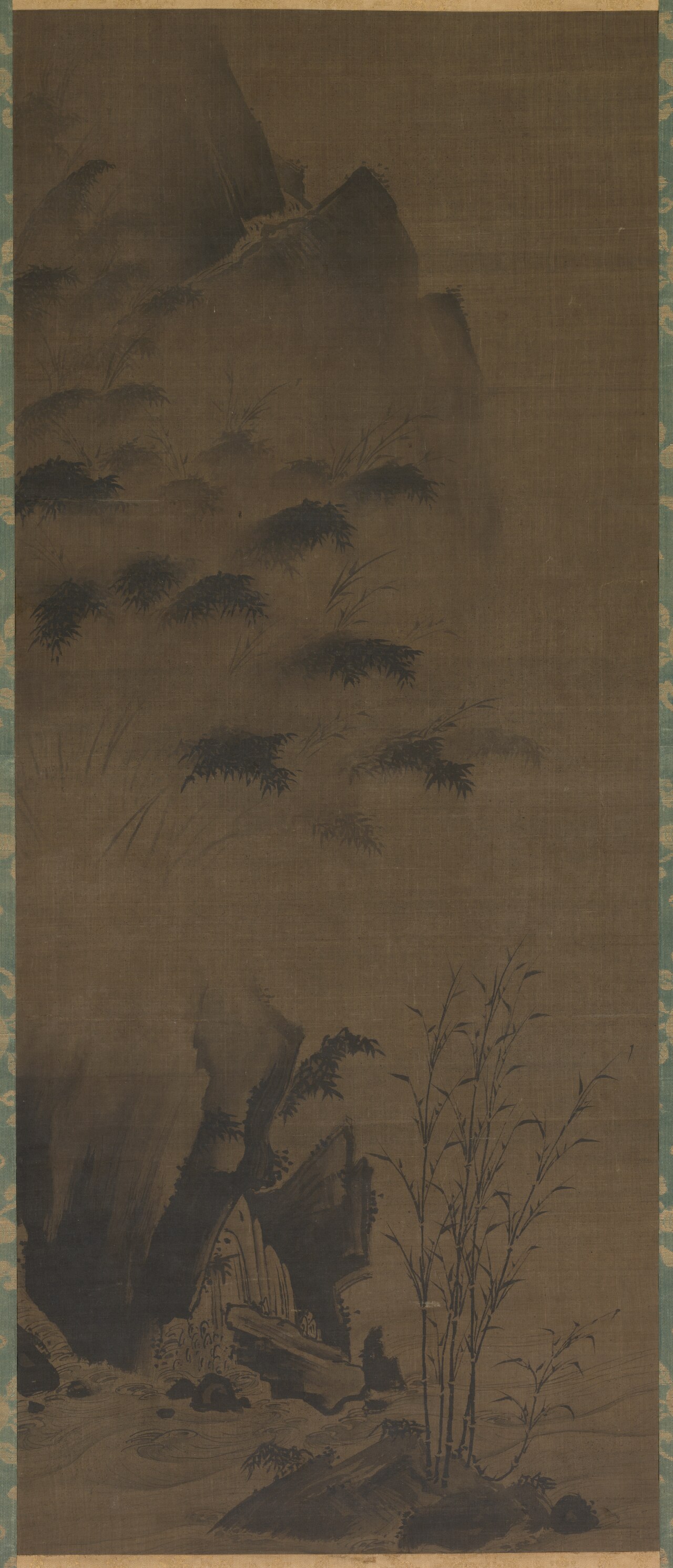
Major works - **Martyrdom of Saint Sebastian (1500)** – Executed at the height of his High Renaissance phase, this altarpiece presents the saint pierced by arrows within a balanced, pyramidal composition. The work showcases Genga’s skill in rendering anatomy and his early mastery of a serene, yet emotionally resonant, narrative. - **The Abduction of Helen (1510)** – A mythological scene that marks a transition toward a more dynamic arrangement. Genga places the figures on a diagonal axis, creating a sense of movement that anticipates the Mannerist emphasis on tension and theatricality. - **Disputation over the Immaculate Conception (1515)** – This religious tableau combines a complex theological debate with a richly detailed setting. Genga’s use of light to separate the heavenly from the earthly realms reflects his growing interest in symbolic illumination. - **Bamboo in Rain; Bamboo in Wind (1525)** – Two small-scale studies that reveal Genga’s fascination with exotic flora. The works capture the delicate sway of bamboo under atmospheric conditions, demonstrating his ability to convey texture and motion with minimal brushwork. - **A Jesse-Tree (1535)** – A genealogical composition that links Old Testament ancestors to the Virgin Mary. Here Genga integrates intricate foliage and a network of interlocking branches, illustrating his mature synthesis of narrative content and decorative design.
Influence and legacy Girolamo Genga’s contributions resonated throughout the Marche region and beyond. His architectural projects informed the development of fortified urban structures in the mid‑16th century, while his paintings provided a model for the emerging Mannerist aesthetic among younger artists in Urbino and neighboring courts. By bridging the rational clarity of the High Renaissance with the expressive excess of Mannerism, Genga helped to define a transitional visual language that would be taken up by figures such as Giulio Romano and later by the Baroque masters. Today, his works are studied for their technical virtuosity and for the way they encapsulate a pivotal moment in Italian art history.
Frequently asked questions
Who was Girolamo Genga?
Girolamo Genga (1476–1551) was an Italian painter and architect from Urbino, known for his work during the High Renaissance and early Mannerist periods.
What artistic movement is he associated with?
He is primarily linked to the High Renaissance, but his later work shows key characteristics of early Mannerism.
What are his most famous works?
His notable paintings include the *Martyrdom of Saint Sebastian* (1500), *The Abduction of Helen* (1510), *Disputation over the Immaculate Conception* (1515), the bamboo studies (1525), and the *Jesse‑Tree* (1535).
Why is Girolamo Genga important in art history?
Genga exemplifies the shift from the balanced classicism of the Renaissance to the expressive, elongated forms of Mannerism, influencing both painters and architects in central Italy.
How can I recognise a painting by Girolamo Genga?
Look for a refined chiaroscuro, elongated figures, careful architectural perspective, and a subtle colour palette that highlights a central narrative scene.