Gion Nankai
1676 – 1751
In short
Gion Nankai (1676–1751) was a Japanese Confucian scholar, author and painter of the nanga (Southern School) tradition, active in Edo in the early 18th century. He is renowned for ink bamboo studies and landscape works that fuse Chinese literati aesthetics with Japanese sensibilities.
Notable works
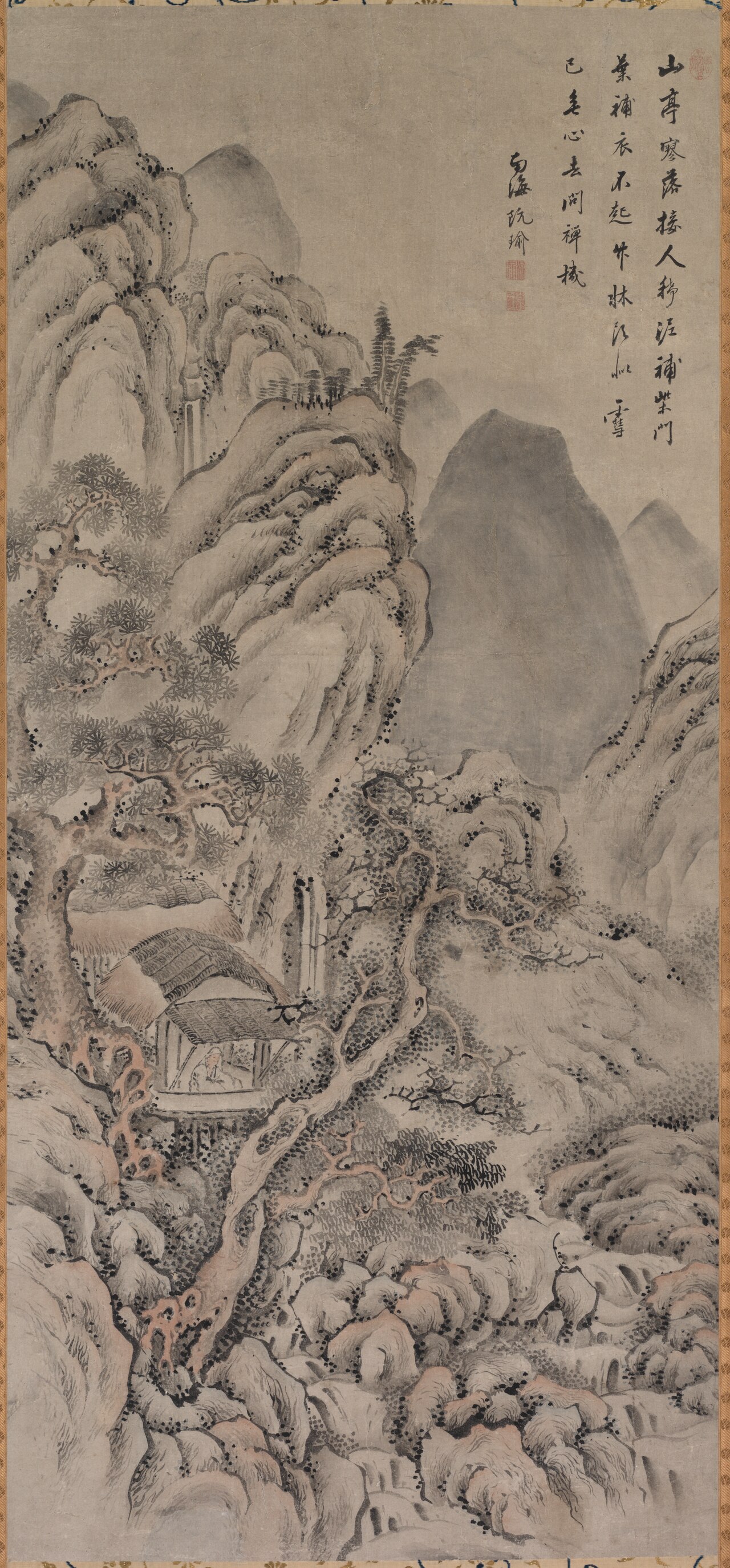


Early life Gion Nankai was born in 1676 in Edo, the bustling capital of the Tokugawa shogunate. His birth name was Gion Yu, and he was raised in a milieu that valued both literary learning and artistic practice. From a young age he received a classical education grounded in Confucian texts, which later informed his philosophical outlook and artistic themes. The cultural environment of Edo, with its thriving publishing houses and artistic guilds, provided fertile ground for his development as a scholar‑artist.
Career and style After completing his studies, Gion Nankai entered the world of the educated elite, serving as a Confucian tutor and producing essays that circulated among literati circles. Simultaneously, he cultivated a reputation as a painter in the nanga style, also known as the Southern School, which was inspired by Chinese Yuan‑dynasty masters such as Wang Meng and Ni Zan. Nankai’s work reflects the core tenets of nanga: an emphasis on personal expression, a preference for monochrome ink, and a calligraphic brushwork that mirrors literary composition. He adopted several art‑names—Hōrai, Kanraitei, Kikyo, Shōun, Tekkan Dōjin and Tekkanjin—to sign his paintings, a practice common among Japanese literati who sought to evade the rigid expectations of official court painting.
Throughout the 1720s and 1730s, Nankai’s reputation grew as he participated in informal gatherings of poets, calligraphers and painters. These salons encouraged the exchange of ideas and the copying of Chinese models, a practice that Nankai embraced while also injecting his own observations of the Japanese landscape. His paintings are characterised by a restrained palette, often limited to black ink and subtle washes, and by a compositional balance that evokes the quiet contemplation of a scholar‑artist.
Signature techniques Nankai’s brushwork is distinguished by its fluidity and economy. He employed the "flying white" technique, allowing the brush to lift off the paper at the end of a stroke, thereby creating a sense of spontaneity and inner light. In his bamboo studies, he used a series of quick, rhythmic strokes to suggest the tension and flexibility of the stalks, while varying ink density to convey depth. His landscapes frequently feature layered mountains rendered with soft, misty washes that recede into the background, a method that mirrors the Chinese concept of "shan shui" (mountain‑water) painting. Nankai also incorporated calligraphic inscriptions, often quoting classical poetry, which serve both as poetic commentary and as an integral visual element.
Major works - **Landscape (1725)** – This early landscape exemplifies Nankai’s mastery of atmospheric perspective. A distant mountain range fades into a light grey wash, while foreground rocks are rendered with darker, more defined strokes. The composition balances emptiness and solidity, inviting the viewer to contemplate the harmony of nature. - **Ink Bamboo** – In this monochrome study, Nankai captures the essence of bamboo with minimal yet expressive brushwork. The stems are suggested by swift, tapered strokes, while the leaves appear as delicate flicks of ink, embodying the vitality of the plant. - **Window onto Bamboo on a Rainy Day (1724)** – This painting portrays a view through a lattice window, where bamboo sways under a gentle rain. The artist uses varying ink tones to depict the wetness of the scene, and the window frame provides a structural contrast to the organic forms outside. - **Study of Rocks** – A contemplative work that focuses on the texture and weight of stone. Nankai employs stippled ink to suggest moss and weathering, creating a tactile sense of age and endurance. - **Landscape After "Solitary Fishing in a Ravine of Flowers" by Wang Meng (1749)** – A later piece in which Nankai reinterprets Wang Meng’s celebrated composition. He retains the original’s intricate foliage and winding river but adapts the colour scheme to a more subdued, ink‑dominant palette, reflecting his mature synthesis of Chinese influence and Japanese restraint.
Influence and legacy Gion Nankai occupies a pivotal position in the transmission of Chinese literati aesthetics to Japan. By integrating Confucian scholarship with visual art, he helped solidify the intellectual foundations of the nanga movement in the Edo period. His works were circulated among fellow scholars and later collected by early museum curators, ensuring that his approach to bamboo and landscape painting continued to inspire subsequent generations of Japanese artists. Although the exact location of his death remains unknown, his artistic legacy endures in the continued appreciation of nanga as a distinctive Japanese adaptation of Chinese tradition. Modern exhibitions of Edo‑period painting often include Nankai’s pieces as exemplars of the scholarly brush, and his techniques are studied by art historians seeking to understand the cross‑cultural dialogue that shaped East Asian visual culture.
Frequently asked questions
Who was Gion Nankai?
Gion Nankai (1676–1751) was a Japanese Confucian scholar, author and painter who worked in the nanga (Southern School) style during the early Edo period.
What artistic movement or style is he associated with?
He is associated with the nanga tradition, a Japanese adaptation of Chinese literati painting that emphasises ink brushwork, personal expression and scholarly themes.
What are his most famous works?
His most recognised works include Landscape (1725), Ink Bamboo, Window onto Bamboo on a Rainy Day (1724), Study of Rocks, and his reinterpretation of Wang Meng’s Solitary Fishing in a Ravine of Flowers (1749).
Why is Gion Nankai important in art history?
He helped transmit Chinese literati aesthetics to Japan, melding scholarly Confucian ideas with visual art, and his paintings set a standard for the nanga style that influenced later Edo‑period artists.
How can I recognise a painting by Gion Nankai?
Look for monochrome ink compositions with fluid, "flying white" brushstrokes, subtle atmospheric washes, and often a calligraphic inscription that reflects a poetic or scholarly theme.