Gillis Coignet
1538 – 1599
In short
Gillis Coignet (1538–1599) was a Flemish Renaissance painter from Antwerp who worked in the Habsburg Netherlands, Italy and later Hamburg. He is noted for his mythological, biblical and allegorical scenes, especially nocturnal compositions illuminated by candle‑ or moonlight.
Notable works
_-_The_last_supper.jpg)
_-_The_1592_Lottery_in_Aid_of_the_Lunatic_Asylum.jpg)


Early life Gillis Coignet was born in 1538 in Antwerp, a thriving commercial centre of the Habsburg Netherlands. Little is known about his family background, but the city's vibrant artistic environment provided ample opportunity for apprenticeship. Antwerp’s guild system regulated training for painters, and Coignet would have been exposed to the techniques of the local masters, as well as the burgeoning market for religious and secular commissions.
Career and style In the early 1560s Coignet began his professional career, initially producing works for local patrons. A decade‑long sojourn in Italy exposed him to the colour and compositional innovations of Titian and Tintoretto, which he incorporated into his own practice. Upon returning to the Low Countries, he settled again in Antwerp, but the political upheavals following the Fall of Antwerp in 1585 forced him, as a Lutheran, to seek refuge elsewhere. He moved first to Amsterdam and later to Hamburg, where he died in 1599.
Coignet’s oeuvre reflects the transition from the High Renaissance to the early Baroque. He favoured mythological and biblical subjects, often framing them within allegorical narratives. A distinctive feature of his work is the treatment of light: many of his paintings depict night‑time scenes illuminated by a single source, such as a candle or moon, creating dramatic chiaroscuro effects. This nocturnal focus aligns him with a small group of Northern painters who explored similar themes, yet his handling of colour retains the warm, layered palette associated with Italian masters.
Signature techniques Coignet worked primarily in oil on canvas, a medium that allowed him to build up translucent glazes and achieve deep, luminous tones. His brushwork is meticulous in rendering textures—whether the sheen of metal armour, the softness of drapery, or the delicate flesh of a saint. He employed a careful modelling of light and shadow, often using a concentrated light source to guide the viewer’s eye across the composition. The subtle gradations between light and dark give his figures a three‑dimensional presence, while his colour choices—rich reds, verdant greens, and deep blues—enhance the emotional resonance of the scenes.
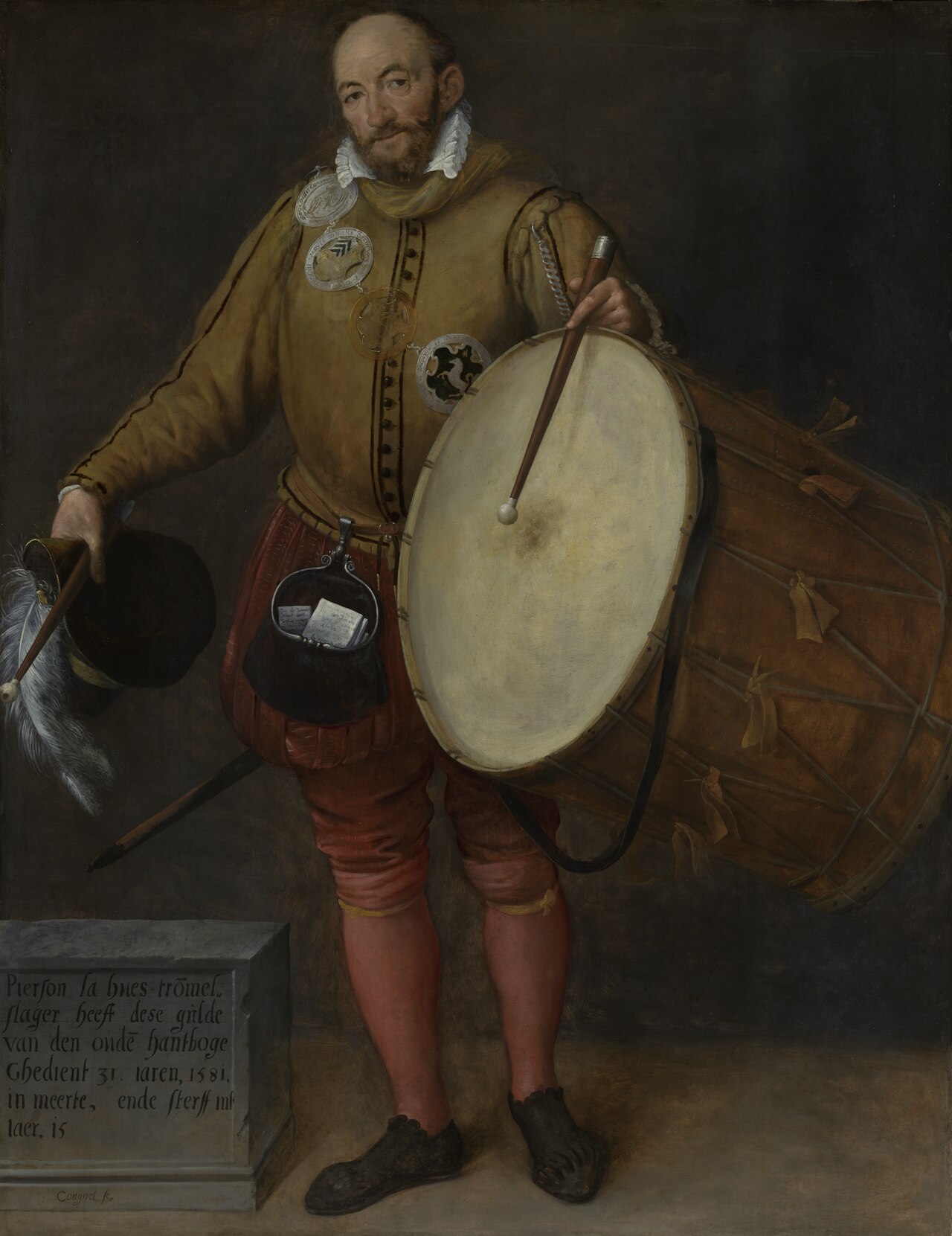
Major works - **The Last Supper (1595)** – This late work demonstrates Coignet’s mature handling of narrative and light. The scene is set under a dimly lit interior, with a single candle casting a soft glow over the figures, highlighting their expressions and the textures of the tablecloth and vessels. - **The 1592 Lottery in Aid of the Lunatic Asylum (1593)** – An unusual civic commission, this painting records a charitable lottery. Coignet captures the bustling atmosphere of the event, using a balanced composition that brings together a diverse group of participants, each rendered with individual attention. - **Pierson la Hues, Drummer and Page of the Old Archers' Guild (1581)** – A portrait‑like work that combines genre detail with allegorical meaning. The sitter is depicted with his drum, illuminated by a warm light that emphasizes the intricate embroidery of his costume. - **Saint George (1581)** – In this mythic‑religious tableau, Coignet portrays the saint in the act of slaying the dragon. The dramatic encounter is heightened by a moonlit sky, the silvery light accentuating the armour and the dragon’s scales. - **Mary Magdalene (1580)** – A devotional image, the Magdalene is shown in a contemplative pose, bathed in candlelight that creates a sense of spiritual introspection. The painting exemplifies Coignet’s skill in rendering delicate facial expressions within a controlled lighting scheme.
Influence and legacy Coignet occupies a niche within the Flemish Renaissance, bridging the detailed naturalism of Northern art with the colouristic richness of Italian painting. His nocturnal scenes prefigure the later Baroque fascination with dramatic lighting, influencing subsequent Dutch painters who explored similar chiaroscuro effects. Although his name is less widely recognised than that of his contemporaries such as Pieter Bruegel the Elder, Coignet’s works contribute valuable insight into the cross‑cultural exchanges that shaped late‑sixteenth‑century European art. His surviving paintings, held in various European collections, continue to be studied for their technical mastery and their role in the evolution of light‑driven narrative composition.
Frequently asked questions
Who was Gillis Coignet?
Gillis Coignet (1538–1599) was a Flemish Renaissance painter from Antwerp, known for mythological, biblical, and allegorical works, especially nocturnal scenes illuminated by candlelight or moonlight.
What style or movement is he associated with?
He worked within the Flemish Renaissance, blending Northern naturalism with Italian influences from Titian and Tintoretto, and is noted for his dramatic chiaroscuro lighting.
What are his most famous works?
Key works include *The Last Supper* (1595), *The 1592 Lottery in Aid of the Lunatic Asylum* (1593), *Pierson la Hues, Drummer and Page of the Old Archers' Guild* (1581), *Saint George* (1581) and *Mary Magdalene* (1580).
Why does he matter in art history?
Coignet’s integration of Italian colour and Northern detail, plus his pioneering use of night‑time illumination, helped pave the way for Baroque lighting techniques and influenced later Dutch painters.
How can I recognise a Gillis Coignet painting?
Look for oil canvases with richly layered colours, meticulous texture, and a single light source—often a candle or moon—creating strong chiaroscuro that highlights figures and surfaces.