George Stanley
1903 – 1970
In short
George Stanley was an American sculptor active in the mid-20th century. He is particularly remembered for his work on the Oscar statuette and the Muse Statue at the Hollywood Bowl.
Notable works


Early life George Maitland Stanley was born in 1903 in the United States. Little is documented about his early life or formative years, but his later career indicates a strong foundation in sculptural arts.
Career and style Stanley's career spanned several decades, during which he established himself as a notable American sculptor. While his specific artistic movement or affiliation remains unclassified, his work exhibits a strong sense of form and classical influence, often applied to public monuments and symbolic figures. His style can be broadly characterized as representational, with an emphasis on conveying dignity and gravitas through his subjects. He worked during a period when monumental sculpture was still a significant public art form, and his contributions reflect the aesthetic sensibilities of the era.
Signature techniques Details regarding Stanley's signature techniques are not widely catalogued. However, his known works suggest a mastery of traditional sculptural methods, likely involving direct carving in stone or modelling in clay for bronze casting. The precision evident in works like the Oscar statuette points to a skilled hand and a deep understanding of material properties. His ability to translate intricate designs into durable, three-dimensional forms was a hallmark of his professional practice.
Major works Among George Stanley's most recognized contributions is his involvement with the iconic Oscar statuette. While Cedric Gibbons is credited with the original design of the award in 1928, it was Stanley who was tasked with the crucial sculpting of the statuette, bringing the design to life in its physical form. His sculpting of this now-globally recognized symbol of cinematic achievement is perhaps his most enduring legacy.
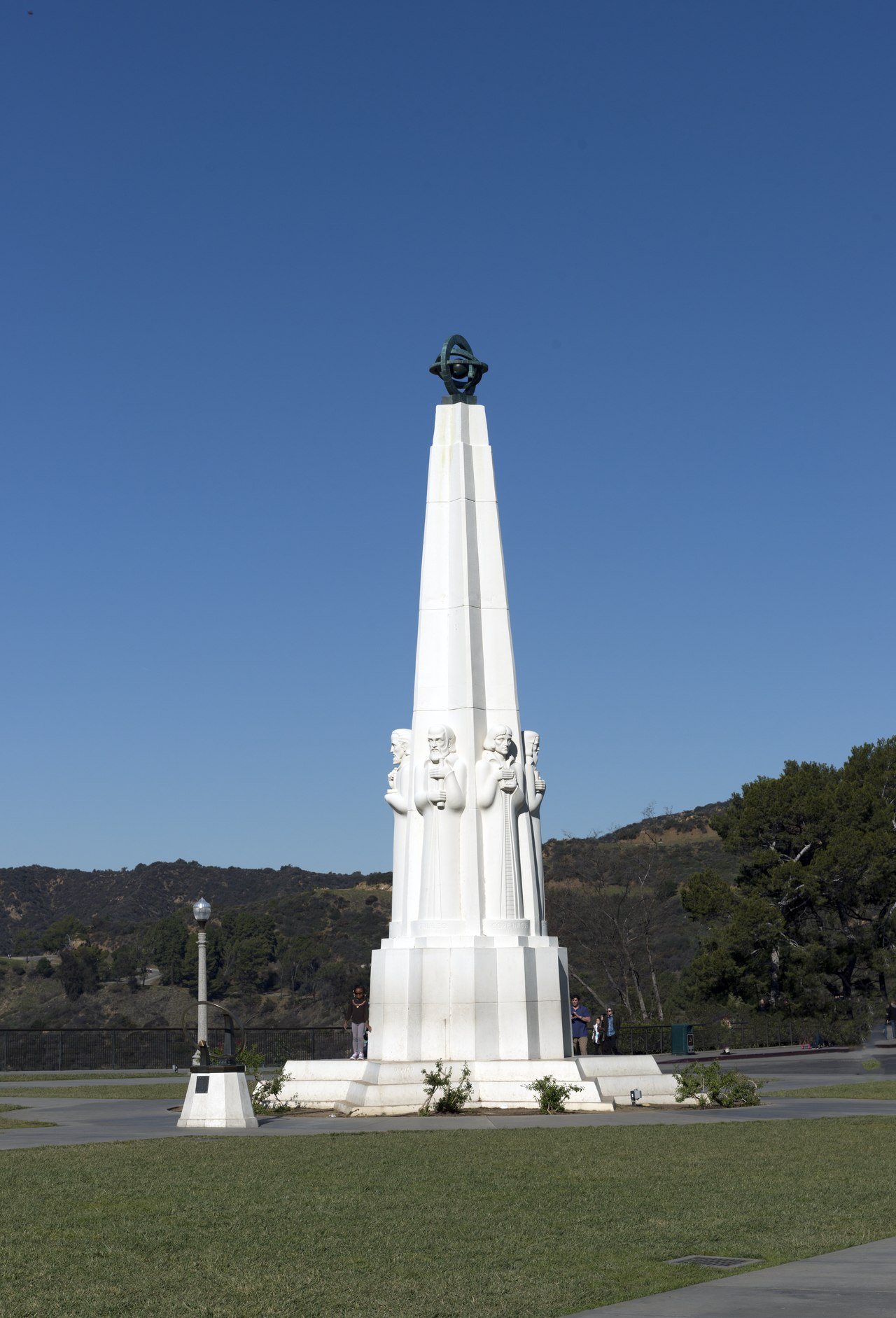
Another significant work is the Astronomers Monument, completed in 1934. This monument stands as a testament to his ability to create large-scale public art with symbolic meaning.
In 1940, Stanley sculpted the Muse of Music, Dance, Drama, a piece likely intended for a public or institutional setting, further showcasing his versatility in capturing allegorical themes.
Stanley is also well-known for sculpting the Muse Statue at the Hollywood Bowl. This monumental work, which graces the iconic venue, further solidifies his connection to the cultural landscape, particularly within Los Angeles.
Influence and legacy George Stanley's legacy is primarily tied to his role in creating enduring symbols and public artworks. His sculpting of the Oscar statuette has cemented his name, albeit indirectly, in the annals of film history. The Muse Statue at the Hollywood Bowl and the Astronomers Monument serve as physical testaments to his skill as a sculptor, contributing to the visual heritage of the locations they inhabit. While not associated with a specific avant-garde movement, Stanley's work represents a continuation of classical sculptural traditions and their application in civic and cultural contexts during the 20th century.
Frequently asked questions
Who was George Stanley?
George Stanley (1903–1970) was an American sculptor known for his work on public monuments and iconic awards.
What art movement was George Stanley associated with?
George Stanley is not formally associated with a specific art movement. His style is generally considered representational and classical, fitting within the broader context of 20th-century American sculpture.
What are George Stanley's most famous works?
His most famous works include sculpting the Oscar statuette, the Muse Statue at the Hollywood Bowl, the Astronomers Monument (1934), and the Muse of Music, Dance, Drama (1940).
Why is George Stanley significant in art history?
Stanley is significant for his contribution to iconic cultural symbols, most notably the physical sculpting of the Oscar statuette, and for creating notable public sculptures like the Muse Statue at the Hollywood Bowl.
How can one recognize George Stanley's work?
Recognizing Stanley's work involves looking for classical, representational forms, often in public monuments or symbolic figures. His sculptures convey a sense of gravitas and are executed with technical precision, as seen in the detailed rendering of the Oscar statuette.