Gaspar Peeter Verbruggen the Younger
1664 – 1730
In short
Gaspar Peeter Verbruggen the Younger (1664–1730) was a Flemish painter from Antwerp who specialised in decorative still‑life compositions of flowers and fruit, often combined with figurative elements, and worked mainly in Antwerp and The Hague.
Notable works


_-_Allegorical_figure_with_flowers.jpg)
Early life Gaspar Peeter Verbruggen the Younger was born in 1664 in Antwerp, a city that was then part of the Habsburg Netherlands and a thriving centre of artistic production. Little is recorded about his family background, but the presence of a well‑established workshop tradition in Antwerp makes it highly probable that he received his first training locally, learning the fundamentals of drawing, colour mixing and the handling of oil paint from a master painter. The city’s guild system, dominated by the Guild of Saint Luke, provided a structured environment for apprentices, and Verbruggen would have been exposed to the rich visual culture of the Flemish Baroque through the works of contemporaries such as Jan Brueghel the Elder and the younger generation of flower painters.
Career and style Verbruggen established himself as a specialist in decorative still lifes, a genre that enjoyed great popularity among the merchant and aristocratic clientele of the late 17th and early 18th centuries. He worked primarily in his native Antwerp, but archival references also place him in The Hague for periods of his career, suggesting a degree of mobility that was common among artists seeking commissions in the Dutch Republic. Although no formal art‑historical movement is attached to his oeuvre, his work reflects the lingering influence of the Flemish Baroque tradition, characterised by sumptuous colour, intricate composition and an emphasis on the fleeting beauty of nature.
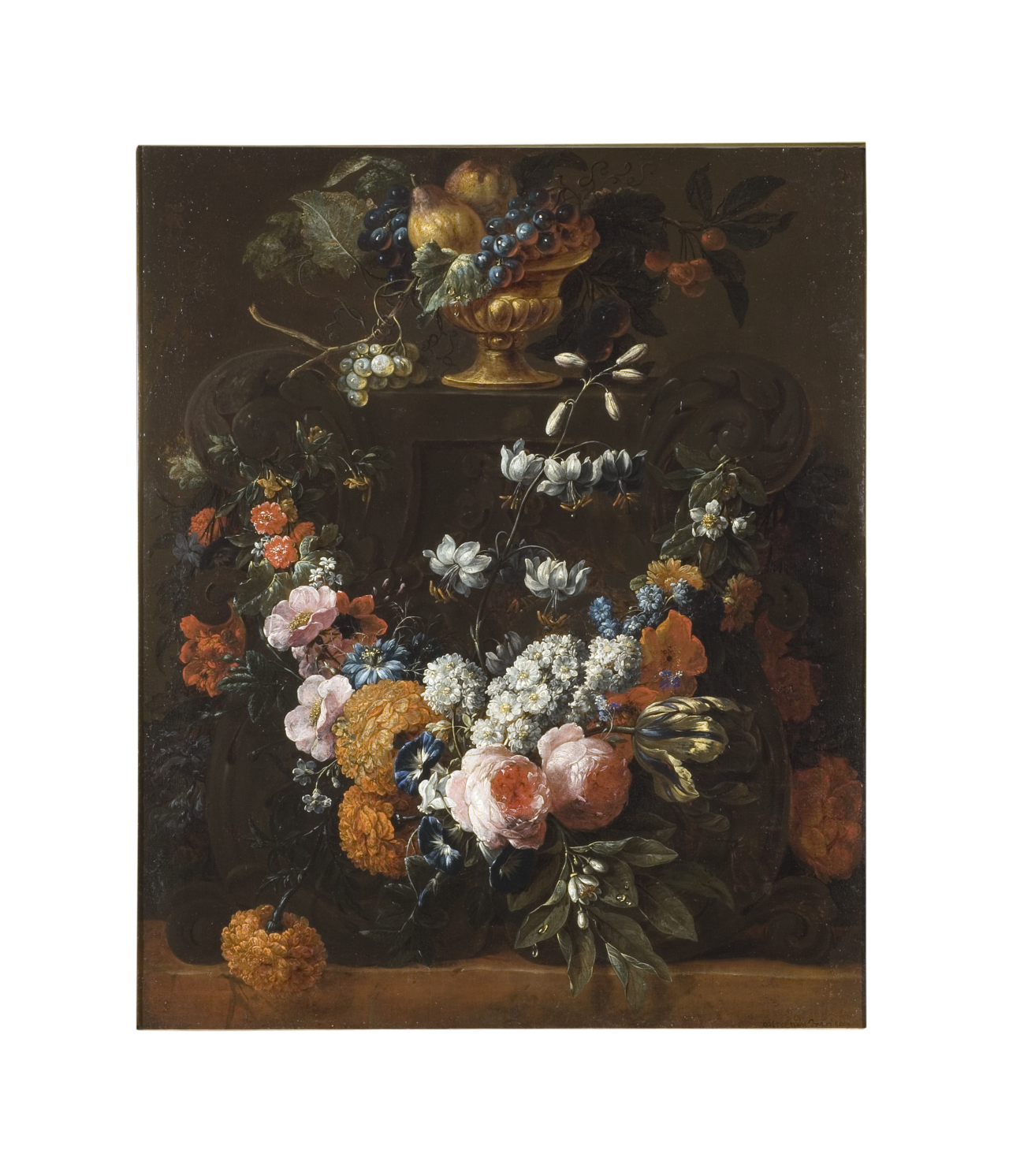
His paintings typically juxtapose luxuriant bouquets of roses, tulips, lilies and other blossoms with carefully rendered fruit, often arranged in ornate vases or set against gilded surfaces. Verbruggen’s compositions frequently incorporate allegorical or mythological figures, a practice that allowed him to collaborate with figure painters and to broaden the narrative scope of his still‑life subjects. This hybrid approach placed him among a small group of artists who merged the decorative potential of floral painting with the storytelling capacity of history and genre scenes.
Signature techniques Verbruggen’s technical skill is evident in several distinctive features:
* Delicate brushwork – He rendered petals, leaves and fruit skins with fine, almost stippled strokes that convey texture without sacrificing overall harmony. * Vivid colour palette – His use of saturated reds, pinks, yellows and deep greens creates a visual intensity that draws the viewer’s eye across the canvas. * Chiaroscuro and atmospheric depth – By modelling light on individual blossoms and employing subtle background shading, Verbruggen achieved a three‑dimensional sense of space. * Gilded accents – Many of his compositions include gold‑leaf or painted gilded elements, particularly in the rims of vases or decorative bowls, enhancing the luxurious quality of the work. * Integration of figures – In collaborative pieces, he blended his floral motifs seamlessly with human or mythological forms, ensuring that the still‑life elements remain central to the overall narrative.
Major works Verbruggen’s surviving oeuvre includes a handful of documented works that illustrate his range:
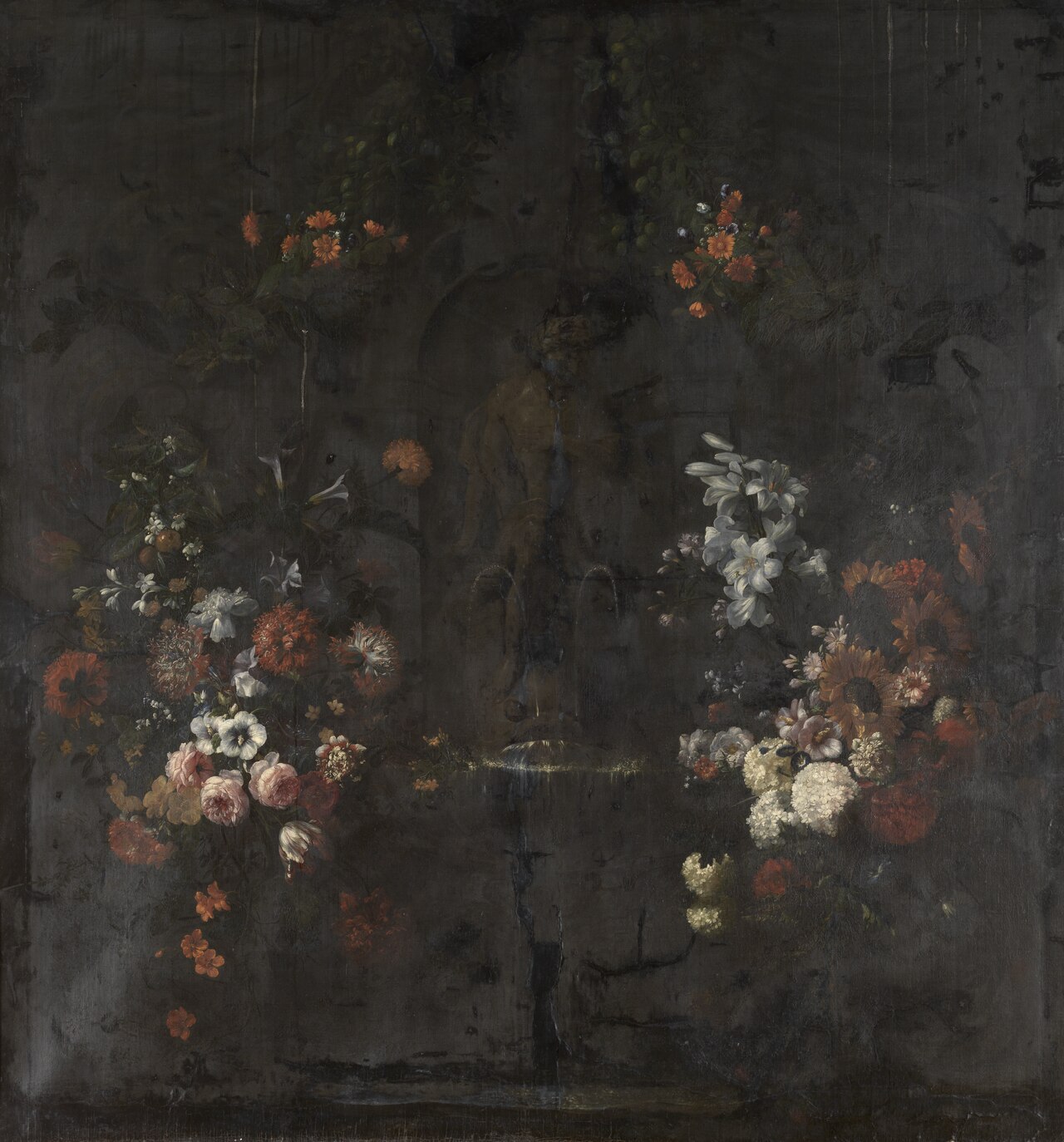
* Flowers and fruits – A typical example of his decorative style, this composition presents a dense bouquet surrounded by a selection of ripe fruit, rendered with meticulous attention to colour and texture. * Flowers in a Vase (1705) – Dated 1705, this painting showcases a tall vase brimming with a variety of blossoms, each petal captured with luminous precision. The work exemplifies the peak of his technical refinement. * Flower Garland and Gilded Bowl of Fruit – Here Verbruggen arranges a circular garland of flowers around a gilded bowl overflowing with fruit, a motif that underscores his interest in combining ornamental and natural elements. * Statue of Apollo with Flowers – In this collaborative piece, a classical statue of Apollo is set against a backdrop of lush floral arrangements, illustrating the artist’s capacity to integrate figural and still‑life subjects. * Allegorical Figure with Flowers (1688) – Dated 1688, the painting features an allegorical figure surrounded by a profusion of blossoms, highlighting Verbruggen’s early engagement with narrative content within his still‑life framework.
Influence and legacy Gaspar Peeter Verbruggen the Younger occupies a niche within the broader tradition of Flemish still‑life painting. His decorative approach, marked by a synthesis of floral abundance and allegorical meaning, influenced younger generations of flower painters who sought to blend ornamental richness with symbolic depth. Moreover, his collaborations with figure artists demonstrate an early model of interdisciplinary production that prefigured later Baroque practices in which specialists pooled their expertise to create complex, multi‑genre works.
Although his name is not as widely recognised as that of some of his contemporaries, Verbruggen’s paintings remain valuable exemplars of the decorative taste that characterised the late 17th‑century market for luxury interiors. His works continue to be studied for their compositional balance, colouristic daring and the subtle way they capture the transience of nature, securing his place in the canon of Flemish still‑life art.
---
Influence and legacy Gaspar Peeter Verbruggen the Younger occupies a niche within the broader tradition of Flemish still‑life painting. His decorative approach, marked by a synthesis of floral abundance and allegorical meaning, influenced younger generations of flower painters who sought to blend ornamental richness with symbolic depth. Moreover, his collaborations with figure artists demonstrate an early model of interdisciplinary production that prefigured later Baroque practices in which specialists pooled their expertise to create complex, multi‑genre works.
Although his name is not as widely recognised as that of some of his contemporaries, Verbruggen’s paintings remain valuable exemplars of the decorative taste that characterised the late 17th‑century market for luxury interiors. His works continue to be studied for their compositional balance, colouristic daring and the subtle way they capture the transience of nature, securing his place in the canon of Flemish still‑life art.
Frequently asked questions
Who was Gaspar Peeter Verbruggen the Younger?
He was a Flemish painter (1664–1730) from Antwerp, best known for decorative still‑life paintings of flowers and fruit, often combined with figurative elements.
What style or movement is his work associated with?
His work follows the Flemish Baroque tradition of elaborate decorative still lifes, though no specific movement is formally attached to his name.
What are his most famous works?
Key works include *Flowers in a Vase* (1705), *Allegorical Figure with Flowers* (1688), *Flower Garland and Gilded Bowl of Fruit*, *Statue of Apollo with Flowers*, and the generic *Flowers and fruits* composition.
Why is Verbruggen important in art history?
He exemplifies the late‑Baroque decorative taste for lavish floral arrangements and helped develop the collaborative model of combining still life with figural painting, influencing later still‑life artists.
How can I recognise a Verbruggen painting?
Look for densely packed, vividly coloured bouquets rendered with fine brushwork, gilded accents, and often a subtle integration of a figure or allegorical element within the floral setting.