Gaspar de Witte
1624 – 1681
In short
Gaspar de Witte (1624–1681) was a Flemish painter from Antwerp, active in the Habsburg Netherlands. He specialised in landscapes and gallery scenes, producing works that combine detailed interior settings with allegorical and religious subjects.
Notable works
_-_The_allegorical_female_figures_Nature_and_Pictura_in_an_art-collection,_with_representative_Antwerp_canvasses.jpg)

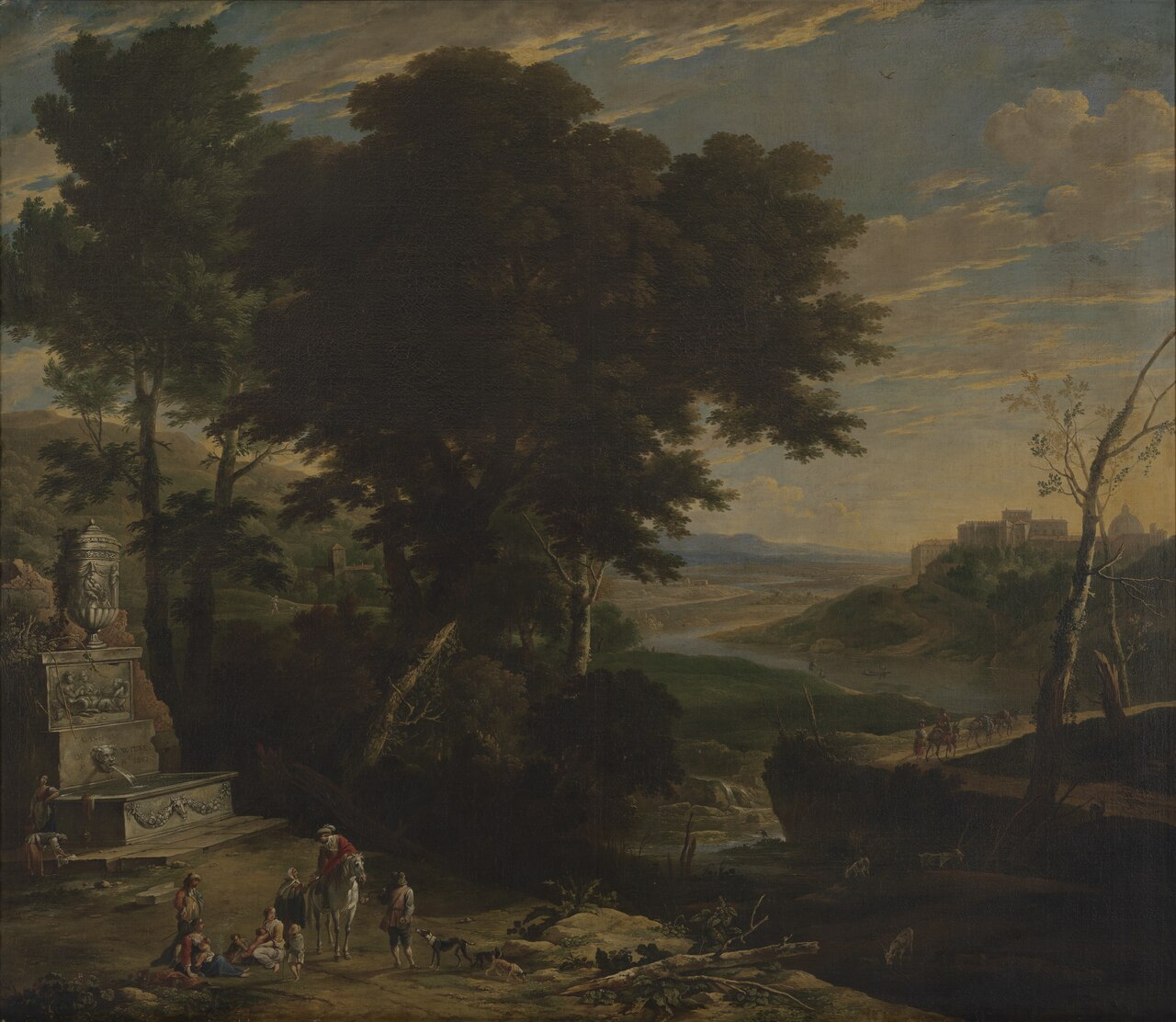
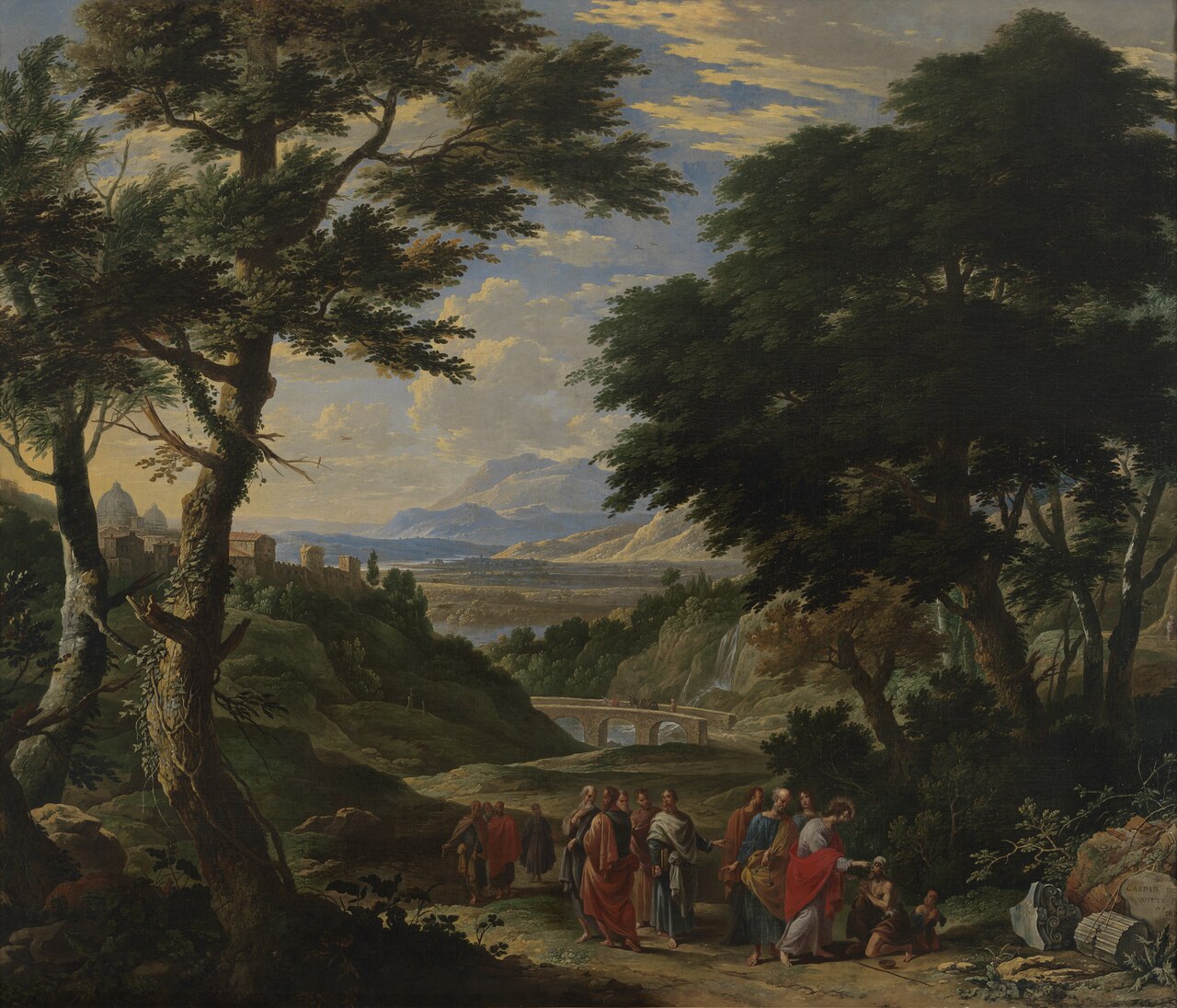

Early life Gaspar de Witte was born in 1624 in Antwerp, a city that was a vibrant centre of artistic production in the 17th‑century Habsburg Netherlands. Little is recorded about his family background or formal apprenticeship, but the artistic milieu of Antwerp would have provided ample opportunities for a young talent to encounter the workshops of established masters. By the late 1630s de Witte was already producing paintings, a fact reflected in the dating of two of his early works to 1639. The early exposure to both the commercial market for decorative interiors and the religious commissions that dominated Flemish art shaped his later versatility.
Career and style De Witte’s career unfolded entirely within Antwerp, where he worked for a range of patrons, from private collectors to ecclesiastical institutions. His oeuvre is characterised by a synthesis of landscape, genre, and gallery painting, often merging narrative content with meticulously rendered interiors. While he is not formally linked to a specific artistic movement, his style aligns with the broader Flemish Baroque tradition, sharing its emphasis on colour, dynamic composition, and a keen observation of light. De Witte’s paintings frequently display a balanced interplay between naturalistic detail and allegorical meaning, reflecting the intellectual interests of his patrons.
Signature techniques A hallmark of de Witte’s technique is his precise handling of perspective, especially in scenes that depict interior spaces crowded with paintings, objects, and figures. He employed a fine, almost miniature brushwork to render textures—whether the sheen of polished wood, the delicate folds of fabric, or the foliage in his landscapes. Light is often introduced from a single source, creating subtle chiaroscuro that enhances the three‑dimensionality of the setting. In his religious works, de Witte uses colour to draw attention to central figures, while in his allegorical pieces he arranges symbolic elements to guide the viewer’s interpretation.
Major works De Witte’s catalogue includes several notable paintings that illustrate his range. *The Allegorical Female Figures Nature and Pictura in an Art Collection, with Representative Antwerp Canvasses* (1639) presents personifications of Nature and Painting surrounded by a selection of Antwerp canvases, highlighting the city’s artistic heritage. In the same year, *Interior of an Art Collector's Cabinet with Many Visitors* captures a bustling gallery interior, emphasizing the social function of art collection in the period. *Concert in the Park* (1650) shifts to an outdoor setting, depicting musicians amidst a lush landscape, evidencing his skill in rendering both natural scenery and human activity. Later works such as *The Fortune‑Teller* (1667) and *Christ Healing the Blind Man at Jericho* (1671) reveal a turn toward narrative and religious subjects, yet retain his characteristic attention to detail and compositional harmony.
Influence and legacy Although de Witte did not found a distinct school, his paintings contribute to our understanding of 17th‑century Flemish visual culture, particularly the intersection of private collecting and public display. By documenting interior galleries, he provides a visual record of contemporary collecting practices and the types of works that were prized in Antwerp. His landscapes and genre scenes also reflect the broader Baroque fascination with the natural world and everyday life. Modern scholars regard de Witte as a competent, if not revolutionary, figure whose works are valued for their documentary quality and technical proficiency. His paintings continue to appear in museum collections and exhibitions that explore Flemish Baroque art and the evolution of gallery painting.
Frequently asked questions
Who was Gaspar de Witte?
Gaspar de Witte was a Flemish painter from Antwerp (1624–1681) known for his landscapes, gallery scenes, and religious works.
What artistic style or movement is he associated with?
He worked within the Flemish Baroque tradition, combining detailed interiors, allegorical content, and naturalistic landscapes.
What are his most famous works?
Key paintings include *The Allegorical Female Figures Nature and Pictura* (1639), *Interior of an Art Collector's Cabinet with Many Visitors* (1639), *Concert in the Park* (1650), *The Fortune‑Teller* (1667), and *Christ Healing the Blind Man at Jericho* (1671).
Why is Gaspar de Witte important in art history?
He provides insight into 17th‑century Flemish collecting practices and exemplifies the technical skill of Baroque painters, enriching our understanding of the period’s visual culture.
How can I recognise a painting by Gaspar de Witte?
Look for finely rendered interiors with precise perspective, a subtle use of light, and detailed textures, often featuring allegorical figures or carefully staged narrative scenes.