Friedrich Dürck
1809 – 1884
In short
Friedrich Dürck (1809–1884) was a Saxon painter who specialised in portraiture of European royalty and aristocracy. He worked mainly in Leipzig and later Munich, producing a small but notable body of courtly portraits.
Notable works



Early life Friedrich Dürck was born in 1809 in Leipzig, a city that was then part of the Kingdom of Saxony. Little is recorded about his family background, but the cultural milieu of early‑19th‑century Leipzig—home to a thriving publishing industry and a vibrant musical scene—provided a fertile environment for artistic development. Dürck likely received his initial training at the local drawing schools that catered to aspiring painters, before moving on to more formal instruction at the Dresden Academy of Fine Arts, a common pathway for Saxon artists of his generation.
Career and style After completing his studies, Dürck established himself as a portrait painter. By the 1830s he was receiving commissions from members of the Saxon bourgeoisie, and his reputation for rendering fine detail and dignified presence attracted the attention of aristocratic patrons. In the 1840s Dürck relocated to Munich, which had become the leading artistic centre of the German states. There he joined a network of court painters who supplied portraits for royalty across Europe. His style remained firmly grounded in the academic traditions of the early nineteenth century: a clear, naturalistic representation of the sitter, careful modelling of flesh tones, and a restrained palette that emphasized the textures of fabrics and jewellery.
Although Dürck never aligned himself with a specific avant‑garde movement, his work reflects the broader currents of academic realism that dominated official art institutions of the period. He avoided the romantic excesses of the earlier generation and the later impressionist experiments that began to appear in Munich in the 1860s. Instead, his paintings are characterised by compositional stability, a focus on the sitter’s status, and a meticulous attention to the symbolism of dress and regalia.
Signature techniques Dürck’s technical approach can be identified through several recurring methods:
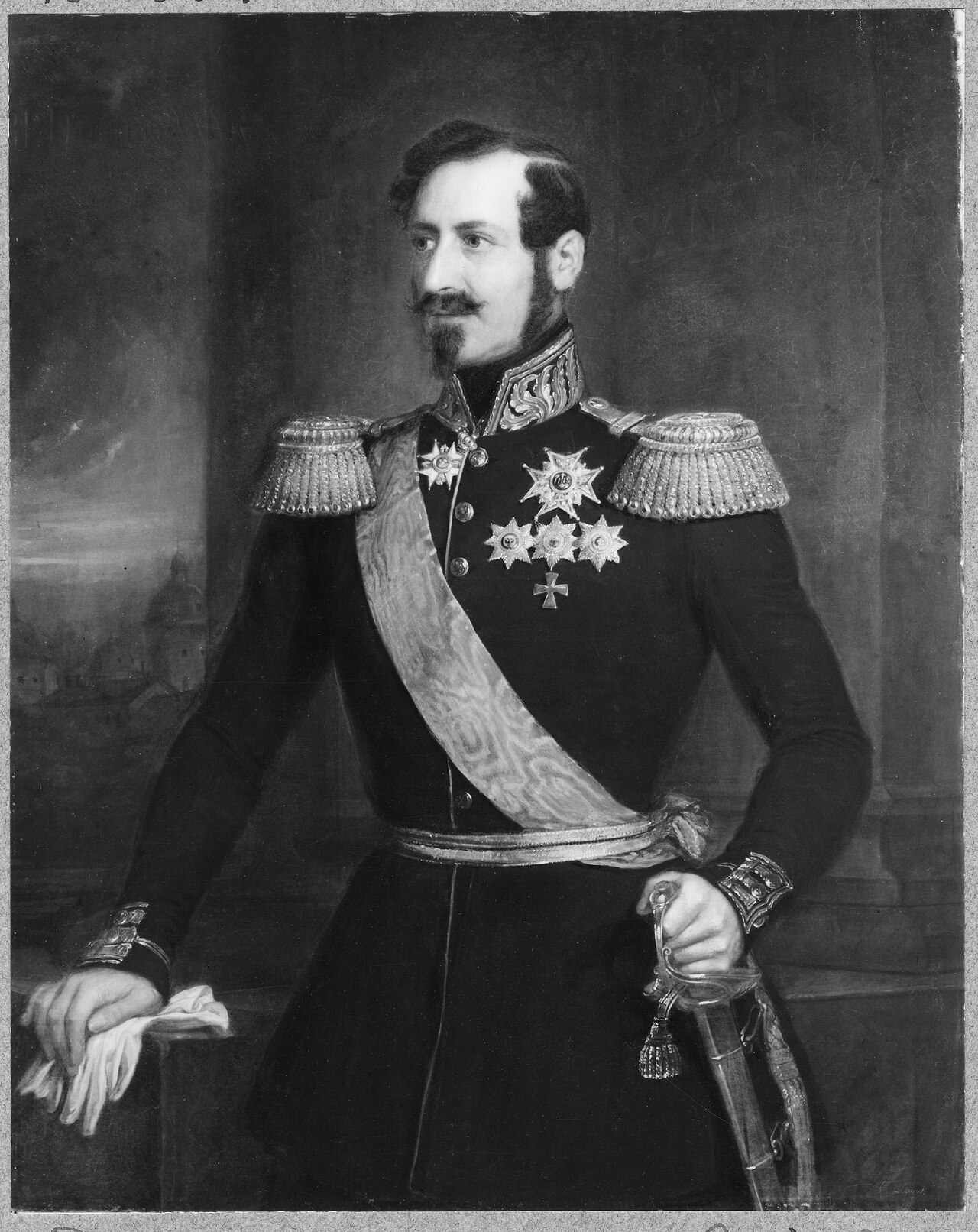
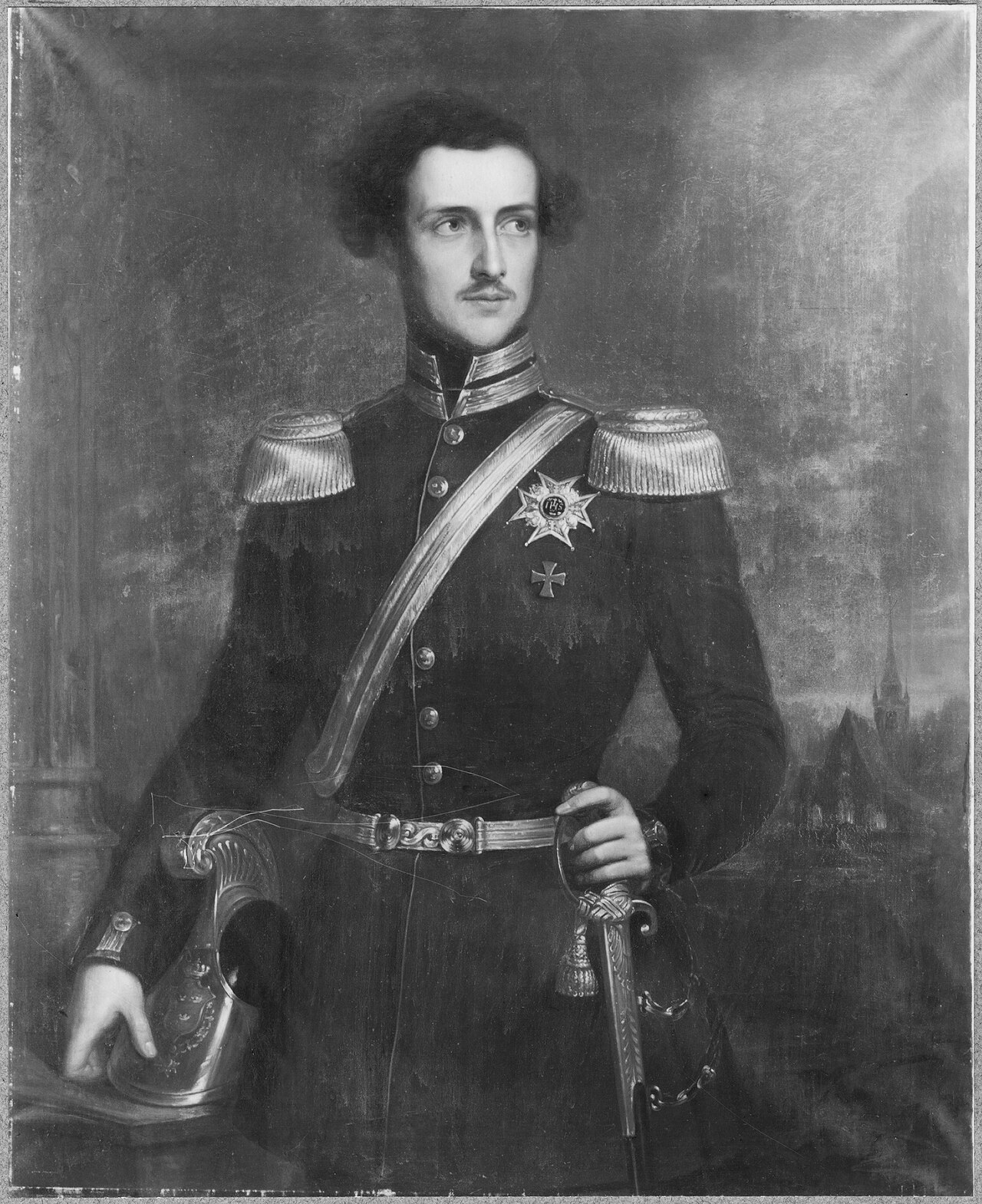
* Layered glazing – He built up skin tones through successive translucent layers, achieving a luminous quality that softened the harshness of oil pigments. * Fine brushwork in detailing – The laces of collars, the sparkle of gemstones, and the intricate embroidery on court dresses are rendered with a precise, almost microscopic brushstroke. * Subtle chiaroscuro – Light is used to model the face and hands, while background elements are kept relatively flat, ensuring the viewer’s attention remains on the principal figure. * Use of a limited colour range – Dürck often employed a restrained palette of earth tones, muted blues and greys, allowing the rich fabrics of the subjects to stand out without competing with the overall composition.
These techniques combined to give his portraits a sense of timeless dignity, suitable for the display in royal palaces and official collections.
Major works The surviving catalogue of Dürck’s oeuvre is modest, but several works illustrate his role as a court portraitist:
* Oskar I, kung av Sverige och Norge – Although the exact date of this portrait is not recorded, the work depicts King Oscar I of Sweden and Norway (1799‑1859). The painting shows the monarch in full regalia, emphasising his dual sovereignty through the inclusion of both Swedish and Norwegian insignia. Dürck’s handling of the royal robes demonstrates his skill in rendering complex textiles.
* Josephine, Princess of Leuchtenberg, Queen Consort of Oscar I of Sweden and Norway (1858) – This portrait captures Josephine (1807‑1876) in a dignified pose, with a focus on the delicate lacework of her gown and the subtle expression that conveys both royal authority and personal grace. The date of 1858 places the work within the later period of Dürck’s Munich career.
* Gustav, hereditary prince of Sweden and Norway, duke of Uppland (1827‑1852) – The portrait of the young prince is notable for its youthful vitality, achieved through a softer modelling of the facial features and a lighter colour scheme. Dürck’s ability to adapt his technique to different ages while maintaining a consistent level of detail is evident here.
* A Neapolitan Woman (1876) – Diverging from his usual royal subjects, this composition presents a genre‑type figure, a woman from Naples, rendered with the same meticulous attention to clothing and expression. The work suggests Dürck’s willingness to explore subjects beyond the court, perhaps reflecting the growing interest in ethnographic portraiture during the late nineteenth century.
* Portrait de S. A. I. Mme. la Princesse Dona Marie Amélie du Brésil (1849) – This portrait of Princess Marie Amélie of Brazil illustrates Dürck’s international clientele. The painting is distinguished by the exotic jewellery and the sumptuous fabrics that indicate the princess’s Brazilian heritage, while the compositional balance remains firmly rooted in European academic conventions.
These works collectively demonstrate Dürck’s proficiency in capturing the status, personality, and cultural context of his sitters, while adhering to the technical standards expected of a court painter.
Influence and legacy Friedrich Dürck did not found a school nor spearhead a new artistic movement, yet his contribution to nineteenth‑century portraiture remains significant. His paintings served as official visual records for several European dynasties, and they continue to be displayed in royal collections and museums in Sweden, Norway, Brazil, and Germany. By preserving the visual language of courtly representation, Dürck provided later historians with reliable material for studying the fashion, regalia, and diplomatic ties of the period.
In the broader context of German art, Dürck exemplifies the professional artist who navigated the expectations of aristocratic patronage while maintaining an academic standard of craft. His work is occasionally referenced in studies of Munich’s court portrait tradition, where his meticulous technique is contrasted with the more experimental approaches of younger contemporaries. Although his name is not as widely recognised as some of his peers, scholars of royal portraiture regard Dürck as a dependable source of visual documentation and a fine example of the disciplined skill that defined academic painting in the mid‑nineteenth century.
Dürck died in Munich in 1884, leaving behind a body of work that, while modest in scale, offers insight into the visual culture of European courts at a time of political transformation. Contemporary exhibitions of nineteenth‑century portraiture occasionally include his paintings, reaffirming his place within the canon of court artists whose work bridges the gap between private devotion and public representation.
Frequently asked questions
Who was Friedrich Dürck?
Friedrich Dürck (1809–1884) was a Saxon painter best known for his portraiture of European royalty and aristocracy, working mainly in Leipzig and Munich.
What style or movement is Dürck associated with?
He worked within the academic realist tradition of the 19th‑century German school, emphasizing precise detail, restrained colour and formal composition.
What are his most famous works?
Among his notable paintings are the portraits of King Oscar I of Sweden and Norway, Queen Consort Josephine of Sweden, Prince Gustav of Sweden, a genre work titled A Neapolitan Woman (1876), and the 1849 portrait of Princess Marie Amélie of Brazil.
Why does Dürck matter in art history?
His portraits provide valuable visual documentation of 19th‑century royal attire and diplomatic ties, and they illustrate the role of court painters in preserving the visual identity of European dynasties.
How can I recognise a Friedrich Dürck painting?
Look for meticulous brushwork on fabrics and jewellery, a subtle chiaroscuro that highlights the face, and a restrained, naturalistic palette typical of academic portraiture.