Felix de Weldon
1907 – 2003
In short
Felix de Weldon (1907–2003) was an Austrian‑born American sculptor best known for large‑scale public monuments such as the United States Marine Corps War Memorial in Arlington, Virginia. He worked mainly in figurative bronze and stone, creating commemorative statues across the United States and abroad.
Notable works



Early life Felix Weihs de Weldon was born in 1907 in Vienna, then part of the Austro‑Hungarian Empire. He grew up in a culturally rich environment, surrounded by the classical traditions of European sculpture and the burgeoning modernist movements of the early twentieth century. After completing his secondary education, de Weldon studied at the Academy of Fine Arts in Vienna, where he received formal training in drawing, modelling and stone carving. The political upheavals of the 1930s prompted him to leave Europe; he emigrated to the United States in the late 1930s, eventually settling in New York City. The experience of displacement, combined with a strong technical foundation, shaped his later focus on commemorative works that celebrated collective memory and national identity.
Career and style De Weldon’s early American career involved work as an assistant in established studios, where he refined his skills in large‑scale bronze casting. By the 1940s he had established his own practice, receiving commissions for memorials and public statues. Although he never aligned himself with a single artistic movement, his style is firmly rooted in the figurative realism that dominated official sculpture in the mid‑twentieth century. He favoured a heroic, idealised representation of his subjects, often emphasizing anatomical precision and dynamic pose. The sculptor’s work reflects a pragmatic approach: he balanced artistic expression with the practical demands of public monuments, such as durability, visibility and symbolic clarity.
Signature techniques De Weldon’s technical repertoire was centred on bronze casting using the lost‑wax (cire‑perdue) method, a process that allowed him to achieve fine detail while preserving the structural integrity required for monumental scale. He frequently employed armature frameworks to support towering compositions, and he collaborated closely with foundries to oversee each stage of casting, patination and installation. In stone projects, he preferred direct carving, a technique that demanded careful pre‑visualisation of the final form. A recurring hallmark of his practice is the use of dramatic, upward‑moving lines that convey motion and aspiration—particularly evident in his equestrian and military subjects.
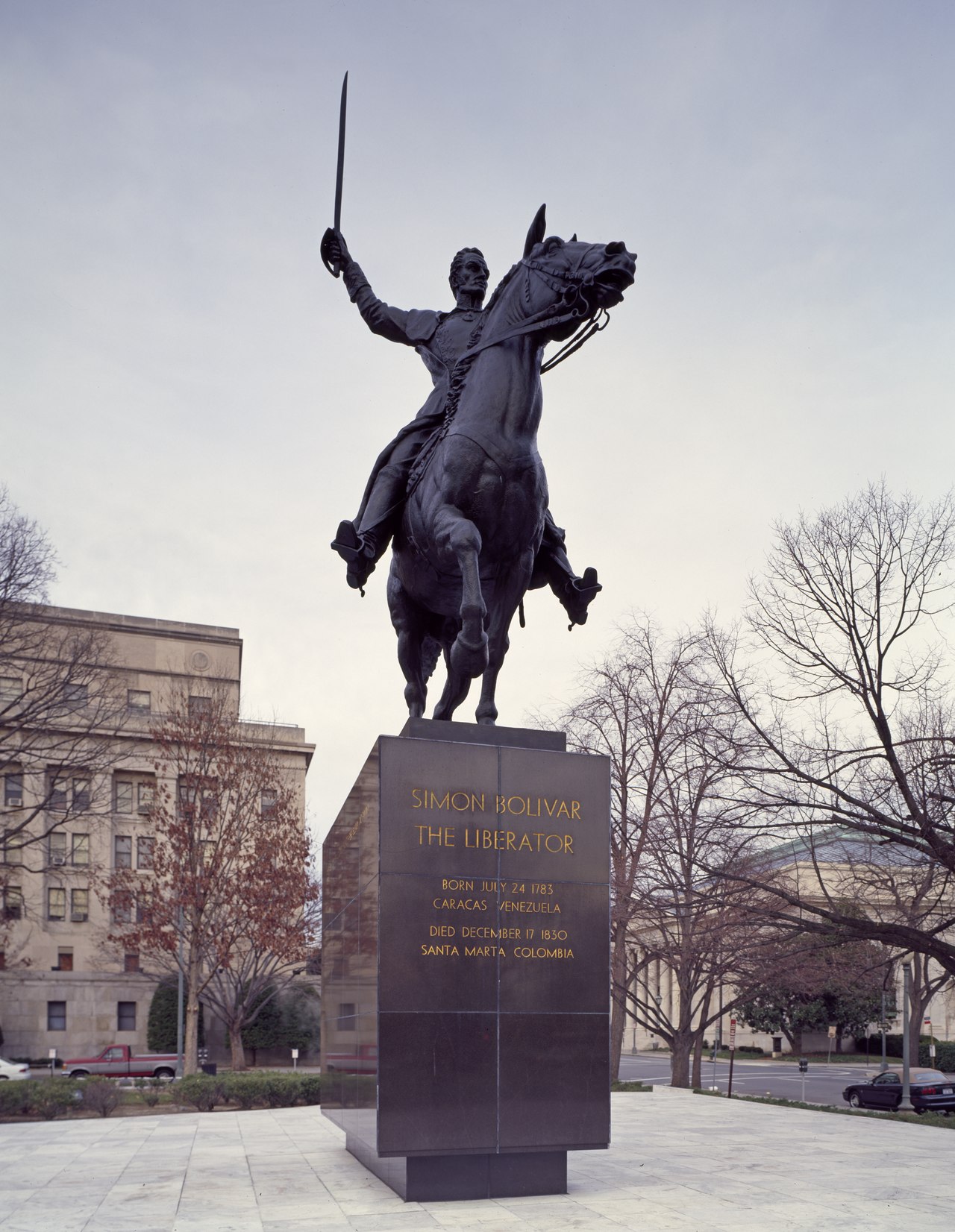
Major works - **Marine Corps War Memorial (1954)** – Also known as the Iwo Jima statue, this bronze composition depicts six Marines raising the flag on Mount Suribachi. Positioned on the grounds of Arlington National Cemetery, the work has become an enduring symbol of American resolve. De Weldon’s meticulous attention to the anatomy of the figures and the interplay of light on the bronze surface contributed to its iconic status. - **Equestrian statue of Simón Bolívar (1959)** – Commissioned by the Venezuelan government, this bronze monument portrays the South American liberator on horseback, gesturing forward. The sculpture combines realism with a subtle romanticism, highlighting Bolívar’s leadership while integrating the surrounding landscape. - **Patrick Cudahy Memorial (1965)** – Located in Wisconsin, this bronze tribute honours the industrialist Patrick Cudahy. De Weldon rendered the figure in a contemplative pose, surrounded by symbolic elements that reference Cudahy’s contributions to the region’s development. - **Statue of Dennis Chavez** – Erected in Albuquerque, New Mexico, the work celebrates the long‑serving U.S. Senator Dennis Chávez. The sculptor’s treatment of the subject emphasizes dignity and perseverance, using a modest scale that encourages intimate viewer engagement. - **Edward Lewis Bartlett (1971)** – This bronze portrait commemorates the philanthropist Edward Lewis Bartlett. De Weldon captured Bartlett’s character through a realistic likeness and a subtle, reflective expression. - **Malaysian National Monument (1966)** – Although not listed among the primary works, de Weldon contributed to this Kuala Lumpur monument, which commemorates Malaysia’s struggle for independence. The piece integrates multiple figures and symbolic motifs, illustrating his capacity to translate collective narratives into sculptural form.
Influence and legacy Felix de Weldon’s career spanned more than six decades, during which he produced over a hundred public monuments worldwide. His legacy lies in the way he melded European academic training with American commemorative traditions, creating works that resonate across cultural contexts. By mastering the technical challenges of large‑scale bronze casting, he set a standard for subsequent generations of monumental sculptors. The Marine Corps War Memorial, in particular, has become a cultural touchstone, appearing in films, photographs and national ceremonies, thereby cementing de Weldon’s place in the visual vocabulary of twentieth‑century public art. Though he did not belong to a defined artistic movement, his dedication to realism, narrative clarity and technical excellence continues to inform contemporary approaches to memorial sculpture.
Frequently asked questions
Who was Felix de Weldon?
Felix de Weldon (1907–2003) was an Austrian‑born American sculptor renowned for large public monuments, most famously the United States Marine Corps War Memorial.
What artistic style or movement is he associated with?
He worked in a figurative realist style, emphasizing heroic and idealised representations, rather than aligning with a specific modern art movement.
What are his most famous works?
His best‑known pieces include the Marine Corps War Memorial (1954), the equestrian statue of Simón Bolívar (1959), the Patrick Cudahy Memorial (1965), the Dennis Chavez statue, and the Edward Lewis Bartlett portrait (1971).
Why does his work matter in art history?
De Weldon’s monuments combine technical mastery with powerful narrative content, shaping the visual language of mid‑twentieth‑century commemorative sculpture and influencing how societies remember historic events.
How can I recognise a Felix de Weldon sculpture?
Look for finely detailed, realistic figures rendered in bronze, often with dynamic poses, strong vertical lines, and a focus on heroic or commemorative themes.