Eugeniusz Zak
1884 – 1926
In short
Eugeniusz Zak (1884–1926) was a Polish painter who spent most of his artistic career in Paris, producing lyrical landscapes and figurative works that blend Symbolist sentiment with post‑Impressionist colour. His best‑known pieces include a self‑portrait (1911) and a series of moody landscapes such as "Krajobraz z wędrowcem" (1920).
Notable works


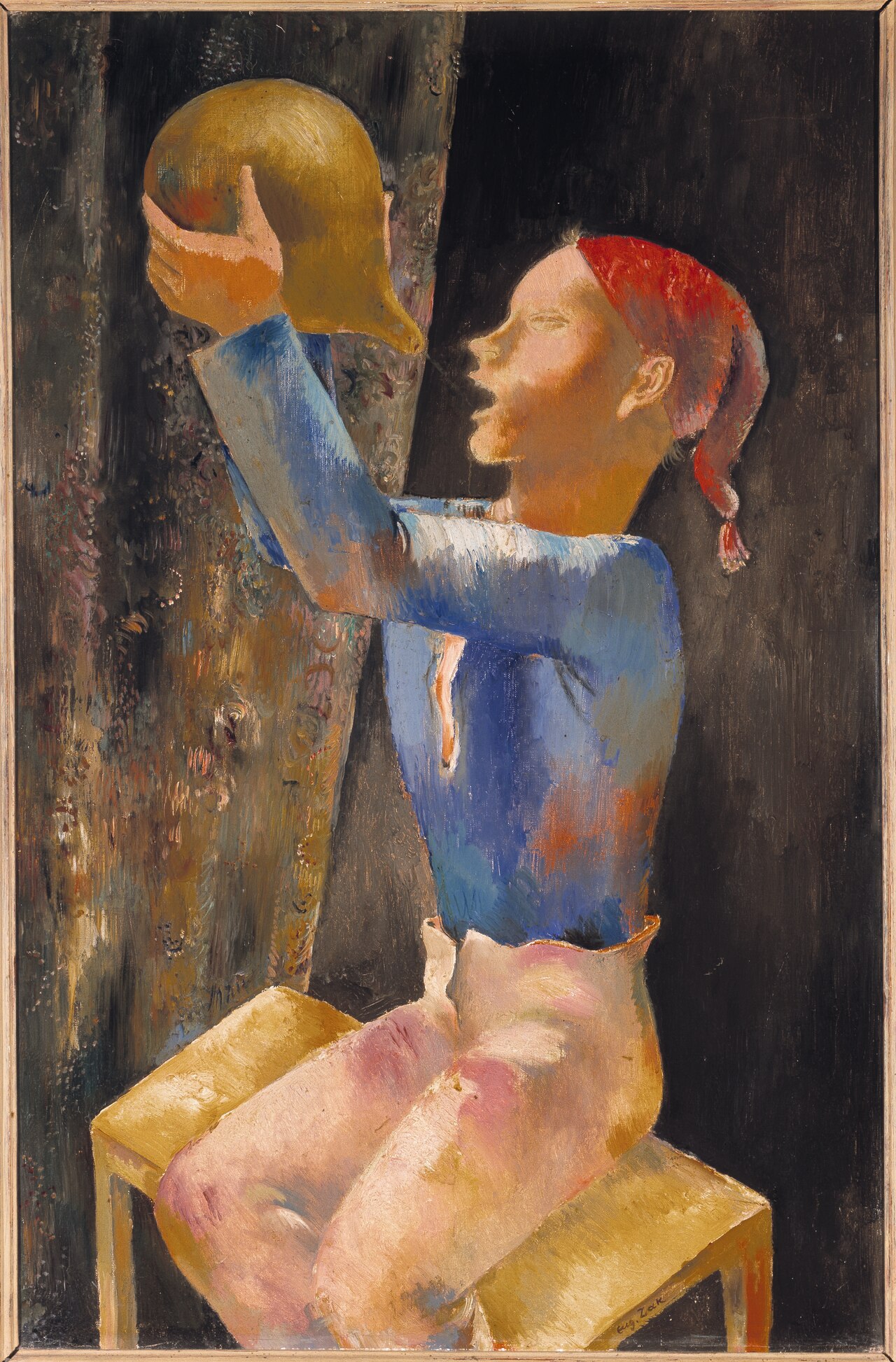
_-_MPW_802_MNW_-_National_Museum_in_Warsaw.jpg)
Early life Eugeniusz Zak was born in 1884 in the small town of Mahiĺna, then part of the Russian‑ruled Kingdom of Poland. Little is recorded about his family background, but like many Polish artists of his generation he received an early grounding in the visual arts through local drawing schools before moving to larger cultural centres. In the early 1900s Zak travelled to Kraków, where he encountered the vibrant artistic community associated with the Young Poland movement, a group that championed Symbolism, folk motifs and a turn away from academic realism. These formative experiences introduced him to a range of modernist ideas that would later shape his own visual language.
Career and style In 1906 Zak moved to Paris, the epicentre of avant‑garde art, and settled in the 14th arrondissement where he would live until his death. The city offered him exposure to the latest developments in French painting, from the late works of Cézanne to the emerging Fauvist and Expressionist tendencies. While he never formally aligned himself with a single movement, his style can be described as a synthesis of Symbolist lyricism and the colouristic daring of post‑Impressionism. Zak’s canvases often convey a quiet, melancholic mood, employing muted palettes and soft, atmospheric light to evoke a sense of introspection.
During the 1910s he exhibited regularly at the Salon d’Automne and other Parisian venues, gaining modest recognition among his peers. The outbreak of World War I saw him return briefly to Poland, where he participated in exhibitions that celebrated national culture. After the war he resumed his Parisian practice, increasingly focusing on landscapes that merged the urban and the rural, a theme that resonated with the displaced feelings of many expatriate artists.
Signature techniques Zak’s technique is characterised by several recurring elements:
* Delicate modelling of form – He often rendered figures and architectural elements with a gentle gradation of tone, creating a subtle three‑dimensionality without harsh outlines. * Atmospheric colour washes – Thin layers of oil or tempera are applied to build up a luminous surface; the resulting washes soften edges and imbue the scene with a dream‑like quality. * Balanced composition – Many of his works feature a central figure or object set against a broad, open background, establishing a harmonious relationship between foreground and distance. * Symbolic motifs – Recurring symbols such as solitary wanderers, bridges, and muted cityscapes suggest themes of travel, transition and the passage of time.
These techniques combine to produce paintings that feel both intimate and universal, inviting viewers to contemplate the emotional resonance of everyday scenes.
Major works Among Zak’s oeuvre, a handful of paintings stand out as exemplars of his mature style:
* Self‑portrait (1911) – Executed in a subdued palette, this work presents the artist with a contemplative gaze, his features softened by delicate brushwork. The portrait reflects both his personal introspection and the broader Symbolist interest in inner states. * Paris – Fragment of a city with bridges (Seine in Paris) (1913) – In this urban landscape, Zak captures the Seine’s reflective surface and the graceful arches of Parisian bridges. The composition balances architectural detail with atmospheric colour, evoking the city’s timeless elegance. * Krajobraz z figurą ludzką / Pejzaż z wędrowcem (1916) – Translating to “Landscape with a Human Figure / Landscape with a Wanderer,” this piece juxtaposes a solitary figure against a vast, mist‑filled terrain. The work underscores Zak’s fascination with the figure as a narrative anchor within an expansive natural setting. * Krajobraz z wędrowcem (1920) – A later variant of the 1916 theme, this painting refines the earlier composition, employing richer tones and a more nuanced handling of light to heighten the sense of melancholy. * The young drinker (1920) – This genre scene portrays a youthful subject in a moment of quiet indulgence. The work’s restrained colour scheme and soft modelling convey both the immediacy of the scene and an underlying emotional depth.
These pieces collectively illustrate Zak’s preoccupation with solitary figures, transitional spaces, and the interplay of light and shadow.
Influence and legacy Eugeniusz Zak’s career was cut short by his untimely death in 1926, yet his paintings continued to circulate in both Polish and French art circles throughout the interwar period. While he never achieved the fame of contemporaries such as Marc Chagall, Zak’s work contributed to the cross‑cultural dialogue between Polish Symbolism and French modernism. Scholars note that his lyrical approach anticipated later developments in European Expressionism, particularly the emphasis on mood over narrative detail.
In Poland, Zak is remembered as part of the generation that bridged the 19th‑century Romantic tradition with early 20th‑century modernism. Retrospectives held in Warsaw and Kraków during the 1960s and 1980s re‑introduced his paintings to new audiences, prompting a reassessment of his role in the broader canon of Central European art. Today, his works are held in public collections such as the National Museum in Warsaw and the Musée d’Orsay’s extended network, where they are cited as examples of the nuanced synthesis between Symbolist sentiment and post‑Impressionist technique.
Overall, Zak’s legacy lies in his capacity to render everyday moments with a poetic, almost timeless quality, offering viewers a contemplative window into the emotional landscapes of early‑20th‑century Europe.
Frequently asked questions
Who was Eugeniusz Zak?
Eugeniusz Zak was a Polish painter (1884–1926) who lived and worked mainly in Paris, known for lyrical landscapes and figurative works that blend Symbolist feeling with post‑Impressionist colour.
What artistic style or movement is he associated with?
He is not tied to a single movement; his style merges Symbolist lyricism, the colouristic innovations of post‑Impressionism, and a personal, atmospheric approach.
Which of his works are the most famous?
His best‑known paintings include the Self‑portrait (1911), Paris – Fragment of a city with bridges (1913), Krajobraz z wędrowcem (1920), and The young drinker (1920).
Why is Eugeniusz Zak important in art history?
Zak bridges Polish Symbolism and French modernism, influencing the mood‑driven direction of early 20th‑century European painting and contributing to the cross‑cultural exchange between Central Europe and Paris.
How can I recognise a painting by Eugeniusz Zak?
Look for soft, atmospheric colour washes, gentle modelling of figures, quiet urban or rural scenes, and recurring motifs such as solitary wanderers, bridges, and muted cityscapes.