Edward Penfield
1866 – 1925
In short
Edward Penfield (1866–1925) was an American illustrator and graphic designer recognised as the father of the modern American poster. Working during the Golden Age of American Illustration, he helped define the visual language of early 20th‑century advertising and magazine art.
Notable works



Early life Edward Penfield was born in 1866 in Brooklyn, New York. Little is recorded about his family background, but he grew up in a period when the United States was rapidly urbanising and the demand for visual communication was expanding. Penfield displayed an early aptitude for drawing, and after completing secondary schooling he pursued formal training at the Art Students League of New York, where he was exposed to the academic traditions of drawing and the emerging decorative arts.
Career and style Penfield entered the professional world in the late 1880s, joining the staff of *Harper's Weekly* as an illustrator. The magazine, a leading platform for political cartoons and narrative art, offered him a venue to develop a bold, graphic style that balanced realism with stylised composition. By the 1890s Penfield had become a prolific contributor, producing cover illustrations, spot drawings and full‑page spreads.
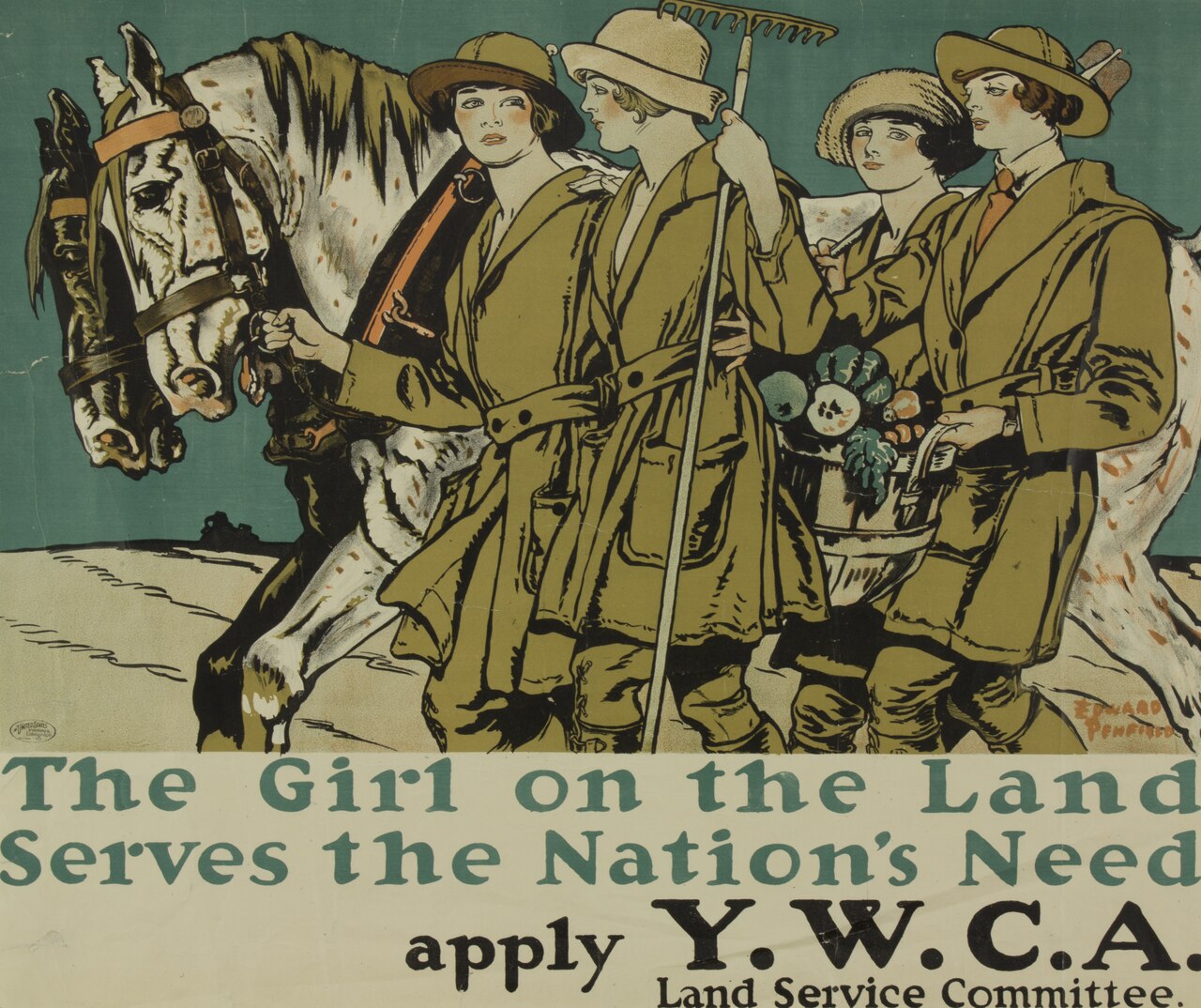
His style is characterised by strong, simplified silhouettes, flat areas of colour, and a clear hierarchy of visual elements. Influences from European Art Nouveau and the American Arts and Crafts movement can be discerned, yet Penfield’s work remains distinctly American in its emphasis on narrative clarity and commercial appeal. He favoured a limited palette, often employing contrasting hues to draw the eye to the central figure or action. The overall effect is both eye‑catching and easily reproducible—a quality that proved essential for his later poster work.
Signature techniques Penfield’s signature techniques include:
1. Bold contour lines – He used thick, clean outlines to separate forms, a method that ensured legibility at small sizes and in mass‑produced prints. 2. Flat colour blocks – Rather than relying on subtle shading, Penfield filled shapes with uniform washes of colour, a practice that echoed contemporary lithographic processes. 3. Dynamic composition – Figures are often placed off‑centre, creating a sense of movement that guides the viewer’s gaze across the page. 4. Integrated typography – Penfield treated type as an element of the illustration, harmonising lettering with the visual narrative rather than allowing it to sit apart. 5. Narrative simplicity – He distilled complex scenes into a single, instantly recognisable moment, making his images instantly understandable.
These techniques not only defined his personal aesthetic but also set standards for early American advertising design.
Major works Among Penfield’s most celebrated pieces are several that illustrate his versatility and commercial acumen:
- Golf Calendar, February (1899) – A striking poster that captures the leisure sport of golf with a single golfer poised mid‑swing against a crisp winter sky. The work demonstrates Penfield’s skill in rendering motion with minimal detail.
- Harper's August – Tom Sawyer Detective (1896) – This magazine cover merges literary reference with visual intrigue, depicting a youthful detective in a dramatic pose. The composition reflects Penfield’s ability to translate narrative themes into compelling visual hooks.
- Vignettes of Manhattan by Brander Matthews (1894) – Produced for a travel guide, these small illustrations present iconic cityscapes and street scenes, each reduced to essential forms that convey the bustling energy of New York.
- The Girl on the Land Serves the Nation's Need; apply Y.W.C.A. Land Service Committee (1917) – A wartime recruitment poster that encourages women to contribute to agricultural efforts. Penfield employs patriotic colour schemes and a confident female figure to communicate civic duty.
- Spanish Sketch Mounted in Scrap Book (1911) – A more personal work, this sketch shows Penfield’s interest in travel and cultural observation, rendered with looser lines and a muted palette, suggesting a departure from his commercial commissions.
These works illustrate the breadth of Penfield’s output, from magazine illustration to public service posters, each bearing his unmistakable graphic clarity.
Influence and legacy Edward Penfield’s impact on graphic design extends far beyond his own era. By pioneering the American poster, he laid the groundwork for later advertising giants such as J. Howard Miller and the designers of the New Deal era. His emphasis on flat colour, strong outlines, and the seamless integration of text with image became foundational principles for mid‑century modernist designers.
Penfield also contributed to the professionalisation of illustration. He taught at the School of Art and Design at the New York School of Fine Arts, influencing a generation of illustrators who would carry his visual language into the pulp magazines and early comic books of the 1920s and 1930s.
Today, Penfield’s work is regularly featured in exhibitions on the Golden Age of Illustration and in scholarly texts on the history of graphic design. Original prints fetch high prices at auction, and digital reproductions are used in design curricula to demonstrate the power of visual economy. His legacy endures in the way contemporary brands continue to rely on bold, simplified imagery—a direct descendant of Penfield’s pioneering approach.
In sum, Edward Penfield remains a pivotal figure whose innovations helped shape the visual culture of modern America, bridging fine art, commercial illustration, and the emerging discipline of graphic design.
Frequently asked questions
Who was Edward Penfield?
Edward Penfield (1866–1925) was an American illustrator and graphic designer, best known as the father of the modern American poster.
What artistic style or movement is Penfield associated with?
Penfield worked during the Golden Age of American Illustration and his style blends Art Nouveau influences with a distinctly American, graphic‑design‑oriented aesthetic.
What are his most famous works?
His most celebrated pieces include the Golf Calendar (February 1899), the Harper's August Tom Sawyer Detective cover (1896), Vignettes of Manhattan (1894), the Y.W.C.A. wartime poster (1917), and the Spanish Sketch Mounted in Scrap Book (1911).
Why is Penfield important in art history?
He pioneered the American poster, introduced graphic‑design principles such as bold outlines and flat colour, and influenced both illustration and advertising throughout the 20th century.
How can I recognise an Edward Penfield illustration?
Look for strong, clean contours, flat colour blocks, dynamic off‑centre compositions, and integrated typographic elements that together convey a clear, single‑moment narrative.