Dudley Hardy
1867 – 1922
In short
Dudley Hardy (1867–1922) was a British painter and illustrator known for his vibrant posters, theatrical portraits, and genre scenes, working primarily in the late Victorian and Edwardian periods.
Notable works
.jpg)

_-_Madame_Sarah_Bernhardt_(1844%E2%80%931923)_-_VIS.165_-_Sheffield_Galleries_and_Museums_Trust.jpg)
_-_Her_Favourite_Corner_-_NMW_A_17538_-_National_Museum_Cardiff.jpg)
Early life Dudley Hardy was born in 1867 in Sheffield, a city then flourishing with industry and a growing middle class. Little is recorded about his family background, but his early exposure to the artistic life of the city—through local exhibitions and the burgeoning railway poster trade—sparked a lifelong interest in visual communication. Hardy pursued formal training at the Royal Academy Schools in London, where he honed his drawing skills under the guidance of established academic painters. The rigorous curriculum emphasized life drawing, anatomy, and composition, providing a foundation that would later inform his work both as a painter and a commercial illustrator.
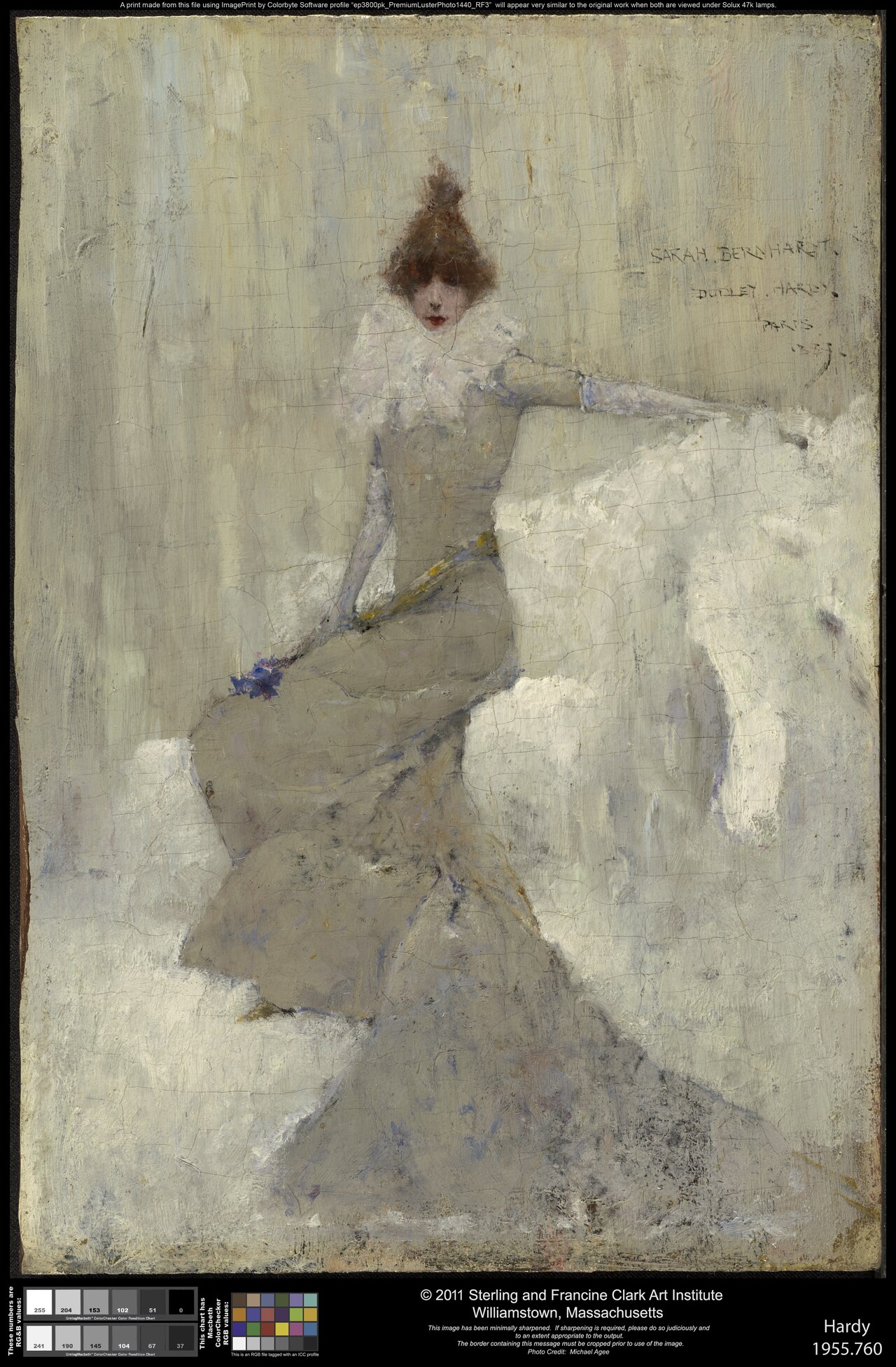
Career and style After completing his studies, Hardy quickly entered the world of illustration, a field that offered steady commissions and wide public exposure. He became a regular contributor to prominent periodicals such as *The Illustrated London News* and *The Graphic*, producing illustrations that combined narrative clarity with a lively use of colour. In the 1890s, Hardy’s reputation grew through his theatrical and celebrity portraits, most notably his depictions of the famed actress Sarah Bernhardt. These works reveal a keen ability to capture personality and drama, aligning him with the popular portraiture tradition of the time.
Hardy’s style can be described as a synthesis of academic drawing and the decorative impulses of the Art Nouveau movement, though he never formally aligned himself with a specific avant‑garde group. His compositions often feature strong outlines, flat colour fields, and a decorative treatment of background elements—characteristics that made his posters especially effective for advertising. The period’s fascination with leisure, travel, and the expanding railway network provided fertile ground for Hardy’s commercial work, and his posters for seaside resorts and theatrical productions became widely recognised.
Signature techniques Hardy’s technique rested on a clear, confident line work derived from his academic training. He frequently employed a limited palette, allowing bold colours to dominate the visual field while maintaining harmony. In his poster designs, he used a stylised, almost graphic rendering of figures, juxtaposing them against simplified architectural or natural backdrops. This approach created a sense of immediacy, making the image instantly readable from a distance—a crucial quality for public advertising.
Another hallmark of Hardy’s work is his treatment of light. Whether depicting a stage spotlight on an actress or the sunlit cliffs of a coastal town, he rendered illumination with a subtle gradation that adds depth without compromising the flat decorative quality. In his watercolour and oil paintings, he often applied washes of translucent colour, giving his subjects a luminous, almost atmospheric quality that set his genre scenes apart from more rigid academic works.
Major works - **A Gaiety girl (1894)** – This oil painting captures a fashionable young woman in a theatrical setting, embodying the optimism and leisure of late‑Victorian society. The composition balances a detailed figure with a softly rendered background, showcasing Hardy’s ability to merge portraiture with genre painting. - **Vintage poster for Bridlington** – Created for the seaside resort of Bridlington, the poster features a sweeping view of cliffs and sea, rendered in bold, flat colours that attract the eye of railway passengers. The work is emblematic of Hardy’s skill in travel advertising, where he combined aesthetic appeal with commercial intent. - **Sarah Bernhardt (1889)** – A striking portrait of the legendary French actress, this piece demonstrates Hardy’s talent for capturing theatrical charisma. The portrait’s dramatic lighting and meticulous rendering of Bernhardt’s features convey both her status as an icon and Hardy’s respect for her artistry. - **Madame Sarah Bernhardt (1844–1923) (1887)** – An earlier depiction of the actress, this work emphasizes elegance and poise, with a softer colour scheme that reflects the artist’s developing style. The piece, often reproduced in illustrated magazines, contributed to Hardy’s reputation as a leading portraitist of theatrical personalities. - **Her Favourite Corner** – Though less widely documented, this work illustrates a domestic interior where a figure is absorbed in reading or contemplation. The composition’s intimate scale and careful attention to interior detail highlight Hardy’s versatility beyond public commissions.
Each of these works illustrates Hardy’s capacity to move fluidly between fine art and commercial illustration, a duality that defined much of his career.
Influence and legacy Dudley Hardy’s legacy resides in his contribution to the visual culture of the turn of the twentieth century. By bridging academic painting with the burgeoning field of poster art, he helped shape the visual vocabulary of advertising and popular media. His theatrical portraits, especially of Sarah Bernhardt, remain valuable records of performance history, offering insights into the celebrity culture of the era.
While Hardy never achieved the lasting fame of contemporaries such as Aubrey Beardsley or James Whistler, his work continued to be reproduced in art journals and exhibition catalogues throughout the early twentieth century. Modern scholars of graphic design cite his posters as early examples of the synthesis between fine art and commercial practice, a precedent that later movements—including the British Arts and Crafts movement—would expand upon.
In recent years, interest in Hardy’s oeuvre has been revived by exhibitions focusing on Victorian and Edwardian illustration, as well as by collectors of railway and seaside posters. His paintings, held in public collections and private holdings, are appreciated for their technical skill, narrative clarity, and the way they capture a dynamic period of British cultural history.
Overall, Dudley Hardy stands as a representative figure of an artist who navigated the demands of the art market while maintaining a personal, disciplined artistic vision, leaving a body of work that continues to inform both historical scholarship and contemporary design practice.
Frequently asked questions
Who was Dudley Hardy?
Dudley Hardy (1867–1922) was a British painter and illustrator known for his vibrant posters, theatrical portraits, and genre scenes during the late Victorian and Edwardian periods.
What style or movement is he associated with?
Hardy blended academic drawing with decorative Art Nouveau influences, but he never formally joined a specific movement, working instead within popular illustration and poster art.
What are his most famous works?
His most recognized pieces include the portrait of Sarah Bernhardt (1889), the poster for Bridlington, the painting A Gaiety Girl (1894), and the earlier Madame Sarah Bernhardt (1887).
Why does he matter in art history?
Hardy helped define the visual language of early commercial advertising and preserved iconic theatrical imagery, bridging fine art and mass‑media illustration.
How can I recognise a Dudley Hardy work?
Look for confident line work, bold yet limited colour palettes, flat decorative backgrounds, and a subtle handling of light that together give his paintings and posters a clear, narrative quality.