David Teniers the Elder
1582 – 1649
In short
David Teniers the Elder (1582–1649) was a Flemish painter from Antwerp who specialised in interior genre scenes and religious landscapes, working in the Habsburg Netherlands.
Notable works



Early life David Teniers the Elder was born in 1582 in Antwerp, a bustling commercial centre of the Habsburg Netherlands. His family had roots in the nearby town of Ath, but the young Teniers grew up in the artistic milieu of Antwerp, a city renowned for its guilds and workshops. Little is recorded about his formal training, though it is highly probable that he apprenticed within the local guild system, absorbing the techniques of established Flemish masters.
Career and style Teniers began his professional career in the early‑17th century, a period when Antwerp’s art market was adapting to shifting tastes after the decline of the great Baroque commissions that had dominated the previous generation. He carved a niche by focusing on modest interior scenes—kitchens, taverns, and domestic interiors—where everyday activities unfolded in a calm, observational manner. These works echo the broader trend of genre painting that was gaining traction in the Low Countries, yet Teniers retained a distinct sensibility. His compositions balance a clear, almost documentary approach with a subtle narrative undercurrent, allowing viewers to infer stories from ordinary gestures.
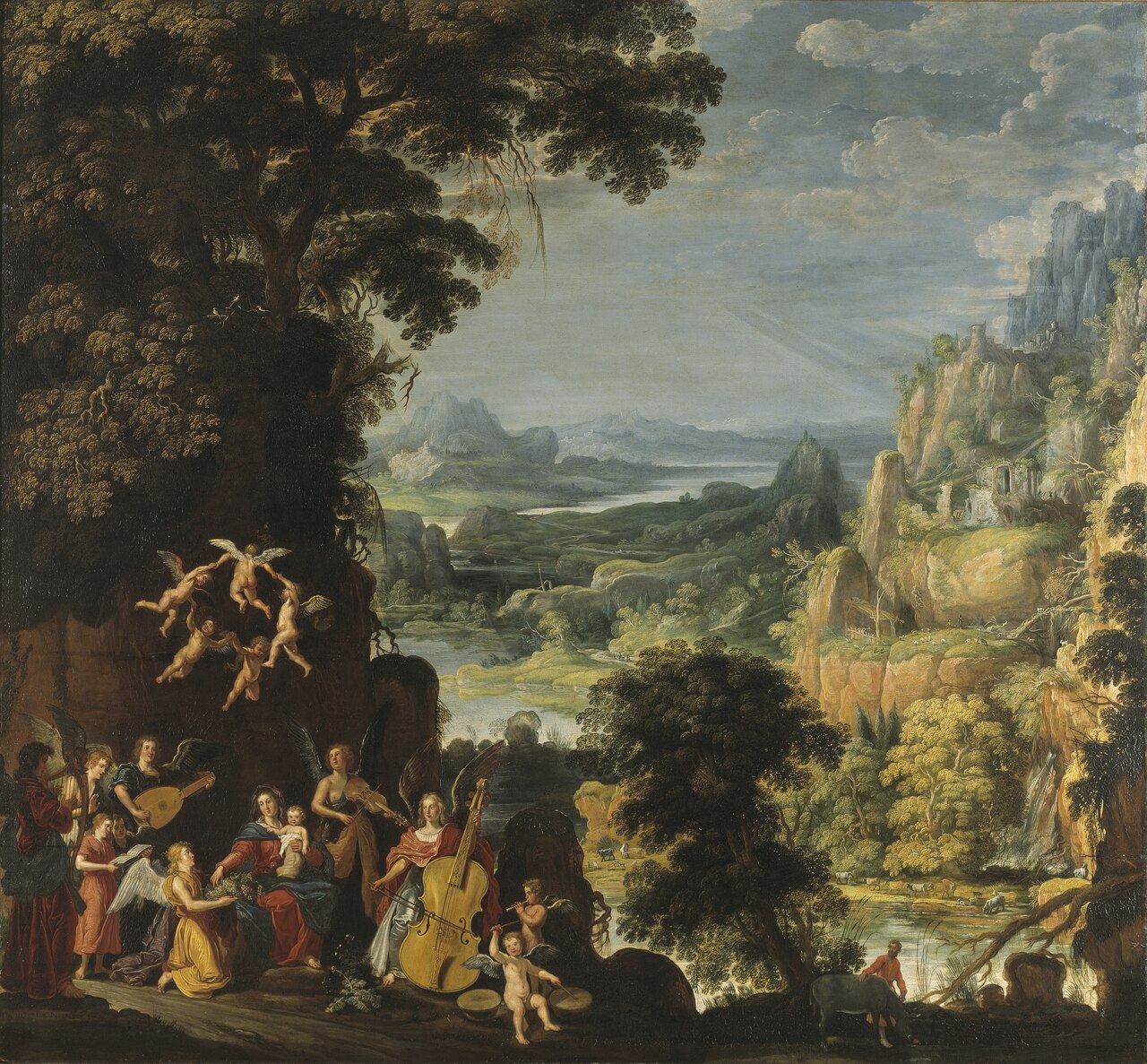
In addition to genre works, Teniers produced a handful of religious and biblical landscapes, most notably a depiction of the Flight into Egypt. Here his handling of light and atmospheric perspective demonstrates an awareness of contemporary landscape conventions, while the human figures remain secondary to the surrounding environment. Throughout his oeuvre, Teniers employed a restrained colour palette—earthy ochres, muted greens, and warm browns—contributing to the intimate mood of his interiors.
Signature techniques Teniers’s technique is characterised by precise, economical brushwork that renders texture without excessive detail. He often used a limited underdrawing, allowing the paint layers to define form and space. Light is introduced through narrow windows or doorways, creating a chiaroscuro effect that highlights key elements such as a gleaming pewter pot or a cluster of smoking pipes. The artist’s handling of material—wood, cloth, metal—shows a keen observation of how light interacts with different surfaces. In his landscape works, he favoured a soft, atmospheric haze to suggest depth, a method that aligns with the early Dutch landscape tradition.
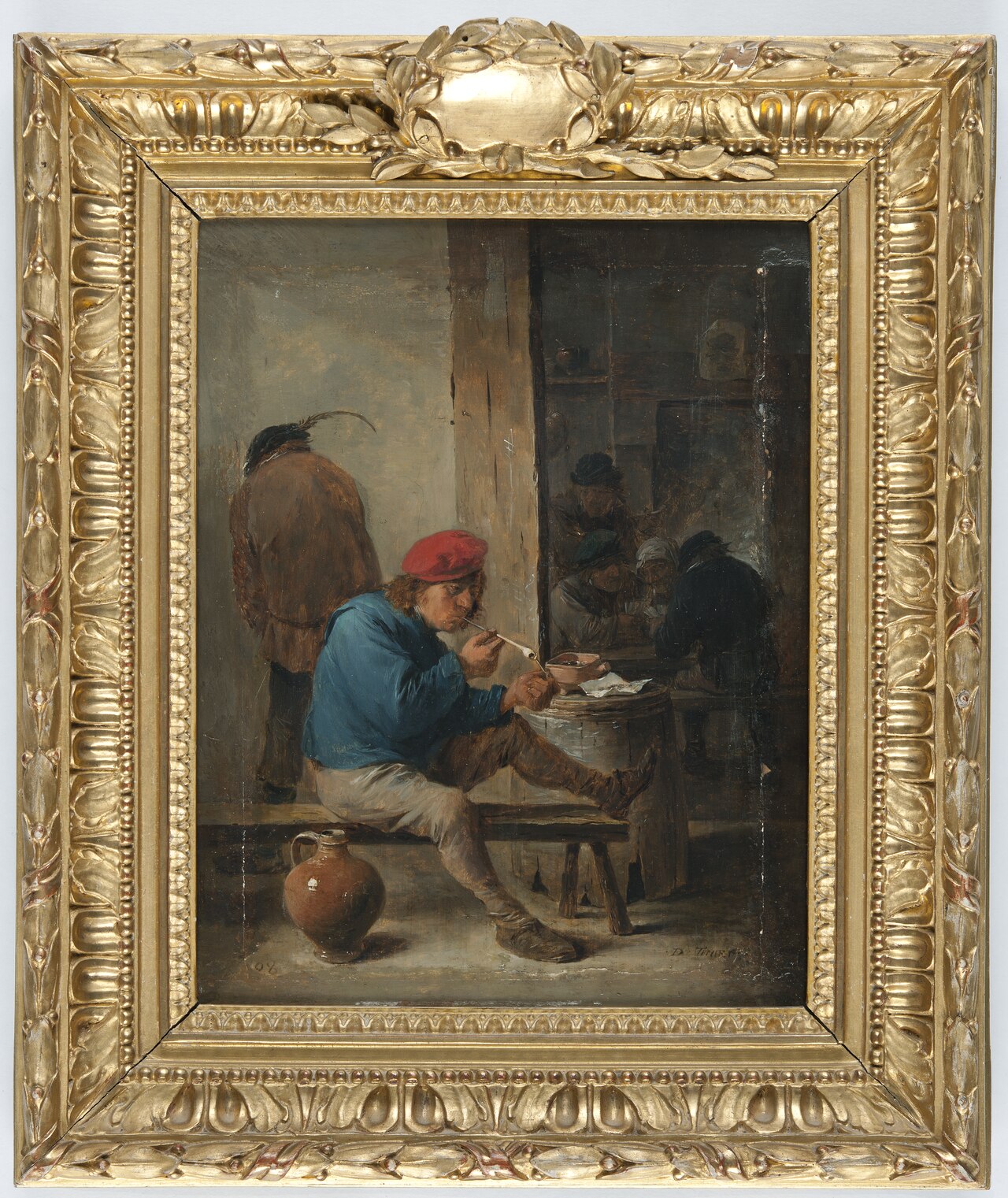
Major works - **Dutch interior (1700)** – Although dated after Teniers’s death, this work is frequently attributed to his workshop or later copyists. The painting depicts a modest domestic setting with a balanced arrangement of figures and objects, illustrating the enduring influence of his interior genre. - **Landscape with the Flight into Egypt (1620)** – This early landscape combines a biblical narrative with a pastoral setting. The composition foregrounds a tranquil countryside while the Holy Family is rendered as a small, almost incidental element, emphasizing the natural world. - **Tavern Scene with Smokers (1640)** – One of Teniers’s later genre pieces, it captures a lively tavern interior where patrons indulge in smoking and conversation. The work is notable for its careful rendering of smoke, the play of light across wooden surfaces, and the subtle social commentary embedded in the figures’ interaction. - **Interior of a Kitchen** – In this interior, Teniers focuses on domestic labour, depicting a woman at work amidst pots, pans, and a modest hearth. The painting’s composition directs attention to the rhythm of everyday chores, underscoring the dignity of humble tasks. - **Interior of an Inn (1620)** – This early inn interior showcases a bustling environment with travelers, serving staff, and a warm, inviting ambience. Teniers’s use of perspective draws the viewer’s eye toward the far wall, where a window frames an exterior glimpse, creating a sense of depth and narrative possibility.
Influence and legacy David Teniers the Elder established a family tradition that would later include his son, David Teniers the Younger, a prolific painter of the Flemish Baroque. While the elder Teniers’s name is less prominent than his son’s, his emphasis on intimate interior scenes laid groundwork for the genre painting that flourished in the Dutch Republic. His balanced compositions and nuanced treatment of light informed subsequent generations of Flemish and Dutch artists who sought to depict everyday life with authenticity. Moreover, his modest yet disciplined approach provided a counterpoint to the grandiose religious commissions of his contemporaries, offering a model for artists who wished to explore the quieter aspects of human experience.
Today, Teniers’s works are held in several European collections, where they serve as valuable examples of early‑17th‑century Flemish genre painting. Scholars regard his oeuvre as a bridge between the late Renaissance emphasis on detailed observation and the emerging Baroque sensibility that would dominate the mid‑century artistic landscape.
Frequently asked questions
Who was David Teniers the Elder?
David Teniers the Elder (1582–1649) was a Flemish painter from Antwerp, known for intimate interior genre scenes and a few religious landscapes.
What style or movement is he associated with?
He worked within the Flemish genre painting tradition, blending realistic observation with the early Baroque emphasis on light and atmosphere.
What are his most famous works?
Key works include the *Landscape with the Flight into Egypt* (1620), *Tavern Scene with Smokers* (1640), and interior pieces such as *Interior of a Kitchen* and *Interior of an Inn* (1620).
Why does he matter in art history?
Teniers helped establish the domestic interior genre in the Low Countries and influenced later Flemish and Dutch artists, including his son, David Teniers the Younger.
How can I recognise a painting by David Teniers the Elder?
Look for modest interior settings, a restrained colour palette, careful light falling through narrow windows, and a precise, economical brushstroke that renders textures like wood, cloth, and metal with subtle detail.